

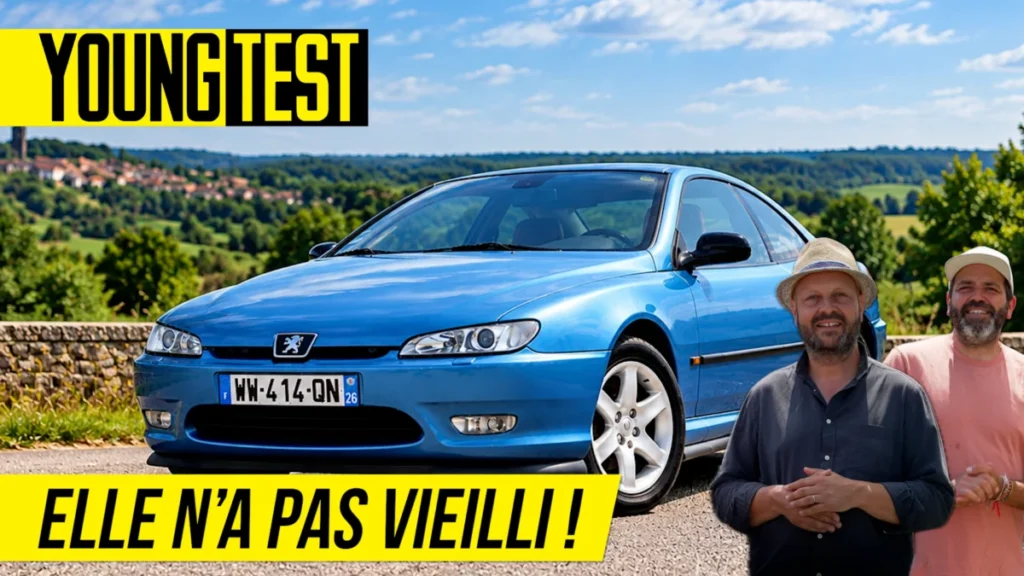
When the Peugeot 406 Coupé made its grand entrance at the 1996 Paris Motor Show, the automotive world collectively paused. It was an anomaly: a French mid-range chassis wearing an haute couture gown tailored in Italy. Almost three decades later, the "French Ferrari"—as it was affectionately dubbed—remains one of the most significant design achievements in modern automotive history. In a new feature from Youngtimers La Chaîne, hosts Nicolas and François-Xavier dive deep into the legacy, engineering, and enduring market appeal of this neo-classic icon.
Main Facts: A Marriage of Pragmatism and Passion
The Peugeot 406 Coupé was never intended to be a mass-market volume seller, yet it defied expectations. Born from a collaboration between the French manufacturer and the legendary Italian design house Pininfarina, the vehicle was a masterclass in aesthetics. While the standard 406 sedan was a respectable, if somewhat utilitarian, family car, the Coupé variant utilized a unique platform architecture.
The project’s design lead, Davide Arcangeli, penned lines that were so fluid, so elegant, and so balanced that they drew immediate, albeit flattering, comparisons to the Ferrari 456. It offered the visual prestige of Italian high fashion at a price point accessible to the French middle class—a feat of industrial democratization that remains rare in the automotive industry.
Under the hood, the range-topping V6 3.0-liter engine became the beating heart of the model. Producing up to 210 horsepower, it transformed the car from a grand tourer into a genuine performer. With a specific chassis setup and the inclusion of high-performance Brembo brakes, the 406 Coupé proved that it was more than just a "pretty face"; it was a driver’s machine.
Chronology: From Concept to Cult Classic
1996: The Paris Debut
The unveiling in Paris sent shockwaves through the industry. The design, characterized by its long, low-slung nose and refined rear haunches, broke away from the boxy aesthetics dominating the 1990s. Peugeot’s decision to outsource the manufacturing to Pininfarina’s facility in Grugliasco, Italy, ensured that the quality of assembly matched the excellence of the design.
1997–2003: The Golden Era
As the vehicle entered production, it was clear that demand would outstrip projections. While Peugeot initially planned for a modest production run, the car’s popularity saw it remain in production far longer than anticipated. Over its lifetime, a total of 107,631 units were produced—a staggering figure considering the initial target of 70,000.
2005: The End of an Era
By the time production ceased in 2005, the 406 Coupé had cemented its status as a "Youngtimer." It was replaced by the 407 Coupé, a car that, despite its technical capabilities, failed to capture the same stylistic lightning in a bottle that its predecessor had mastered so effortlessly.
Supporting Data: Engineering and Value
The 406 Coupé’s success was not merely a result of its exterior lines. The engineering team invested heavily in the driving dynamics of the car. The integration of Brembo calipers on the V6 models provided the necessary stopping power to handle the engine’s output, while the suspension tuning provided a supple yet composed ride quality that balanced French comfort with Italian agility.
Market Valuation Guide (Current Estimates)
For collectors and enthusiasts, the 406 Coupé represents one of the most accessible entry points into the classic car market. Current market values are segmented by engine and rarity:
- 2.0L Inline-4: Approximately €5,500 – An excellent entry-level cruiser.
- 2.2L Inline-4: Approximately €7,500 – A balanced mid-range option.
- 3.0L V6 (194 hp): Approximately €9,500 – The classic V6 experience.
- 3.0L V6 (210 hp): Approximately €10,500 – The most desirable standard powertrain.
- Settant’anni Edition: Up to €18,000 – The rare, highly sought-after 70th-anniversary model.
These prices reflect a car that is currently in a "valuation transition." As the supply of clean, low-mileage examples dwindles, experts anticipate a steady appreciation in value over the next decade.
Official Responses and Industry Legacy
During the launch, Peugeot’s leadership was vocal about their intent to move the brand upmarket. By leveraging the Pininfarina brand, Peugeot managed to elevate the perceived value of their entire lineup. Industry analysts at the time noted that the 406 Coupé was a "halo car" in the truest sense—it brought people into showrooms who might otherwise never have considered a Peugeot.
Pininfarina’s role was critical. In their official statements during the production cycle, the Italian firm highlighted that this was one of the few instances where they were given almost complete creative freedom over the final form of a mass-produced vehicle. The collaboration resulted in a car that felt bespoke despite being built on a modular platform.
Implications: Is the 406 Coupé a Wise Investment?
For the modern collector, the question remains: is the 406 Coupé still as seductive as it was nearly 30 years ago? The answer, according to Nicolas and François-Xavier, is a resounding yes.
Why it Matters Today
- Timeless Design: Unlike many vehicles of the 90s, the 406 Coupé does not look dated. Its proportions—long hood, short overhangs, and clean side profile—adhere to the principles of classical beauty rather than fleeting trends.
- Driving Engagement: While it may not have the raw power of a modern sports car, the 406 Coupé offers an analog driving experience that is increasingly rare. The V6 engine provides a linear power delivery and a refined soundtrack that modern, turbocharged four-cylinder engines struggle to emulate.
- The "Youngtimer" Status: As a recognized "Youngtimer," the 406 Coupé benefits from a dedicated community of enthusiasts, a wealth of spare parts availability (thanks to its shared components with the 406 sedan), and a growing presence at classic car rallies and shows.
Points to Monitor for Potential Buyers
While the 406 Coupé is a robust machine, prospective buyers should exercise due diligence. The V6 models require diligent timing belt maintenance, and the electrical systems—often a point of contention in 90s French vehicles—should be thoroughly inspected. Furthermore, finding a rust-free chassis is the most critical factor in maintaining long-term value.
Conclusion
The Peugeot 406 Coupé is a testament to what happens when art and industry intersect. It is a car that proved that beauty does not have to be exclusive. Whether you are looking for a weekend cruiser or a piece of automotive history that is poised to appreciate in the coming years, the 406 Coupé remains the gold standard of the Youngtimer movement.
As Nicolas and François-Xavier conclude in their latest episode, the most beautiful Peugeot of all time isn’t a prototype hidden away in a museum; it’s a car you can still buy, drive, and enjoy today for the price of a modest city car. The "French Ferrari" is not just a relic of the past; it is a living, breathing celebration of design that continues to capture hearts three decades later.
For more in-depth reviews and expert guidance on acquiring your own piece of French automotive history, be sure to subscribe to Youngtimers La Chaîne and join the conversation in the comments regarding your favorite Peugeot designs.
