

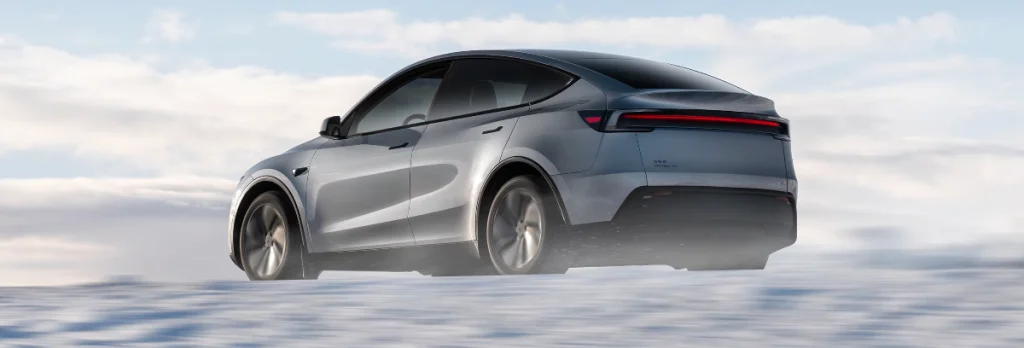
The global electric vehicle (EV) sector has long looked to China as both its most significant growth engine and its most volatile battlefield. In April 2024, Tesla, the American EV pioneer, signaled a robust return to form within this critical market. According to the latest industry data, Tesla’s China-made vehicle sales surged by 36% year-over-year, a figure that underscores the brand’s resilience even as it navigates an unprecedented "price war" and a tightening regulatory environment regarding data and autonomous driving.
This growth, while indicative of a solid recovery, comes at a time when the domestic Chinese market is undergoing a radical transformation. With local giants like BYD expanding their dominance and tech entrants like Xiaomi disrupting the status quo, Tesla’s performance in Shanghai is no longer just about manufacturing—it is about strategic survival in the world’s most sophisticated automotive ecosystem.
I. Main Facts: The Numbers Behind the Rebound
In April 2024, Tesla’s Gigafactory Shanghai—the company’s primary export hub—delivered a total of 79,478 vehicles. This represents a substantial 36.1% increase compared to the 58,384 units delivered in the same month in 2023.
Key Performance Indicators:
- Year-on-Year (YoY) Growth: 36.1% increase from April 2023.
- Month-on-Month (MoM) Performance: A slight decline of 7.2% from March 2024, where deliveries peaked at 89,064 units.
- Product Mix: The vast majority of these deliveries consisted of the Model Y, the world’s best-selling vehicle, and the refreshed Model 3 "Highland."
- The Export Factor: Of the nearly 80,000 units produced, a significant portion was earmarked for international markets, particularly Europe and Southeast Asia. This "China-for-Global" strategy continues to allow Tesla to optimize production schedules even when domestic demand fluctuates.
This data, provided by the China Association of Automobile Manufacturers (CAAM) and the China Passenger Car Association (CPCA), suggests that Tesla has successfully stabilized its operations following a turbulent first quarter characterized by production adjustments and shifting consumer sentiment.
II. Chronology: A Path of Volatility and Recovery
To understand the significance of the April surge, one must look at the preceding twelve months, which were marked by aggressive pricing strategies and shifting geopolitical tides.
- January – March 2023: Tesla ignited a global price war by slashing prices in China to stimulate demand. This led to a surge in orders but squeezed profit margins, causing concern among investors.
- Late 2023: The introduction of the refreshed Model 3 "Highland" brought renewed interest. However, local competitors like Li Auto, NIO, and Xpeng launched several competing models in the same price bracket.
- Q1 2024: Tesla faced a challenging start to the year. Q1 global deliveries fell for the first time in nearly four years, largely due to a slowdown in China and production halts in Germany.
- April 2024: Tesla announced further price cuts in several major markets, including China, lowering the entry price of the Model 3 to approximately 231,900 yuan ($32,000).
- Late April 2024: Elon Musk made an unannounced visit to Beijing. During this visit, he met with high-ranking government officials, including Premier Li Qiang, to discuss the rollout of Full Self-Driving (FSD) software and data transfer regulations.
This timeline illustrates a brand in constant motion, using both economic levers (price cuts) and diplomatic efforts (Musk’s visit) to maintain its foothold.
III. Supporting Data: The Competitive Landscape and Market Dynamics
Tesla does not operate in a vacuum. The 36% growth must be contextualized within the broader Chinese New Energy Vehicle (NEV) market, which grew by approximately 33% in the same period.
1. The BYD Factor
While Tesla’s 79,478 units are impressive, they are eclipsed by BYD’s massive scale. In April, BYD sold over 313,000 passenger vehicles (including both BEVs and Plug-in Hybrids). Tesla remains the leader in the premium "pure electric" segment, but BYD’s vertical integration allows it to offer technology at price points Tesla currently cannot reach.
2. The Tech Disruptors
April saw the full impact of the Xiaomi SU7 launch. The Chinese smartphone giant entered the EV space with a vehicle that directly targets the Model 3’s demographic. Xiaomi reported over 70,000 firm orders within weeks of its launch, creating a "halo effect" for Chinese tech-integrated EVs that has forced Tesla to double down on its software-centric identity.
3. Giga Shanghai’s Role as a Global Engine
The Shanghai plant currently has an annual capacity exceeding 950,000 units. In April, the facility functioned as a relief valve for Tesla’s global operations. With the Red Sea shipping disruptions affecting logistics from China to Europe earlier in the year, the April export numbers reflect a clearing of backlogs and a renewed push into markets like France, Sweden, and Denmark.
4. Macroeconomic Influences
Rising global oil prices, exacerbated by Middle Eastern tensions, have indirectly supported Tesla’s sales. As fuel costs rise, the total cost of ownership (TCO) for EVs becomes increasingly attractive to European and Chinese commuters alike, bolstering the demand for the highly efficient Model Y.
IV. Official Responses: Regulatory Milestones and Corporate Strategy
The official narrative from both Tesla and the Chinese government suggests a period of "cautious cooperation."
The "Data Security" Breakthrough
Following Elon Musk’s April visit, the China Association of Automobile Manufacturers announced that Tesla’s Model 3 and Model Y were among the first foreign vehicles to pass China’s stringent data security requirements. This is a monumental win for Tesla, as it removes previous restrictions that banned Tesla vehicles from entering certain government and military compounds.
Tesla’s Internal Stance
In their Q1 earnings call, Tesla executives emphasized that the company is "between two major growth waves." While the current growth is driven by the Model 3 and Y, the company is pivoting toward "Autonomous Transport" and "Robotaxis." The April sales figures are seen by the board as a necessary "cash-flow bridge" to fund the development of the next-generation platform, rumored to be a more affordable model.
Government Incentives
The Chinese Ministry of Commerce recently announced a new "trade-in" subsidy, offering up to 10,000 yuan (approx. $1,400) to consumers who scrap old internal combustion vehicles for new NEVs. Tesla has moved quickly to integrate these government incentives into its own marketing, effectively lowering the barrier to entry for first-time EV buyers.
V. Implications: What This Means for the Future of Mobility
The 36% jump in April is more than just a statistical victory; it carries deep implications for the future of the automotive industry.
1. The FSD Frontier
The most significant implication of Tesla’s April performance is the potential for Full Self-Driving (FSD) to be licensed in China. If Tesla can successfully deploy its V12 end-to-end neural network driving software in the world’s most complex driving environments (like Shanghai or Beijing), it will transform from a car manufacturer into a high-margin software provider. This would likely trigger a new round of investment and force Chinese rivals to accelerate their own ADAS (Advanced Driver Assistance Systems) development.
2. The EU Anti-Subsidy Probe
The fact that Giga Shanghai is exporting so heavily to Europe puts Tesla in the crosshairs of the European Commission’s anti-subsidy investigation. If the EU decides to impose tariffs on Chinese-made EVs, Tesla’s Shanghai-made cars will be affected. This might force Tesla to shift more production to Giga Berlin or reconsider its global supply chain.
3. The "Survival of the Fittest" in China
Tesla’s ability to grow 36% YoY despite the "Xiaomi effect" and BYD’s dominance suggests that the brand still carries immense aspirational value in China. However, the 7.2% month-on-month dip indicates that the market is reaching a saturation point. The coming months will determine if Tesla can maintain this momentum without further eroding its margins through price cuts.
4. Environmental and Geopolitical Impact
Tesla’s continued success in China serves as a double-edged sword for Western policymakers. While it accelerates the transition to green energy, it also deepens the interdependence between American high-tech firms and Chinese manufacturing. The April data proves that, for the foreseeable future, Tesla’s heart beats in Shanghai.
Final Perspective: A Fragile Yet Formidable Recovery
Tesla’s April performance is a testament to the company’s ability to pivot under pressure. By balancing aggressive local pricing with a robust global export strategy, the company has managed to turn a looming slump into a narrative of recovery.
However, the road ahead remains fraught with challenges. The "rebound" is currently built on the foundations of the Model Y and Model 3—platforms that, while refreshed, are aging in a market that demands constant novelty. Tesla’s future in China will ultimately depend on three factors: the successful regulatory rollout of FSD, the maintenance of a cordial relationship with Beijing, and the eventual arrival of a lower-cost "Model 2" to compete with the entry-level dominance of local manufacturers.
For now, the 36% surge provides Tesla with the breathing room it needs to execute its next grand pivot: the transition from a car company to an AI and robotics powerhouse. In the high-stakes game of Chinese automotive politics, Tesla has proved once again that it is far from being counted out.
Analysis by the Editorial Team
Credit Illustration: Tesla Inc.
