

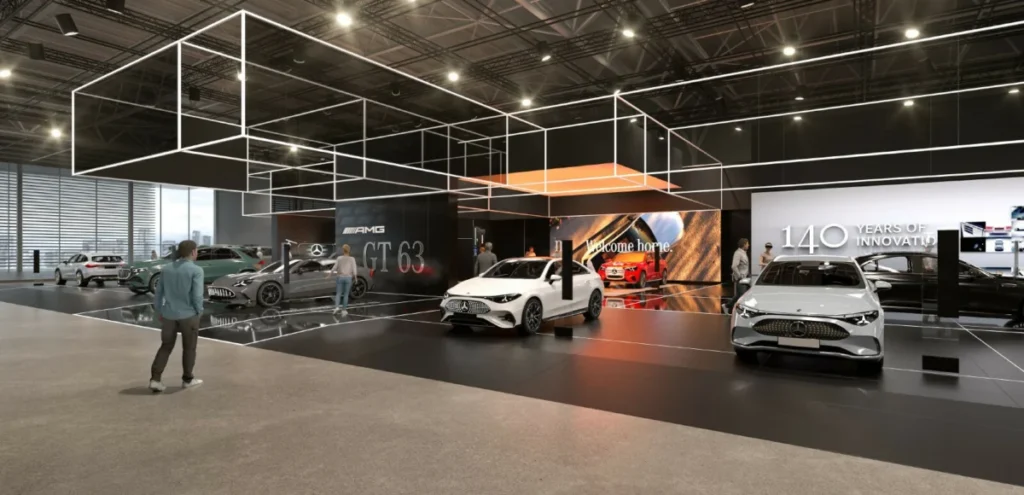
The 2026 Paris Motor Show, held at the historic Porte de Versailles, opened this week under a cloud of existential dread. With only 21 of the 49 expected manufacturers present, the event serves as a stark physical manifestation of the contraction currently gripping the European automotive industry. While the opening ceremony featured the customary ribbon-cutting, political grandstanding, and scripted speeches about reindustrialization, the atmosphere behind the polished facades was akin to a formal insolvency audit. The era of European dominance is not merely stalling; it is experiencing a painful, structural recalibration.
The Shrinking Footprint: A Snapshot of Industrial Decline
The physical layout of the 2026 Mondial de l’Auto is the most immediate indicator of the industry’s "hangover." A turnout of less than 50% capacity is not just a logistical detail; it is a signal of capital flight and strategic withdrawal. Two years ago, European executives viewed the rise of Asian competitors with a mixture of polite skepticism and the arrogance of heritage. They believed that a century of engineering prestige would provide an insurmountable moat.
Today, that moat has been drained. In the last twelve months alone, over one million vehicles assembled in Chinese coastal hubs have arrived at European ports like Antwerp and Bremerhaven. These imports have successfully carved out a 12% share of the European electric vehicle (EV) market. While European bureaucrats scramble to plug these leaks with protectionist tariffs, the industry’s executive suites are focused on survival, not innovation.
Chronology of a Crisis: From Hubris to Retrenchment
The erosion of the European automotive sector did not happen overnight, but the acceleration over the past twenty-four months has been breathtaking.
- 2024: The year of "polite irony." European manufacturers maintained their pricing power, relying on legacy brand loyalty to shield them from the influx of affordable Chinese EVs.
- 2025: The "Year of the Squeeze." Supply chain bottlenecks, coupled with the high cost of European energy and labor, led to the first widespread inventory build-ups. The "bonus écologique" in France was tightened, causing a 83% crash in the sales of key budget EVs like the Dacia Spring, forcing a radical shift in production strategy.
- 2026: The year of "Brutal Realignment." Volkswagen announces potential plant closures in Germany, and the industry pivots toward retro-marketing to hide the lack of competitive, mass-market electric platforms.
The Wolfsburg Warning: A Giant on the Brink
Perhaps nowhere is the malaise more palpable than at Volkswagen. Oliver Blume, who two years ago was affectionately referred to as "Olli" by trade union leaders at IG Metall, is now addressed with cold, bureaucratic formality as "Herr Blume."
The data emanating from Volkswagen’s internal analysis is damning. To maintain profitability in an era of high costs, the group is contemplating the most severe restructuring in its history: up to 100,000 job cuts. The threat of closing iconic production sites—Hanover, Zwickau, and Emden—is no longer a negotiation tactic; it is a looming reality. The cost disparity is the primary driver: assembling a vehicle in Emden incurs €4,850 in direct labor costs, compared to just €1,078 in the suburbs of Tianjin. When the discrepancy is nearly five-fold, the accountants have effectively already decided the outcome.
The "Heritage" Smoke Screen: Nostalgia as a Last Resort
Facing a void in modern, cost-competitive electric offerings, marketing departments have turned to "patrimonial recipes." By reviving the aesthetics of the past, manufacturers hope to distract consumers from the high price tags and technical shortcomings of their current fleets.
Citroën, for example, has unveiled a minimalist electric concept inspired by the legendary 2CV. While it aims to capture the hearts of the nostalgic, the reliance on a post-war rural icon to compete against high-tech, digitally integrated sedans from Shenzhen signals a desperate lack of contemporary ammunition.
Similarly, Audi has resurrected the A2 moniker. Once a niche, aluminum-bodied experiment, the new A2 is a compact SUV built on the underpinnings of the Volkswagen ID.3. It promises an impressive 646 kilometers of range, but at a price point of €38,600—a figure that demands nearly three years of minimum wage earnings for the average worker. This is a strange definition of "mass mobility" that leaves the middle class behind.
The Dacia Shuffle: Industrial Alchemy
In contrast to the stagnant legacy brands, Dacia has engaged in a masterful, if cynical, exercise in industrial logistics to bypass protectionist barriers. After the collapse of the Spring’s sales following the exclusion of Chinese-made cars from French subsidies, the brand effectively "de-Sinicized" its production chain.
The production was moved from the Hubei province to the Slovenian plant in Novo Mesto. The vehicle was redesigned in just 16 months by Renault’s Shanghai technical office, using a platform shared with the upcoming Twingo. The battery chemistry, though under license from the Chinese giant CATL, is sourced from Hungarian plants. The result? A €17,900 vehicle that is legally "European" enough to qualify for French environmental bonuses. It is a brilliant administrative bypass, but it highlights the absurdity of the current regulatory environment.
Stellantis and the Supply Chain Bottleneck
Stellantis occupies a precarious position. While they are pushing forward with the Fiat Grizzly—a €27,000 SUV aimed at the budget-conscious segment—their internal operations are paralyzed. Four French factories are currently operating at a fraction of their capacity, with workers on partial unemployment due to chronic shortages of battery cells from the ACC gigafactory in Billy-Berclau.
Antonio Filosa, at the helm of this operation, is effectively managing a system with "clogged pipes." Without a steady supply of local batteries, the grand political narratives of "European industrial sovereignty" sound increasingly hollow. Stellantis is, in many ways, a victim of a transition it cannot fully control.
Luxury and the Illusion of Innovation
The upper echelons of the market are no less immune to the industry’s identity crisis. Mercedes-AMG, for instance, presented its new GT 63 electric four-door. With 1,169 horsepower and a 0-100 km/h time of 2.4 seconds, it is a marvel of engineering. However, the price tag—starting at €203,050—includes a set of acoustic transducers designed to play a synthetic V8 soundtrack. Paying over €200,000 for a car that plays an MP3 file of a combustion engine while stuck in urban traffic is perhaps the ultimate irony of the 2026 automotive landscape.
The Geopolitical Paradox
The absurdity reaches its zenith at the Volvo stand, where the EX60 is presented as a triumph of Swedish engineering. While assembled in Torslanda with great pride, the reality remains that for the past sixteen years, every major patent, platform, and strategic decision has been directed from the Geely headquarters in Hangzhou. European labels are increasingly becoming empty vessels for Chinese intellectual property and capital.
Implications: A Future in Flux
The 2026 Paris Motor Show does not herald a miracle recovery. Instead, it serves as a wake-up call for an industry that has spent too long relying on heritage and not enough on efficiency.
The implications are clear:
- Consolidation: The number of European manufacturers will likely decrease as smaller players fail to achieve the necessary scale to compete with global, low-cost producers.
- Regulatory Failure: The current tariff and subsidy structures are being exploited by manufacturers through complex global supply chain maneuvers, failing to provide the intended protection for local industry.
- Consumer Disconnect: As manufacturers chase high-margin luxury segments and nostalgic concepts, they are losing the mass market to more affordable, tech-forward competitors.
As the curtains close on this year’s show, the industry faces a harsh winter. The quarterly balance sheets, once they arrive, will likely expose the full extent of the underutilized factories and the failed strategies of the past decade. On the tarmac of the dealerships, the customers have already stopped looking at the "Made in Europe" label as a guarantee—they are looking for value, technology, and availability. For the European giants, the time for "polite irony" has passed; the time for a radical reinvention has arrived.
