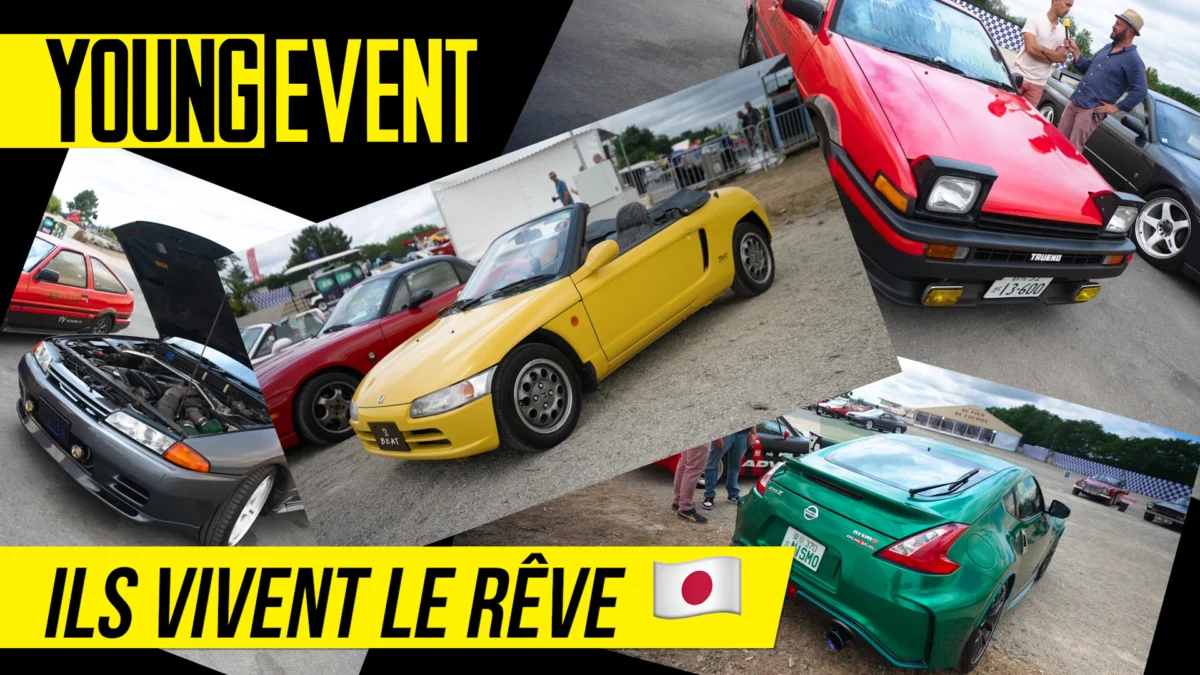
At the prestigious Le Mans Classic Legend 2026, amidst the roaring echoes of history and the scent of high-octane fuel, one group stood out not just for their machinery, but for the distinct cultural tapestry they brought to the circuit. They are the members of the OttoClub, a collective of enthusiasts who have elevated the appreciation of Japanese sports cars into a lifestyle that transcends mere gear-shifting and lap times.
Led by correspondent François-Xavier Basse, our latest feature dives deep into the heart of this movement, exploring why, decades after their inception, vehicles from Japan continue to command such fervent devotion.
The Genesis of the JDM Phenomenon
To understand the current obsession with Japanese Domestic Market (JDM) vehicles, one must look back to the "Golden Era" of the late 1980s and the 1990s. This was a period when Japanese manufacturers, flush with capital and technological prowess, engaged in a fierce engineering arms race.
The OttoClub members gathered at Le Mans represent a cross-section of this history. From the precision-engineered Mazda MX-5, which redefined the roadster, to the legendary Toyota Supra A80, which became a pop-culture icon, these cars were not merely products—they were statements of intent.
"The appeal isn’t just about speed," explains one club member. "It is about the holistic experience. When you drive a car from this era, you feel the direct connection between the engineer’s ambition and the driver’s hands. They were built with a unique philosophy: reliability paired with unrelenting performance."
Chronology of a Cult: From Niche Import to Global Icon
The journey of the Japanese sports car from the fringes of the automotive world to the center stage of collector culture was not overnight.
- 1970s – The Foundations: The arrival of the Datsun 240Z and early Celicas proved that Japan could build machines that were not just efficient, but engaging.
- 1980s – The Turbo Revolution: The introduction of forced induction systems, exemplified by the Toyota AE86 and the Nissan Skyline R31, signaled a shift toward high-performance tuning potential.
- 1990s – The "Golden Era": This decade birthed the giants. The Nissan Skyline GT-R (R32, R33, R34), the Honda NSX, and the Mazda RX-7 defined a generation. These cars were technologically advanced, featuring complex all-wheel-drive systems and twin-turbo configurations that embarrassed European supercars costing three times as much.
- 2000s – The Digital Age and Pop Culture: Through the lens of cinema and video games, these cars became global status symbols.
- 2020s – The Preservation Era: Today, we see the rise of the "Youngtimer" movement. Enthusiasts are now focused on meticulous restoration, preserving the legacy of these machines as they transition into true classics.
Beyond the Metal: An Art of Living
What makes the OttoClub unique is their rejection of the "car-only" paradigm. For them, the vehicle is the gateway to a broader appreciation of Japanese culture. A typical club meet is as likely to involve discussions on the nuances of manga culture, the intricacies of Japanese culinary traditions, or the aesthetic principles of Wabi-sabi—the acceptance of transience and imperfection—as it is to involve talks about camshafts.
This intersection of interests creates a community that is remarkably resilient. By treating the car as a cultural artifact rather than just a depreciating asset, members foster a sense of belonging that is rarely found in more traditional, high-end classic car circles.
Technical Mastery and the Question of Reliability
One of the primary drivers behind the enduring popularity of Japanese sports cars is the legend of their reliability. But how much of this is fact, and how much is myth?
According to the experts at the OttoClub, the durability of these vehicles is a testament to the "Kaizen" philosophy—continuous improvement. Even when pushed to the absolute limit, the drivetrain components of a 90s-era Nissan or Toyota were engineered with tolerances that allowed for significant modification without catastrophic failure.
However, maintenance in 2026 presents new challenges. With original parts becoming increasingly scarce, the community has turned to a combination of 3D printing, carbon-fiber fabrication, and a global network of specialized suppliers to keep these machines on the road. The dedication required to source a specific trim piece for an AE86 or a rare turbo-manifold for an R32 is, in itself, a badge of honor among enthusiasts.
Anecdotes from the Asphalt: The R32 Secret
During our filming, François-Xavier uncovered some of the "croustillantes" (crispy/juicy) anecdotes that only a deep-dive community can provide. A standout example involves the Nissan Skyline R32 GT-R.
Some owners, wary of specific regulatory hurdles in their home countries regarding front-mounted license plates, developed ingenious, motorized hide-away brackets. These were not just modifications; they were a subculture’s clever response to the rigid bureaucracy surrounding these cars. It is these human-centric stories—the cat-and-mouse games with authorities, the late-night tuning sessions, the cross-country road trips—that solidify the bond between driver and machine.
The Implications for the Collector Market
The rise of the Japanese collector car market has profound implications for the wider automotive landscape. As European marques become increasingly digitized and autonomous, the tactile, analog nature of the 1990s JDM icons becomes more attractive.
- Valuation: We have seen a steady, often exponential, increase in the value of "clean" examples. A stock, low-mileage Supra or RX-7 is now considered a blue-chip asset.
- Cultural Shift: The younger generation of collectors is moving away from traditional V8 muscle cars or heavy luxury cruisers, preferring the nimble, high-revving nature of Japanese engines.
- Sustainability: Paradoxically, by maintaining and driving these older cars, the OttoClub is promoting a form of automotive sustainability—extending the lifecycle of existing high-performance machines rather than contributing to the rapid churn of new-vehicle manufacturing.
Conclusion: The Ideal Garage
As the Le Mans Classic Legend 2026 winds down, the question remains: What constitutes the perfect Japanese garage? For some, it is the purist’s selection—an NSX for the weekend, an MX-5 for the B-roads, and a GT-R for the track. For others, it is about the emotional attachment to a single, well-loved model.
The true success of the OttoClub lies in its ability to keep the flame of the "Golden Era" burning bright. They remind us that an automobile is more than the sum of its parts; it is a vessel for history, a canvas for self-expression, and a bridge between cultures.
As we look toward the future, one thing is certain: as long as there are enthusiasts willing to turn a wrench, seek out rare parts, and share the story of their machine, the legend of the Japanese sports car will never fade.
What about you? If you had the keys to the perfect garage, which Japanese masterpiece would you choose to park inside? Join the conversation in the comments below, and don’t forget to subscribe to our channel for more deep dives into the world of automotive passion.
Key Data Points: A Quick Reference
| Model | Known For | Primary Appeal |
|---|---|---|
| Nissan Skyline R32 | "Godzilla" / All-wheel drive | Tuning potential & racing pedigree |
| Toyota Supra A80 | 2JZ Engine | Pop culture icon / Power ceiling |
| Mazda MX-5 (NA) | Lightweight handling | Purity of the driving experience |
| Honda AE86 | Drift culture | Mechanical simplicity & balance |
For more in-depth features on Youngtimers and the stories behind the most iconic cars in history, follow our ongoing series.