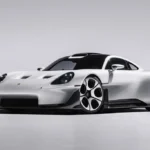
October 16, 2026 — In a strategic pivot that is sending shockwaves through the automotive world, Porsche has officially pulled the covers off its latest visionary concept: the Porsche Mission S. Revealed under the umbrella of the brand’s new "Sportwagenschmiede ’35" strategic roadmap, the Mission S does much more than preview Stuttgart’s future design language. It lays the groundwork for a permanent, series-production mid-engine supercar destined to sit proudly above the iconic 911.
After years defined by aggressive market expansion into volume-driven sectors with the Cayenne, Macan, Panamera, and the all-electric Taycan, Porsche is returning to its purest motorsport roots. For purists who feared the brand was losing its combustion-powered soul to mass electrification, the Mission S is nothing short of a revelation.
Main Facts: The Anatomy of the Porsche Mission S
The Porsche Mission S represents a fundamental shift in Stuttgart’s product strategy. Rather than existing as a low-volume, ultra-exclusive hypercar like its spiritual predecessor, the 918 Spyder, the Mission S points toward a dedicated, scalable mid-engine supercar platform.
Design Inspired by Endurance Legends
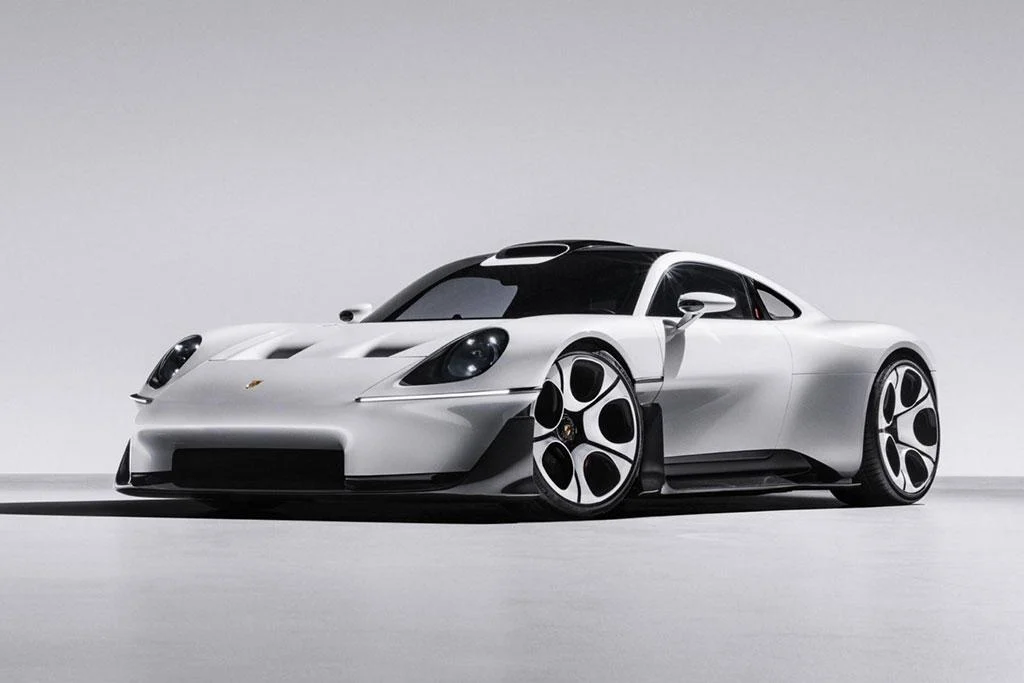
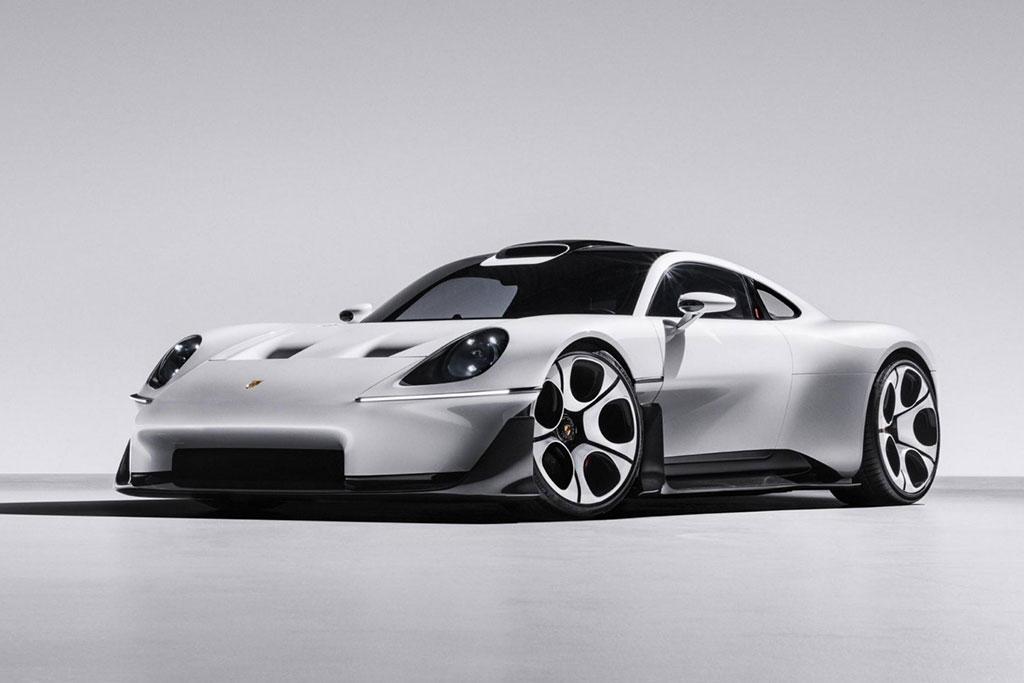
Visually, the Mission S cuts an aggressive figure that bridges Porsche’s glorious motorsport past with a bold, forward-looking aesthetic.
The Front Fascia: Clear visual cues are drawn from the legendary 911 GT1 endurance racer of the late 1990s, characterized by prominent front fenders, signature round light clusters, and an expansive central air intake.
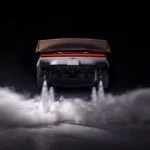
The Rear Profile: Historical nods continue at the tail end, where a centrally mounted cooling fan integrated into the engine cover instantly evokes the iconic Porsche 917. A seamlessly integrated active rear wing, a massive aerodynamic diffuser, and a quad-exhaust layout stacked vertically complete the aggressive rear facade.
A Driver-Centric, Analog-Digital Cabin
Inside, Porsche has outright rejected the industry-wide trend toward sprawling, tablet-heavy dashboards. The Mission S cockpit is remarkably minimalist and deeply focused on the act of driving.
Five digital instrument gauges pay direct homage to the classic 911 binnacle.
There is no central infotainment screen. Instead, Porsche has engineered a clever retractable dock allowing drivers to connect their smartphones via MagSafe for navigation and media needs.
The rest of the cabin relies heavily on tactile, physical architecture: aerospace-inspired toggle switches, a carbon-fiber gear selector, and deep bucket seats fitted with racing harnesses.
The Rumored Mechanical Heart: A Brand-New Flat-8
While Porsche remains tight-lipped regarding official powertrain specifications, industry insiders and engineering leaks point toward a groundbreaking development. Stuttgart’s powertrain division is reportedly developing an all-new, mid-mounted boxer eight-cylinder (flat-8) engine specifically for this platform.
While flat-8 architectures are not entirely unprecedented in the broader Porsche ecosystem—echoing independent creations like the RUF CTR3 B8—this would mark a monumental first for a series-production Porsche in modern history. Such a powerplant would instantly grant the upcoming supercar a distinct identity, a soul-stirring acoustic signature, and performance metrics sitting comfortably above the standard 911 hierarchy.
Chronology: The Road to the Mission S
To understand the weight of the Mission S announcement, one must trace the timeline of Porsche’s top-tier halo cars over the past decade:
2013–2015: Production of the 918 Spyder concludes. For years, Porsche stands without a technological flagship at the very peak of its portfolio, leaving a void at the top of the hypercar food chain.
Early 2020s: Porsche pivots heavily toward electrification, resulting in the launch of the Taycan and subsequent battery-electric vehicle (BEV) architectures.
Mid-2023: Porsche reveals the Mission X concept—a jaw-dropping, fully electric hypercar designed to conquer the Nürburgring. However, as global market dynamics shift and high-performance hybrid powertrains experience a powerful resurgence among elite collectors, the Mission X struggles to find a commercially viable business case for mass series production in its pure BEV format.
Late 2025 – Early 2026: Under the banner of the "Sportwagenschmiede ’35" strategy, Porsche’s board re-evaluates its high-performance roadmap. Engineering teams are redirected toward a combustion-hybrid or high-output internal combustion architecture capable of satisfying true driving enthusiasts.
October 16, 2026: The Mission S concept is officially unveiled, establishing the framework for a permanent mid-engine production supercar sitting above the 911.
Supporting Data: Market Context and Competitive Landscape
The timing of the Mission S is far from accidental. The high-end supercar and hypercar market has experienced a tectonic shift over the past 24 months. Traditional competitors have drawn battle lines, forcing Porsche to respond with a definitive statement of intent.
Manufacturer
Model
Powertrain Philosophy
Target Market
Ferrari
F80
V6 Twin-Turbo Hybrid
Ultra-exclusive flagship
McLaren
W1
V8 Twin-Turbo Hybrid
Next-gen hypercar
Porsche
Mission S (Concept)
Rumored Mid-Mounted Flat-8
Permanent Supercar Range (Above 911)
As data indicates, marquee rivals in Maranello and Woking have leaned heavily into hybridized combustion engines to deliver the visceral feedback that high-net-worth enthusiasts demand. Porsche’s realization that a pure-EV hypercar was premature for the die-hard collector base paved the way for the Mission S—a car built specifically to counter the F80 and W1 on equal emotional terms.
Official Responses and Executive Insights
While official press releases from Stuttgart have focused primarily on the design language and the "Sportwagenschmiede ’35" strategic framework, off-the-record briefings from Porsche insiders paint a vivid picture of internal corporate evolution.
"We have listened closely to our community," shared an anonymous source close to Porsche’s R&D department. "While electrification remains a cornerstone of our daily fleet compliance and urban mobility, a true Porsche supercar at the pinnacle of our range requires an emotional connection that transcends kilowatts. It needs a heartbeat, a mechanical voice, and an architectural purity that only a mid-engine layout can provide."
Furthermore, executives emphasize that the "Sportwagenschmiede ’35" initiative is designed to realign Porsche with the core values that built the brand: uncompromised driving dynamics, lightweight engineering philosophy, and timeless design that honors historical racing icons like the 917 and 911 GT1.
Implications: What the Mission S Means for the Future of Porsche
The unveiling of the Mission S carries deep strategic, financial, and cultural implications for the Stuttgart-based manufacturer.
1. Re-establishing the Brand Halo
For nearly a decade, critics argued that Porsche risked diluting its sports car heritage by chasing high-volume SUV and sedan segments with the Cayenne, Macan, and Panamera. While these vehicles funded the company’s financial success, the absence of a true spiritual successor to the 918 Spyder left a gap in the brand’s enthusiast hierarchy. The Mission S bridges that gap, providing a clear halo product that elevates the prestige of every lesser model in the showroom.
2. A Strategic Rejection of Monolithic Electrification
Porsche’s initial push toward an all-electric sports car lineup faced headwinds from shifting consumer demand and regulatory adjustments. By developing a flexible architecture capable of housing a high-output internal combustion engine—or potentially an advanced hybrid-assisted flat-8—Porsche is safeguarding its relevance among traditional petrolheads without abandoning its long-term decarbonization goals.
3. Setting the Stage for Production
If the production version of the Mission S stays true to the concept’s core tenets—retaining its motorsport-derived styling, analog-focused cabin, and the rumored flat-8 engine—Porsche will have engineered one of the most significant driver’s cars of the 21st century. It signals to the automotive industry that the analog soul of the supercar is far from dead; it is merely evolving.
Related Porsche News
Manthey Racing Celebrates 30 Years with Exclusive Track Specials
To mark three decades of motorsport excellence and engineering mastery, Manthey Racing has unveiled a strictly limited run of just 30 units split across two exclusive race-bred machines: the Porsche 911 GT3 Cup MR-30 and the 718 Cayman GT4 RS Clubsport MR-30. These anniversary specials push aerodynamic and suspension tuning to the absolute limit, cementing Manthey’s legendary status in the Porsche tuning ecosystem.
Carpoint Transforms the Porsche 944 into a Luxury Shooting Brake
German restomod specialist Carpoint has turned heads with the introduction of the GT-K44, a radical transformation of the classic Porsche 944 into a breathtaking luxury shooting brake. Marrying classic 1980s transaxle proportions with modern bespoke craftsmanship, the GT-K44 proves that the appetite for creative Porsche restomods remains insatiable.
Porsche Strengthens Ties with Manthey Racing via Majority Stake
In a move designed to secure its competitive edge in global GT racing and track-day engineering, Porsche has officially taken controlling ownership of Manthey Racing. By increasing its financial stake in the Meuspath-based enterprise, Porsche ensures that future track-focused road cars will benefit even more directly from Manthey’s unparalleled Nürburgring expertise.