

By Audric Doche
Enriched Automotive Analysis
Main Facts
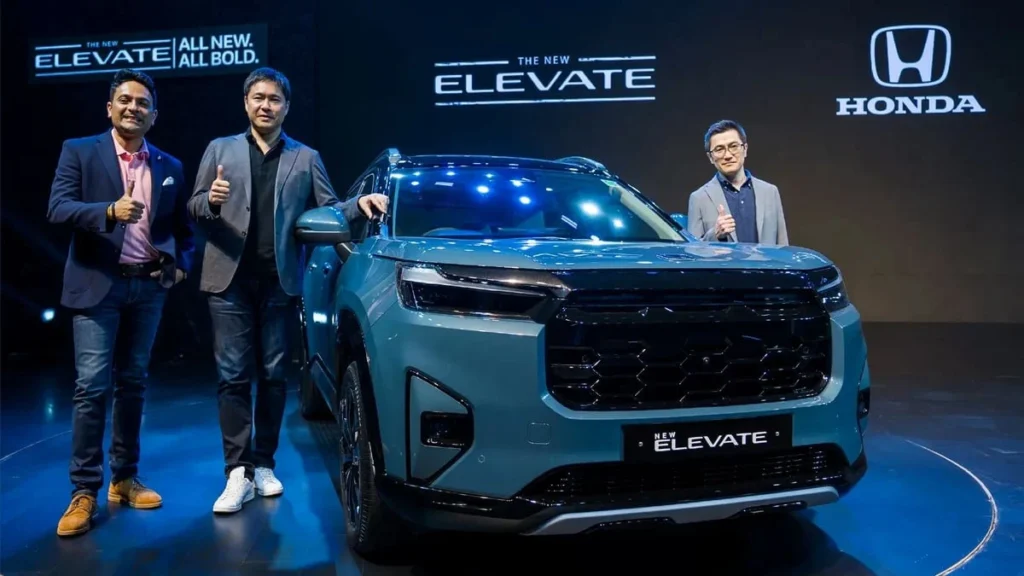
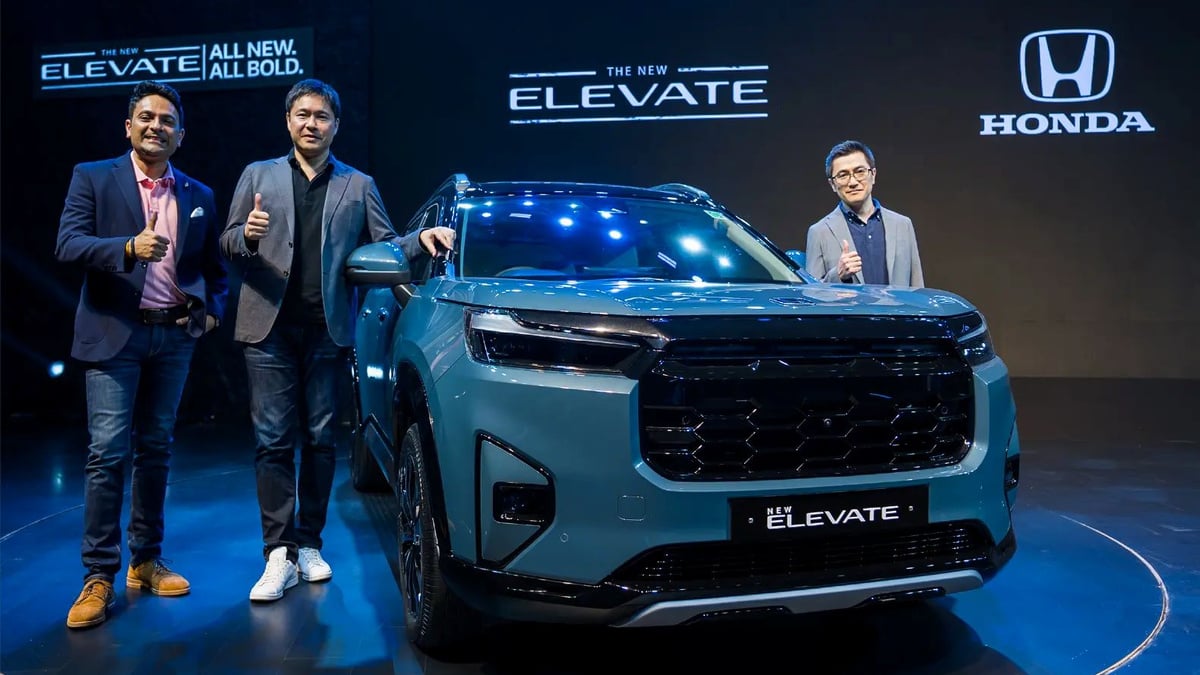
In an era where the European automotive market is plagued by soaring prices, tightening environmental regulations, and dwindling affordable options, the reality in other parts of the world paints a starkly different picture. Enter the refreshed Honda Elevate—a compact SUV with dimensions nearly identical to a Peugeot 2008 or a Renault Captur. Manufactured in India and recently treated to a comprehensive 2026 restyling, this vehicle starts at an astonishing 11,000 to 13,000 euros, with even its most opulent, fully-loaded top-tier trim topping out at a mere 17,300 euros.
To put this into perspective for European consumers, 11,000 euros barely buys a stripped-down, bare-bones entry-level city car on the continent. Yet, the Honda Elevate is far from a hollow shell. It pairs the legendary reliability of a Honda powertrain with modern styling, high-end comfort features typically reserved for luxury segments, and a robust build designed to handle grueling driving conditions.
However, the vehicle’s jaw-dropping price tag is not a miraculous act of charity by the Japanese manufacturer. Rather, it is the product of a specific economic ecosystem: low local labor costs, hyper-localized supply chains exceeding 90% domestic sourcing, and an absence of punitive emissions regulations that force complex, expensive engineering solutions. While the Elevate serves as a global export hub for Honda—shipping to markets across South Africa, Latin America, and even Japan under the WR-V moniker—it exposes a massive chasm between Western and emerging-market motoring realities.
Chronology: From Concept to Global Export Hub
The journey of the Honda Elevate and the broader strategy of manufacturing ultra-affordable, high-value SUVs for emerging markets follows a distinct timeline shaped by globalization and regional economic shifts:
- Pre-2023 (Development Phase): Honda identifies a massive, rapidly expanding demand for compact SUVs in emerging markets, particularly India. Japanese engineers design a dedicated platform tailored to local preferences—prioritizing cabin space, high ground clearance, and robust mechanical simplicity over complex, costly electrification.
- Late 2023 (Initial Indian Launch): The Honda Elevate makes its commercial debut in India. It hits the ground running, instantly capturing consumer attention by undercutting established local rivals and offering traditional Honda durability at an unbeatable price point.
- 2024–2025 (Global Expansion): Capitalizing on the success of its Rajasthan manufacturing plant, Honda begins exporting the vehicle to various international markets. It is rebranded as the Honda WR-V in Japan and finds immense success across developing economies in Africa and Latin America, driving down research and development costs through sheer economies of scale.
- October 2026 (The Comprehensive Restyling): Honda introduces a major refresh for the Elevate. The 2026 model receives exterior styling tweaks—including a redesigned front grille and new interconnected LED rear light bars—alongside a massive technological and comfort upgrade for its flagship trims, proving that affordability does not necessitate asceticism.
Supporting Data: The Economics of Low-Cost Manufacturing
How is it financially viable to produce a fully equipped, robust SUV for the price of a used European city car? The answer lies in hard economic data concerning labor, logistics, and mechanical architecture.
1. The Labor Cost Discrepancy
The foundational pillar of the Elevate’s low price tag is labor arbitrage. In India, an automotive technician or assembly line worker earns an average monthly wage of 350 to 400 euros for a standard 48-hour work week. This figure is roughly six to seven times lower than the wages commanded by equivalent workers in Japan or Western Europe. This massive structural difference directly compresses assembly costs, rippling down through every local sub-contractor and component manufacturer.
2. Hyper-Localization of the Supply Chain
More than 90% of the components used to build the Honda Elevate are sourced and manufactured directly within Indian territory. By eliminating cross-border shipping logistics for parts and avoiding steep import tariffs, Honda streamlines its supply chain to a degree impossible for vehicles built in Europe for the European market.
3. Mechanical Simplicity vs. Regulatory Overhead
Under the hood, the 2026 Honda Elevate maintains a classic, highly reliable powertrain: a 1.5-liter i-VTEC naturally aspirated gasoline engine delivering 119 horsepower.
- No Expensive Hybrids: Unlike Europe, where stringent anti-pollution regulations force automakers to invest heavily in complex, expensive hybrid systems or turbocharged setups, India’s regulatory framework permits the continued use of this naturally aspirated, fully amortized engine block.
- Cost Amortization: Because the 1.5 i-VTEC engine has been utilized across multiple global Honda models for years, its development costs were written off long ago, preserving profit margins while keeping the final retail price rock-bottom.
4. Pricing Tier Breakdown (2026 Restyling)
- Entry-Level Trim: €11,000 – €13,000 (dependent on currency exchange rates)
- Flagship ZX Plus Trim (Fully Loaded): Up to €17,300, which includes:
- Power-adjustable front seats
- Ventilated front and rear seats (an extraordinary luxury at this price point)
- 360-degree camera system
- Advanced Driver Assistance Systems (ADAS), including adaptive cruise control and lane-keeping assist.
Official Responses and Industry Context
The strategy deployed by Honda in India is not isolated. Industry giants like Suzuki (via its Maruti subsidiary) have long mastered the art of dominating the Indian sub-continent through hyper-localized manufacturing and deep market understanding. Maruti Suzuki commands a dominant market share by consistently offering affordable, utilitarian vehicles tailored explicitly to the purchasing power of the local population.
Conversely, Western automakers attempting to penetrate this lucrative space have faced severe hurdles. Brands like Renault have poured significant resources into cracking the Indian market with localized models, yet sales figures remain remarkably low. Cultural preferences, fierce domestic competition, and a distinct lack of brand heritage in the value segment have caused several European ventures to stumble.
Honda, by contrast, leveraged its reputation for bulletproof mechanical reliability to build an export powerhouse. The manufacturing facility in Rajasthan does not merely serve domestic buyers; it functions as a global export nexus. Shipping these vehicles in massive volumes to South Africa, Latin America, and even back to the home market of Japan allows Honda to spread fixed costs across hundreds of thousands of units.
Implications: Why Europe Will Never See the €11,000 Elevate
For European drivers gasping at the continuous inflation of new car prices—where basic hatchbacks now routinely clear the 20,000 to 25,000 euro mark—the existence of the Honda Elevate feels like a tantalizing tease. However, automotive experts confirm that hoping to see this SUV in European showrooms for 11,000 euros is a pipe dream.
If Honda were to import the Elevate into Europe, the vehicle would immediately face an insurmountable regulatory and fiscal wall that would obliterate its low pricing structure:
- The Environmental Penalty (Malus Écologique): The naturally aspirated 1.5-liter engine, while clean enough for Indian standards, would face crushing carbon penalties under European tax structures. To survive, Honda would be forced to engineer and integrate an expensive e:HEV full-hybrid powertrain.
- Structural and Safety Overhauls: The baseline structural integrity of the Indian-market Elevate would need heavy reinforcement to pass the notoriously stringent Euro NCAP crash tests.
- Mandatory Electronic Regulations: Europe’s General Safety Regulation 2 (GSR2) mandates a slew of active safety technologies as standard equipment—including intelligent speed assistance, drowsiness detection, and cyber-security systems—none of which are baked into the base model’s entry price.
The Inevitable Price Inflation
When these required safety enhancements, structural modifications, and cleaner powertrains are added up, industry analysts estimate they would inflate the vehicle’s retail price by nearly 10,000 euros.

Consequently, an "Europeanized" Honda Elevate would cost upwards of 21,000 to 23,000 euros. At that price point, it would no longer disrupt the market; instead, it would collide directly with Honda’s existing European lineup—positioning itself right alongside the Honda Jazz city car, and undercutting the larger, more expensive HR-V by a very slim margin.
Ultimately, the Honda Elevate stands as a brilliant monument to engineering efficiency and globalization, but it also serves as a stark reminder of how regulatory burdens and high labor standards have permanently altered the cost of personal mobility in the West.
