

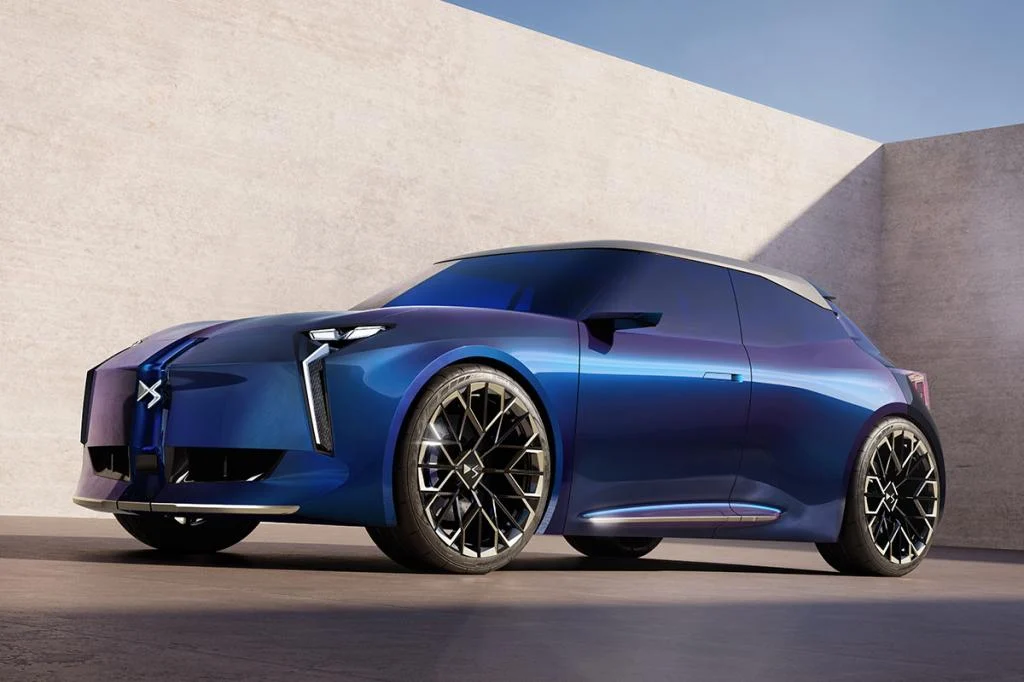
Paris — In the grand tradition of French automotive haute couture, DS Automobiles has once again used home turf to make a definitive statement about the future of design, technology, and brand identity. Debuting at the Mondial de l’Automobile de Paris on October 12, 2026, the brand’s latest creation—the DS F3VER concept car—transcends the traditional boundaries of an auto show styling exercise.
Positioned as a rolling laboratory and a visionary manifesto, the F3VER is engineered to explore three fundamental pillars of the brand’s roadmap: absolute desirability, hyper-personalization, and complete freedom of usage. Beyond merely turning heads under the exhibition hall lights, this striking compact prototype introduces a radical new design language and a streamlined engineering philosophy destined to cascade down into upcoming production models.
Main Facts: Anatomy of the DS F3VER
At first glance, the DS F3VER commands attention through proportions that break new ground for the French premium manufacturer. Measuring 4.19 meters in length, 1.84 meters in width, and standing 1.46 meters tall, the vehicle adopts a remarkably compact yet assertive footprint.
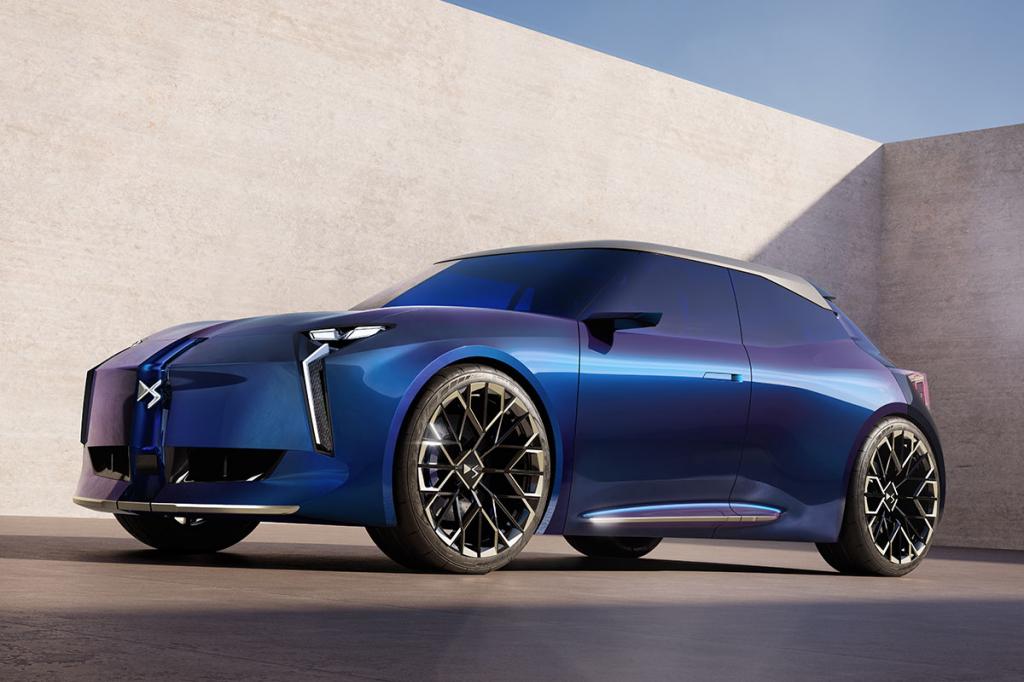
The front fascia is anchored by a dramatic new vertical "totem" housing the illuminated DS emblem, flanked by a brand-new Y-shaped lighting signature that redefines the face of future DS vehicles. At the rear, the vehicle marries digital technology with emotive design, utilizing a digital totem paired with an intricate three-dimensional lighting array. Composed of 16 individual LED panels, this rear light setup creates a striking sense of visual depth. DS designers note that the pattern draws subtle inspiration from the iconic architectural ironwork of the Grand Palais, while offering a sentimental nod to the very first DS3—the ground-breaking hatchback launched in the era of Citroën chevrons.
Despite its avant-garde styling, the F3VER is built on a practical foundation. A generous 2.70-meter wheelbase and a 400-liter cargo capacity ensure that the vehicle bridges the gap between sculptural desirability and everyday family usability.
Chronology: The Evolution of DS Design Thinking
The unveiling of the F3VER at the Paris Motor Show represents the latest chapter in a carefully orchestrated narrative of design resurgence for DS Automobiles. To understand the significance of the 2026 concept, one must look at how the brand has steadily cultivated its avant-garde identity over recent years:

- June 2022: DS launches the heavily revised DS 7 E-TENSE 4×4 360, dropping the "Crossback" moniker and asserting a more muscular, performance-oriented aesthetic for its presidential SUV.
- September 2024: The DS DESIGN STUDIO PARIS unveils the breathtaking SM Tribute concept, proving that the styling teams could brilliantly reimagine a legendary Citroën classic through a modern luxury lens.
- January 2026: At the Brussels Motor Show, the Taylor Made N°4 Concept is revealed, focusing heavily on bespoke craftsmanship and celebrating localized luxury.
- October 2026: The debut of the DS F3VER at the Paris Motor Show. Rather than looking backward into heritage like the SM Tribute, the F3VER looks fiercely forward, setting the concrete styling and structural blueprint for the brand’s next generation of production vehicles.
Supporting Data & Technical Innovations
Hyper-Personalization and the "Cosmic Blue" Paintwork
Personalization has sat at the very heart of DS Automobiles’ strategy since day one. The F3VER takes this philosophy to unprecedented lengths by introducing a customizable roof arch (anneau de pavillon), which serves as a floating, signature design element that owners can tailor to their aesthetic tastes.
Furthermore, the exterior finish relies on an exclusive new paint formula dubbed Cosmic Blue. Under changing ambient light conditions, this complex coating shifts dynamically between deep shades of electric blue and rich violet. The two-tone treatment has also been evolved: instead of breaking strictly at the beltline or A-pillar, the color separation extends all the way to the rear quarters, fundamentally altering how the human eye perceives the vehicle’s volume and stance. Even the digital rear lighting animations can be personalized via the rear totem interface.
Design Intelligence: Less Is More
Beneath the striking aesthetics lies a revolutionary manufacturing and structural approach that DS terms Design Intelligence. Faced with the dual pressures of weight reduction, efficiency, and perceived quality, the brand’s engineers re-engineered how a modern car is put together.

Design Intelligence focuses explicitly on reducing the total component count and simplifying overall architecture. Key technical implementations visible on the F3VER include:
- Monoblock Bumpers: Seamless, single-piece front and rear bumper assemblies that eliminate clumsy panel gaps.
- Eradication of Appliqués: The widespread removal of tacked-on plastic exterior cladding in favor of cleaner, integrated body surfaces.
- Compact Illumination Modules: Optical functions are condensed into smaller, highly efficient clusters, allowing for smoother body panels and minimized visual clutter.
- Concealed Assembly Lines: Panel joins and fasteners are hidden or integrated directly into the design contours, elevating the car’s visual cleanliness to a near-monolithic standard.
Official Responses and Strategic Vision
Speaking at the Paris Motor Show, brand representatives emphasized that the F3VER is much more than a fleeting show car. It is a strategic statement of intent designed to solidify DS Automobiles’ unique positioning within the broader Stellantis portfolio.
As a premium marque operating in a heavily contested European landscape, DS must constantly justify its existence through differentiated emotional value. Company executives confirmed that while the exact silhouette of the F3VER may not translate verbatim to a showroom floor, its core DNA is already locked into the production pipeline.

The brand’s official statement highlights that the new Y-shaped lighting signature, the customizable roof architecture, the "Design Intelligence" manufacturing ethos, and the expanded personalization catalog are direct precursors to the next wave of production cars. By moving toward a more statuesque, emotional, and streamlined design language, DS aims to distance itself from mainstream volume brands while carving out a distinctively French interpretation of future luxury mobility.
Implications: The Future of the Brand and European Premium Segments
The unveiling of the DS F3VER carries profound implications for both the brand and the broader automotive industry:
- Refining the Stellantis Hierarchy: Within Stellantis, DS occupies the high-end luxury and avant-garde niche. Concepts like the F3VER prove that management is willing to give the design teams creative freedom to experiment with radical proportions and manufacturing efficiency, ensuring DS does not simply badge-engineer shared platform components.
- The Shift Toward Sustainable Simplicity: Through the Design Intelligence concept, DS is addressing a major critique of modern automotive styling: visual clutter and over-reliance on cheap plastic trim. By proving that premium status can be achieved through minimalist, monolithic surfaces and fewer parts, DS is pointing the way toward more efficient manufacturing cycles.
- The Compact Luxury Paradigm: At just 4.19 meters long, the F3VER demonstrates that high-end luxury, advanced personalization, and generous interior packaging (400-liter boot) can successfully migrate into a compact footprint—a crucial consideration for urbanized European markets transitioning toward electric and space-efficient mobility solutions.
As the curtains close on the Paris Motor Show, the DS F3VER remains one of the most daring, thought-provoking concepts on the floor. Whether its bold stylistic strokes and structural innovations can successfully survive the rigorous gauntlet of mass production will determine the ultimate trajectory of DS Automobiles as it navigates the next decade of European premium motoring.
