

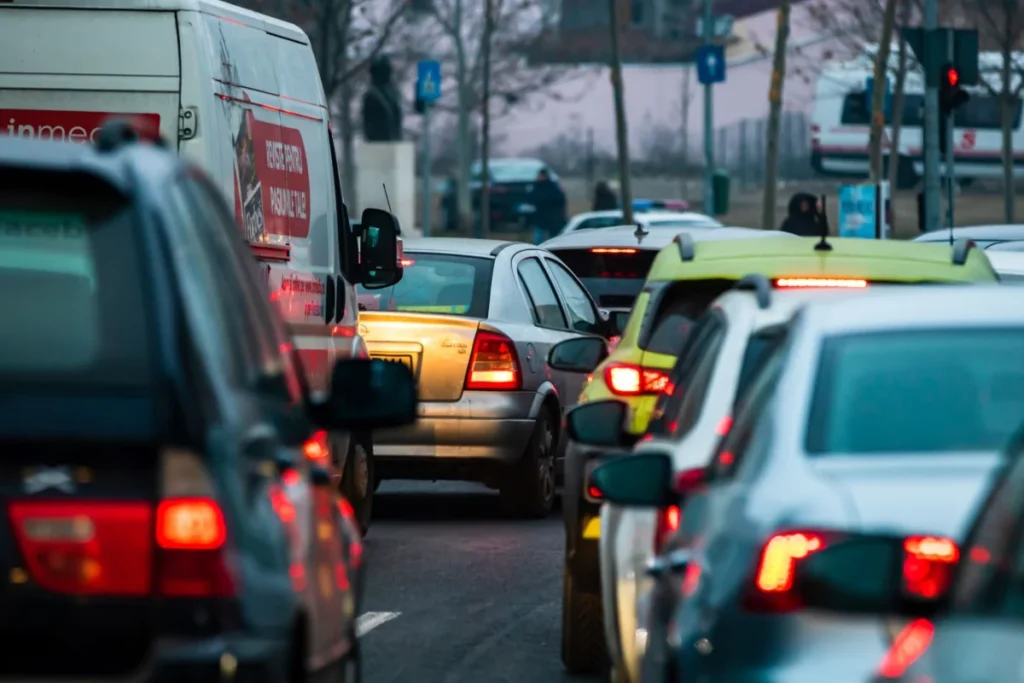
In the intricate ballet of modern logistics, the speed of a delivery van is often secondary to the reliability of its arrival. A new, comprehensive study released by Geotab, a global leader in connected transportation solutions, has shed light on the paradoxical reality of urban freight in Europe. While Paris is often the subject of debate regarding its traffic congestion, the Geotab report suggests a more nuanced narrative: the French capital is not necessarily the most congested city, but it is one of the least efficient for professional fleets, primarily due to the "permanent" nature of its traffic patterns.
Main Facts: The Cost of Urban Gridlock
The Geotab report, which evaluates the efficiency of urban freight across major European capitals, places Paris in a precarious position. With a performance score of just 37 out of 100, the city lags significantly behind leaders such as Berlin (61) and Amsterdam (59). The study highlights a striking disparity: there is a 144% difference in operational efficiency between the top-performing and bottom-performing cities in the index.
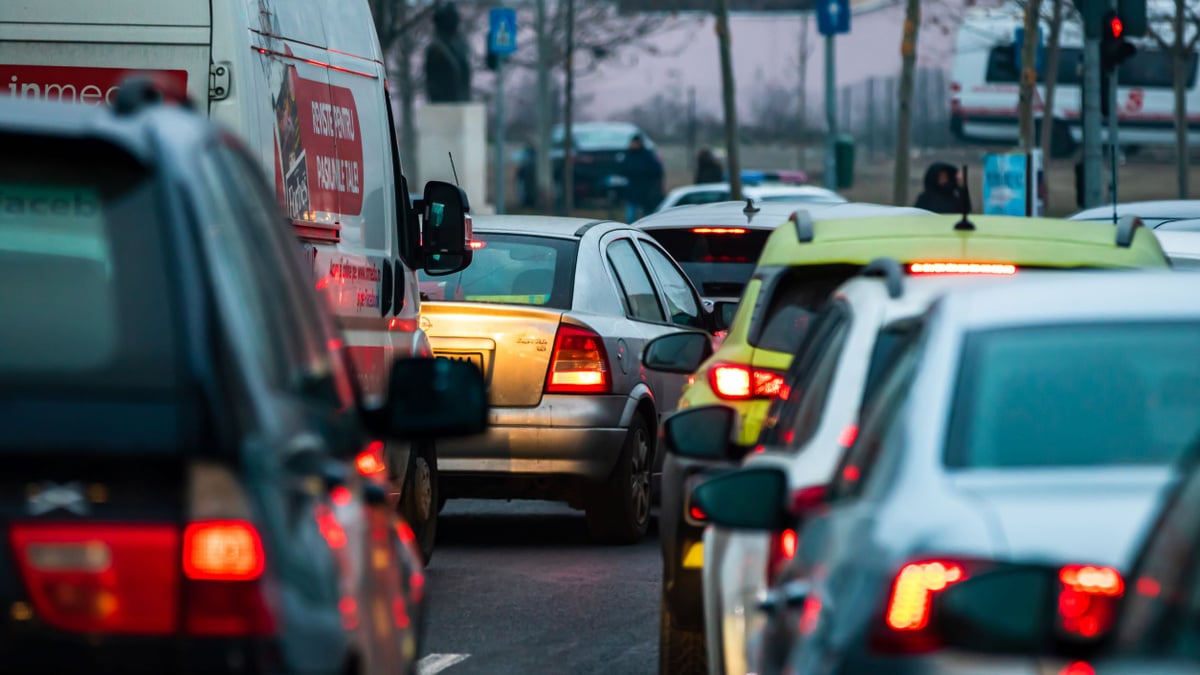
Crucially, this study does not focus on the individual commuter. Instead, it isolates the experiences of professional transport fleets—utility vehicles, last-mile delivery services, and heavy goods vehicles (HGVs). For these operators, time is literally money. In Paris, the data indicates that congestion is no longer a localized phenomenon occurring only at peak hours; rather, it has become a constant, pervasive condition of the workday.
A Chronology of Declining Fluidity
The transformation of Parisian traffic is not a recent phenomenon, but rather the culmination of a decade of shifting urban policies.
- 2014–2018: The city began an aggressive campaign to reduce private vehicle reliance, implementing "pedestrianization" zones and expanding cycling infrastructure. While successful in reducing the volume of personal cars, the impact on professional arterial routes remained volatile.
- 2019–2021: The COVID-19 pandemic temporarily emptied the streets, providing a baseline of what an efficient city could look like. However, as the world reopened, the rise of e-commerce surged, leading to an unprecedented increase in delivery vehicles on already constrained streets.
- 2022–2024: Professional logistics adapted to a "new normal." According to the Geotab index, Paris reached a saturation point where traffic became so predictably sluggish that companies began to bake these delays into their operational costs.
- 2025: The current status quo, as identified by the report, shows that while Paris has improved in terms of predictability, it has failed to regain the efficiency required for modern, agile logistics.
Supporting Data: The "Stability" Trap
Perhaps the most surprising finding in the report is the metric of "variability." Paris scored an index of 83 for time-of-trip stability. In data science, high stability is usually a positive indicator. However, in the context of Parisian traffic, it signifies that the jams are so consistent that they have become a reliable, albeit slow, constant.
Comparison of European Efficiency Scores
| City | Efficiency Score (out of 100) |
|---|---|
| Berlin | 61 |
| Amsterdam | 59 |
| Dublin | 49 |
| Rome | 48 |
| Paris | 37 |
| London | 29 |
| Madrid | 25 |
While Madrid and London suffer from lower overall scores, Paris serves as a case study for "structural congestion." The data suggests that when traffic is unpredictable—as it is in London—logistics managers cannot plan effectively, leading to massive resource waste. In Paris, the "predictable" nature of the congestion allows companies to adapt, yet the underlying inefficiency remains a tax on the city’s economic productivity.
Official Responses and Industry Perspectives
Logistics associations and urban planning experts have responded to the Geotab data with a call for structural reform rather than mere traffic management.
Industry leaders in the Ile-de-France region argue that the current infrastructure is forcing a "night-shift" economy. Because delivery vehicles struggle to move during daylight hours, there is a mounting pressure to move more freight into the late evening and early morning windows. "We are effectively operating in a constrained cage," says a spokesperson for a major national courier service. "We have optimized our routes to the point of exhaustion, but we cannot overcome the physical limits of the current urban layout."
Urban planners, on the other hand, defend the policy of reducing private car traffic, noting that if the city were to revert to older, car-centric designs, the "predictability" would vanish, replaced by total gridlock. They argue that the solution lies in "micro-hubs"—small, decentralized centers where goods can be transferred from heavy trucks to cargo bikes or electric micro-vehicles, bypassing the arterial congestion entirely.
Implications: The "Structural Tax" on Business
The implications of the Geotab findings are profound, affecting everything from the price of a loaf of bread to the speed of medical supply chains.
1. The Financial Burden
When a delivery van spends two hours in traffic, the cost is not just fuel; it is the opportunity cost of the driver’s time, the vehicle’s depreciation, and the potential for late penalties. This is what the report identifies as a "structural tax." Businesses in Paris are essentially paying a premium to exist in a city where movement is fundamentally inefficient.
2. The Logistical Pivot
Companies are now forced to use advanced AI-driven routing software to manage the Parisian "predictability." This shift requires significant capital investment, which puts smaller, local couriers at a disadvantage compared to multinational logistics giants. This risks a monopolization of the urban delivery market, as only large players can afford the tech stack required to navigate the city’s unique constraints.

3. Sustainability versus Efficiency
There is a tension between the city’s green goals and its logistical efficiency. Many of the measures intended to make Paris greener (such as narrow lanes and restricted access) inadvertently slow down freight. The challenge for the next five years will be integrating these goals: can Paris become a "15-minute city" for residents without becoming a "5-hour city" for logistics?
Conclusion: Looking Toward the Future
The Geotab report serves as a wake-up call for municipal authorities. While the predictability of Parisian traffic offers a strange kind of comfort to logistics managers, it is a low bar for a major global capital. To move from a state of "predictable stagnation" to "dynamic efficiency," the city must invest in smarter, multi-modal infrastructure.
Moving forward, the success of Parisian logistics will depend on the integration of data-driven traffic management and the continued transition toward sustainable, small-scale transport solutions. As the city prepares for future urban expansion, the goal must be to dismantle the "structural tax" and restore the fluidity that is essential for a thriving, modern economy. For now, the lesson is clear: in the race to be a world-class city, moving slowly is no longer an option, no matter how predictable the delay may be.
