

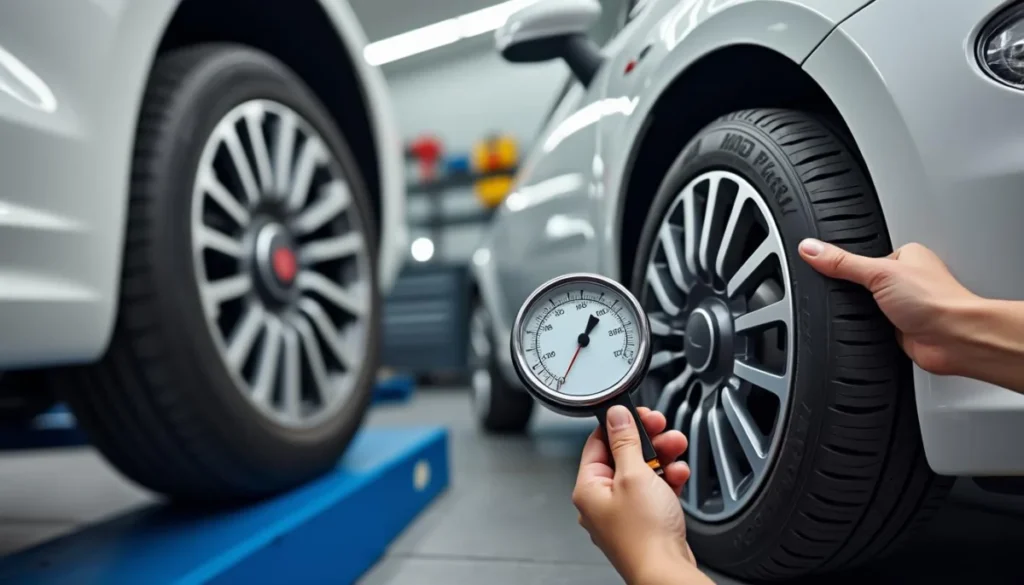
Maintaining the correct tire pressure on your Fiat 500 is not merely a routine chore; it is a fundamental pillar of automotive ownership that dictates your vehicle’s safety, efficiency, and longevity. As an iconic city car that demands agility and precision, the Fiat 500 relies heavily on its four contact patches to manage everything from sudden urban braking to highway stability.
This comprehensive guide explores the technical requirements, the physics of tire inflation, and the long-term implications of proper maintenance for every Fiat 500 owner.
Main Facts: The Criticality of Proper Inflation
The tire pressure of a Fiat 500 typically fluctuates between 2.0 and 2.5 bars, depending on the specific engine variant, tire dimensions, and load requirements. It is a common misconception that tire pressure is a "set and forget" metric. In reality, tires are dynamic components that react to ambient temperature, road surface friction, and the weight distribution of the vehicle.
Why Pressure Matters
- Safety and Handling: Correct inflation ensures that the tire’s tread pattern sits flat against the asphalt. Under-inflation leads to tire squirm in corners, while over-inflation reduces the contact patch, leading to a loss of traction.
- Fuel Efficiency: A tire under-inflated by even 0.5 bars increases rolling resistance, which can force your engine to work harder, increasing fuel consumption by up to 10%.
- Tire Longevity: Tires are expensive. Consistent, improper pressure causes uneven wear—either at the edges (under-inflation) or in the center (over-inflation)—shortening the life of your rubber by thousands of kilometers.
Chronology: The Lifecycle of a Tire and Pressure Maintenance
To understand the importance of pressure, one must look at the "chronology" of a tire’s service life.
- Initial Setup (0–5,000 km): During the break-in period of a new Fiat 500, tire pressure should be checked every two weeks. New tires are prone to slight seating adjustments on the rim.
- The Monthly Ritual (Ongoing): We recommend a monthly check. Air permeates through rubber over time, meaning even a perfectly healthy tire will lose pressure gradually.
- Seasonal Transitions: As ambient temperatures drop, air contracts, leading to lower pressure readings. Conversely, summer heat causes air to expand. A check is mandatory whenever the season changes.
- The Pre-Trip Inspection: Before any long journey, especially with a full load of passengers or luggage, the tire pressure must be adjusted to the "heavy load" specifications found in your manual.
Supporting Data: The Physics of Performance
Data from independent automotive testing agencies highlights the staggering difference between a "well-maintained" tire and a "neglected" one.
The Braking Distance Correlation
Tests demonstrate that a Fiat 500 traveling at 90 km/h with tires under-inflated by 0.5 bars requires an additional 5 to 10 meters to come to a complete stop compared to a vehicle with the manufacturer’s recommended pressure. In an urban environment where split-second reactions are required, this difference is the margin between a safe stop and an accident.
Consumption Metrics
Field studies show that a Fiat 500 maintained at the correct pressure realizes an average fuel saving of approximately 0.3 liters per 100 kilometers. While this may seem marginal, over the 50,000 km lifespan of a set of tires, this represents a significant reduction in both cost and CO2 emissions.
Official Recommendations and Manufacturer Guidelines
Fiat provides specific pressure values for each version of the 500. These values are not suggestions; they are engineering requirements. You can locate these figures in two primary locations:
- The B-Pillar/Door Jamb: Upon opening the driver’s side door, look for a placard on the frame. This is the primary reference point.
- The Owner’s Manual: For specialized load conditions (such as towing or full passenger capacity), the manual provides the definitive table.
Pressure Reference Table
| Fiat 500 Model | Tire Size | Front (bar) | Rear (bar) | Typical Use |
|---|---|---|---|---|
| 1.2 Gasoline | 185/55 R15 | 2.2 | 2.0 | Daily/Urban |
| 1.4 Sport | 195/45 R16 | 2.3 | 2.1 | Dynamic |
| 500e (Electric) | 185/50 R16 | 2.4 | 2.2 | Mixed |
| 500C Cabriolet | 185/55 R15 | 2.2 | 2.0 | Leisure |
Note: Always adjust pressure when tires are "cold"—at least three hours after driving or after less than 3 km of low-speed travel.
Implications of Neglect: Real-World Experiences
We spoke with "Julien," a daily Fiat 500 driver, who experienced the consequences of neglect firsthand. During a long-distance road trip, he ignored a "soft" tire warning. Within 300 kilometers, the tire had suffered irreversible sidewall deformation due to heat buildup, necessitating an emergency replacement.
"I thought it was just a minor inconvenience," Julien admitted. "But that minor oversight ended up costing me the price of a new tire and ruined my weekend schedule. Since then, I’ve kept a digital pressure gauge in my glove box."
The Economic Ripple Effect
Neglecting tire pressure creates a cascade of costs:
- Direct Cost: Premature replacement of tires.
- Indirect Cost: Increased fuel consumption.
- Hidden Cost: Potential suspension damage due to the tire’s inability to absorb road impacts correctly.
Best Practices for Tire Maintenance
Beyond pressure, the health of your Fiat 500’s tires involves a holistic approach to maintenance.
1. The "Penny Test" (Tread Depth)
Ensure your tread depth is above the legal minimum (1.6mm). However, for safety in wet conditions, we recommend replacing tires once they hit 3mm.
2. Alignment and Balancing
If your Fiat 500 pulls to one side or the steering wheel vibrates at high speeds, your tires may be misaligned or out of balance. This causes "scalloping" or uneven wear that no amount of pressure adjustment can fix.
3. Visual Inspections
Inspect your tires for "bubbles" or bulges in the sidewall, often caused by hitting curbs. These represent a structural failure and are an immediate safety hazard.
4. Valve Stem Health
Sometimes the air leak isn’t the tire, but the valve stem. If you notice a tire consistently losing pressure, have your mechanic replace the valve core.
Conclusion: The Path to Safer Driving
The Fiat 500 is a vehicle designed for enjoyment and ease of use. By integrating a simple, monthly tire pressure check into your routine, you are taking a proactive step toward protecting your investment and ensuring the safety of your passengers.
Remember: A well-maintained tire is the only thing keeping your car connected to the road. Do not wait for a warning light or a visible flat to take action. Use a reliable gauge, check your pressures when cold, and consult your manual regularly. By mastering the variables of your tire health, you guarantee that your Fiat 500 remains the nimble, efficient, and safe companion it was designed to be.
For further reading on the relationship between tire maintenance and vehicle safety, consult the official Fiat service documentation or visit your local authorized service center for a comprehensive tire health check.
