

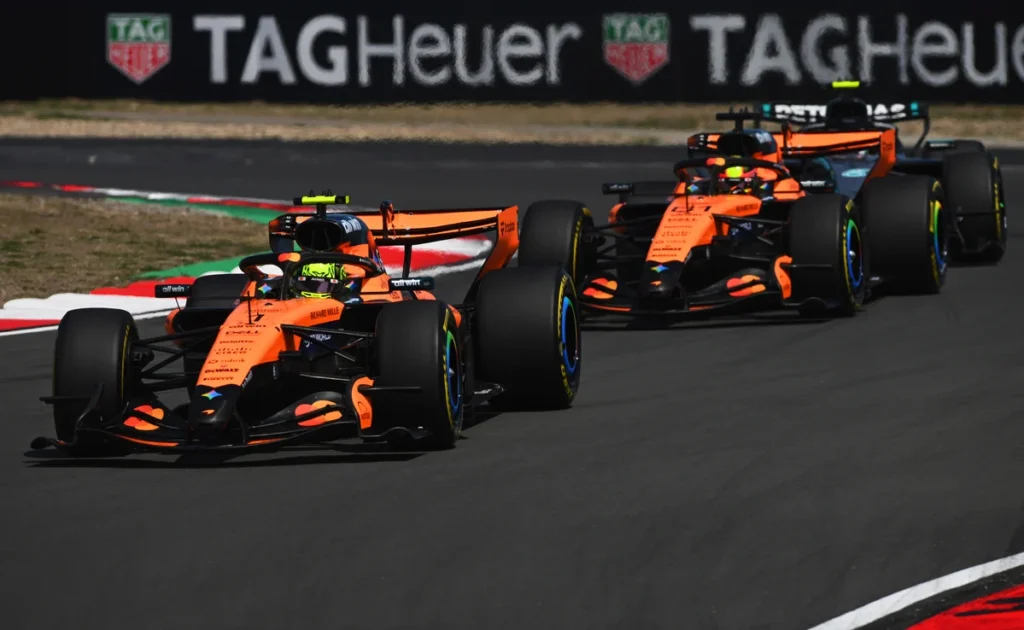
In the ruthless theater of modern Formula 1, the path to a World Championship is rarely a straight line. For a talent as precocious as Oscar Piastri, the challenge is not just about raw speed; it is about navigating the treacherous political landscape of driver management. As the Australian continues to impress at McLaren, speculation regarding a potential move to Red Bull Racing has intensified. Yet, behind the allure of being the "main man" lies a career-defining dilemma: remain in a title-contending team while sharing the spotlight with a superstar teammate, or chase the status of an undisputed team leader at the risk of vanishing into the midfield.
According to veteran paddock figures Rob Smedley and Otmar Szafnauer, the history of Formula 1 is littered with the wreckage of drivers who made the wrong bet.
The Anatomy of a Career Trap
The prospect of Piastri, currently one of the most promising young talents in the sport, potentially joining Red Bull Racing to lead a post-Max Verstappen era is a narrative that writes itself. On paper, it is the ultimate promotion: moving to a championship-winning powerhouse to head a project alongside emerging talent like Isack Hadjar. However, for those who have spent decades inside the pit wall, this "dream scenario" often functions as a gilded cage.
Rob Smedley, a man whose tenure at Ferrari and Williams provided a front-row seat to the internal dynamics of championship teams, argues that the romantic notion of a driver leaving a dominant environment to "build their own legacy" is fundamentally flawed.
"If you are in a top-tier team and you are finding it difficult to match your teammate, what are your options?" Smedley asked during a recent appearance on the High Performance Racing podcast. "You look for the exit. You think, ‘I’ll go to a team where I am the leader, where the car is built around me.’ But the reality is that you are often choosing a weaker structure. I have seen this scenario play out countless times in my career, and I have never seen it end well. I have never seen a driver leave a winning environment and emerge happier or more successful."
A Chronology of Failed Hopes
To understand the gravity of the warning, one must look at the historical precedent. The F1 paddock is a graveyard for "Number One" ambitions.
The Schumacher-Era Fallout
In the early 2000s, many talented drivers left competitive seats to lead midfield projects, hoping to catalyze a rise to the top. Almost invariably, the lack of resources, technical stability, or corporate backing caused those projects to plateau. Whether it was the transition from Williams to Toyota or the ill-fated moves of various talents to Jaguar or early-stage Renault projects, the pattern is consistent.
The Mercedes and Red Bull Dominance Cycles
The modern era of F1 has been defined by extreme consolidation. From the mid-2010s to the early 2020s, Mercedes-AMG Petronas held a stranglehold on the sport. During this period, drivers who sought to challenge Lewis Hamilton from within were often sidelined, leading many to jump ship.
"Look at the eras," says Otmar Szafnauer, a veteran team principal. "You had the Schumacher-Ferrari era, the Red Bull-Vettel era, the Mercedes-Hamilton era. These cycles are not short. They last half a decade or more. If you leave a team that is in a cycle of winning because you are tired of being second, you are likely consigning yourself to five to ten years of irrelevance."
Supporting Data: The Cost of the "Leader" Label
The data suggests that the "team leader" label is often a consolation prize for drivers who cannot secure a seat in the best car. In F1, the car is responsible for approximately 75% to 80% of a driver’s success.
- Engineering Stability: A driver’s ability to win is tied to the technical infrastructure of the team. Teams like McLaren, currently in an upward trajectory, possess the wind tunnel, CFD resources, and engineering depth that a mid-table team would need years to replicate.
- The "Number One" Fallacy: Being the lead driver in a team that finishes P6 in the Constructors’ Championship does not enhance a driver’s legacy. It creates a reputation for "driving the wheels off a bad car," which, while impressive, rarely results in a world title.
- Internal Competition: Piastri’s current rivalry with Lando Norris is intense, but it is taking place within a team that is fighting for race wins. This environment forces a driver to grow. The "easy" path of being a undisputed leader often breeds complacency.
Official Perspectives: The Szafnauer Analysis
Otmar Szafnauer, who has managed teams through various stages of growth and decline, provides a cold, clinical assessment of the trade-off. For Szafnauer, there are two distinct, equally difficult hurdles that a driver must clear if they choose to leave a top team.
"There are two things that have to happen simultaneously," Szafnauer explains. "First, you must become the undisputed number one in a new team. That is the easy part. The second part is that the team itself must become the best in the sport. That is the hard part. The combination of those two is incredibly rare."
Szafnauer points out that moving from the third-best team to the best team is not a simple jump; it is an organizational transformation. "When you leave a Ferrari or a McLaren to lead a different project, you are banking on the hope that you can be the catalyst for a ten-year championship run. But history shows that it is far more likely you will spend your prime years in a car that is simply incapable of victory."
Strategic Implications for Oscar Piastri
The situation for Oscar Piastri is unique. He is not a driver struggling to keep pace; he is an equal in a competitive partnership with Lando Norris. McLaren has committed to him through 2027, positioning him as a cornerstone of their future.
The Temptation of the Red Bull Seat
If Max Verstappen were to depart Red Bull—a recurring rumor that keeps the paddock in a state of high alert—the vacancy at Milton Keynes would be the most coveted in the sport. For a driver like Piastri, the prospect of being the "chosen one" to lead the post-Verstappen era is intoxicating. It would offer him a clean slate, a team built entirely around his feedback, and the prestige of the Red Bull brand.
The Risks of Departure
However, the strategic risks are immense:
- Technical Volatility: Red Bull’s dominance is currently under scrutiny due to internal staff departures and aerodynamic regulation changes.
- Cultural Fit: Piastri is thriving in the current McLaren culture. Transitioning to the high-pressure, often turbulent environment of Red Bull could stifle his development.
- The "Schumacher" Factor: If Piastri leaves, he leaves behind a McLaren team that is arguably the most consistent technical force in the sport right now. Walking away from a winning car is, in the eyes of Smedley, a "cardinal sin" of driver management.
Conclusion: The Reality of the Podium
In the final analysis, the warning from Smedley and Szafnauer is a sobering reminder of what defines success in Formula 1. Being the "star" of a mid-tier team is a hollow victory. The sport is a binary competition: you are either winning, or you are participating.
Oscar Piastri stands at a crossroads that will define his career. The temptation to escape the shadow of a teammate is human, but the history of the sport proves that the shadow of a teammate is often a small price to pay for the sunshine of a World Championship. If Piastri continues to perform at his current level, he may find that the best place to be the "number one" is exactly where he is: in a car that is capable of winning on any given Sunday. In the ruthless pursuit of greatness, patience is not just a virtue; it is the most vital competitive advantage a driver can possess.
