

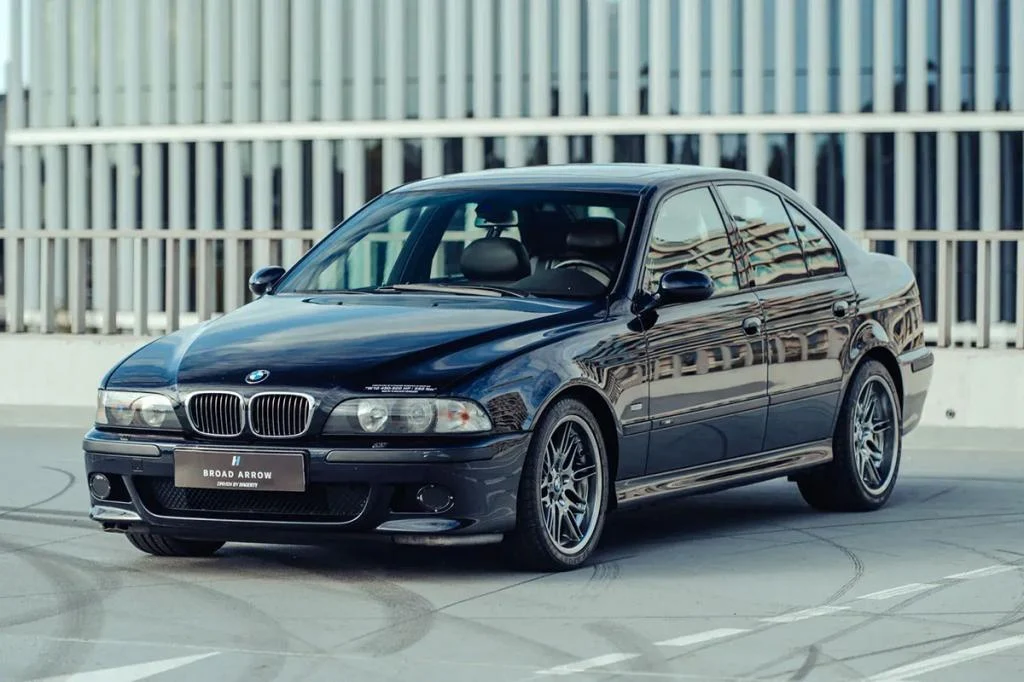
At first glance, the silver BMW M5 E39 sitting quietly in the climate-controlled storage facility looks like a pristine example of the late 90s Bavarian masterpiece. To the untrained eye, it is just another iteration of the iconic sports sedan that redefined the segment. However, popping the hood reveals a mechanical anomaly that defies decades of brand loyalty and automotive engineering logic. Nestled where the legendary 4.9-liter S62 V8 should be sits a monstrous 5.0-liter W10 engine—a top-secret experiment developed by the Volkswagen Group during the ambitious reign of Ferdinand Piëch.
This unique vehicle, now heading to the auction block via Broad Arrow Auctions, represents more than just a “franken-car.” It is a tangible artifact from a period of unbridled engineering hubris, serving as the missing link in the development of the engine architectures that would eventually power the world’s most exclusive supercars.
The Genesis of an Engineering Maverick: 1999–2002
The story begins in 1999. Under the leadership of Ferdinand Piëch, the Volkswagen Group was in the midst of a massive transformation, transitioning from a manufacturer of accessible people-movers into a global automotive titan with aspirations of technical supremacy. Piëch, an engineer by trade and a perfectionist by nature, demanded that his team create a power plant capable of challenging the absolute best in the world.
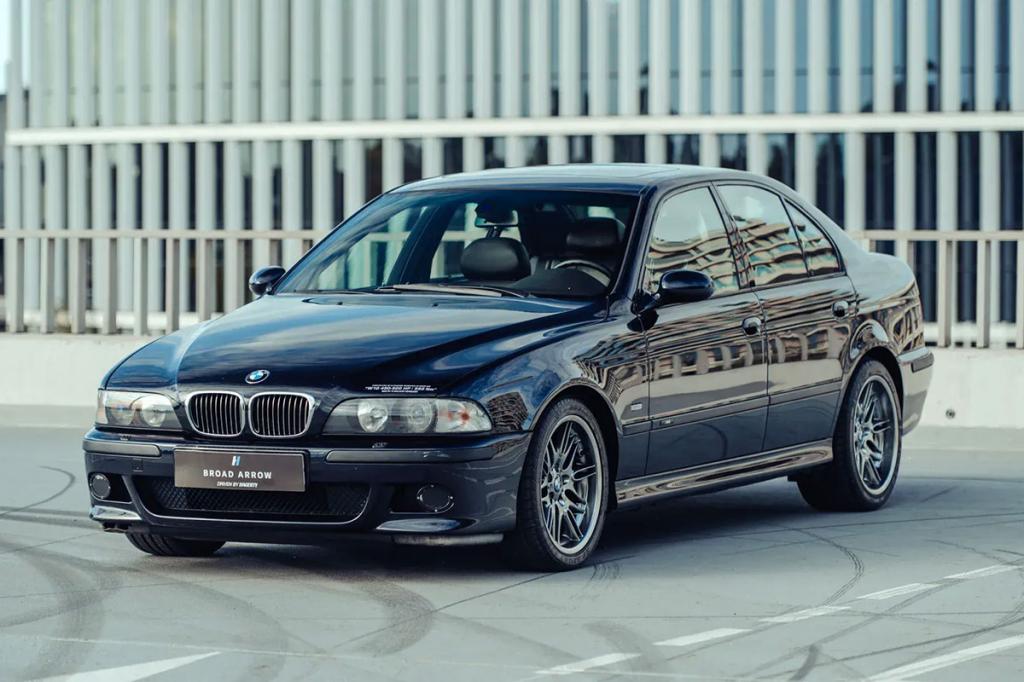
Rather than looking internally at Audi’s existing V8 portfolio, Piëch sought to innovate. He tasked his engineers with a challenge: create a compact, high-output engine that could fit into a standard chassis while delivering performance superior to the benchmark BMW M5 E39.
The solution was the "W" configuration. Volkswagen had already found success with its VR6 engine—a staggered, narrow-angle design that combined the benefits of a straight-six and a V-engine. The engineers decided to marry two 2.5-liter VR5 engines (derived from the Golf GTI’s VR6) at a specific angle to create an atmospheric 5.0-liter W10. This engine was never intended for a production Volkswagen; instead, it was built to test the modularity of the W-concept. They purchased a brand-new BMW M5 E39—the ultimate dynamic benchmark of the era—to serve as the rolling testbed for this exotic power unit.
Technical Architecture: The W10 Explained
The W10 engine is a masterpiece of compact, albeit complex, engineering. By utilizing the VR5 design, the team created an engine that was surprisingly short in length, allowing it to fit into the M5’s engine bay without requiring a structural redesign of the chassis.

Performance Specifications
- Engine: 5.0-liter naturally aspirated W10
- Power Output: 480 horsepower
- Peak Torque: 592 Nm
- Configuration: Dual-VR5 fusion, 72-degree bank angle (approximate)
- Transmission: BMW 6-speed manual gearbox
- Drivetrain: Rear-wheel drive
The engine delivered 480 horsepower—a significant jump over the stock S62’s 400 hp—and a massive 592 Nm of torque. This torque delivery, combined with the lightweight nature of the narrow-angle block, gave the M5 a personality shift. It was no longer the linear, high-revving sports sedan; it became a low-end torque monster.
The integration was remarkably seamless. By retaining the BMW’s original six-speed manual transmission and rear-wheel-drive layout, the engineers ensured that the car remained a true driver’s machine. However, the internal electronics required a complete overhaul. To manage the W10, Volkswagen had to strip out the factory BMW engine management system and replace it with a bespoke development suite, leading to the modified dashboard instrumentation visible in the cabin today.
A Chain of Innovation: The W-Engine Legacy
While this M5 remained a prototype, its existence was far from a failure. The W10 was essentially the "proof of concept" for the modular engine strategy that would define the Volkswagen Group’s prestige portfolio for the next twenty years.

The Evolution of the W-Platform
- The M5 Prototype (W10): The proof of concept for mating VR-based blocks into a singular W-configuration.
- Bentley Continental GT (W12): Utilizing the same philosophy, engineers merged two VR6 engines to create the 6.0-liter W12, which became the cornerstone of the Bentley brand.
- Bugatti Veyron/Chiron (W16): The culmination of the research. By adding more cylinders and forced induction to the W-layout, the group achieved the 1,000+ horsepower thresholds required for the Veyron, and later the 1,500 hp output of the Chiron.
In this context, the M5 E39 W10 is the "missing link." Without the confidence gained from the successful operation of this W10, the path to the W12 and W16 engines would have been significantly more difficult, and perhaps, impossible.
Life as a Prototype: The Piëch Connection
This specific vehicle is not merely a display piece. It was a working prototype that underwent rigorous testing cycles across Europe. Records indicate that only three W10 engines were ever built. Of those, this is the only one to receive full road-legal status.
The interior of the vehicle bears the marks of its life as a development tool. The original BMW odometer has been replaced by custom instrumentation designed for monitoring the experimental W10’s vitals—oil pressure, bank temperatures, and AFR (Air-Fuel Ratio) readouts that were critical during high-speed testing sessions.

Perhaps the most compelling detail is the ownership history. It is widely reported within industry circles that Ferdinand Piëch himself used this vehicle as a personal driver for a period. It provided him with a first-hand perspective on the power delivery and vibrations of his W-engine design. The car was not pampered; it was a tool, tested on the Autobahn and the VW proving grounds to ensure that the W-concept was not just a theoretical success, but a practical one.
Auction Details and Market Implications
As of October 2026, the car is listed for auction through Broad Arrow Auctions. With an estimated hammer price of €250,000 to €350,000, it sits at a unique intersection of markets. It appeals to both BMW purists who appreciate the E39 chassis and Volkswagen enthusiasts who recognize the historical significance of the W10 project.
Investment Analysis
- Rarity: 1 of 1 road-legal prototype.
- Provenance: Formerly part of the Volkswagen Group’s R&D fleet; personal usage by Ferdinand Piëch.
- Historical Significance: Essential component in the history of the W12/W16 engine architecture.
- Condition: "Well-used." The car shows signs of heavy testing, which, for a collector, serves as proof of its authenticity rather than a deterrent.
For the winning bidder, this car is not an investment in transportation, but an investment in history. It represents the "what if" scenario that keeps automotive historians awake at night. What if Volkswagen had decided to push the W10 into production for the M5? What if the W-engine had become a standard for sports sedans?
Conclusion: A Testament to Audacity
The BMW M5 E39 W10 is an anomaly that should not exist. It is a German sports sedan with a Volkswagen heart, created by a company that would eventually own the very brand it was trying to compete with. Its existence serves as a reminder of an era when engineering curiosity was given a blank check and the freedom to break the rules.
As the automotive world pivots toward electrification—as evidenced by the recent launches of the BMW iX4 and iX3 M60—this W10 prototype stands as a fossil from a different age. It is a loud, mechanical, and slightly rebellious reminder of the passion that built the performance icons of the late 20th century. When the gavel falls on October 9, 2026, the new owner will not just be purchasing a car; they will be taking custody of one of the most daring secrets in automotive history.
