

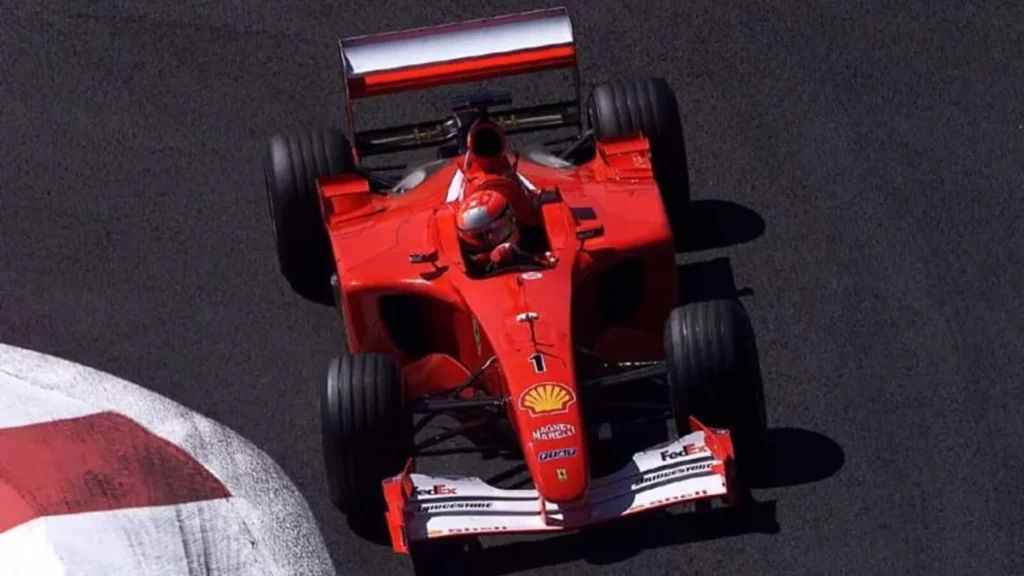
For decades, the Formula 1 World Championship has operated under a unique set of geopolitical rules—or, more accurately, a complete disregard for them. To the average geography professor, the notion of hosting a "Grand Prix of Europe" in the oil-rich hub of Azerbaijan or a "Grand Prix of Switzerland" in the rolling vineyards of Burgundy would be considered a professional heresy. Yet, within the high-stakes boardroom of Formula 1, cartographic improvisation has long been a second nature.
Under the reign of Bernie Ecclestone, and continuing into the modern era, the sport has treated national borders as mere suggestions. Driven by lucrative broadcasting deals, state-funded subsidies, and the insatiable hunger of a global sporting juggernaut, the FIA and F1’s commercial rights holders have mastered the art of the "geographical passport." This is a deep dive into the most audacious instances of administrative make-believe in motorsport history.
1. The Anatomy of an Identity Crisis: Why Borders Don’t Matter
The fundamental logic driving these historical anomalies is simple: supply and demand. Formula 1 is a premium product, and its stakeholders have always been willing to bend reality to secure the "right" number of races in a calendar or to satisfy a key TV market.
When a foreign promoter arrives with a suitcase of petrodollars, or a broadcaster demands a second dose of Sunday afternoon racing to satisfy local fans, the sport’s regulators do not look at a globe—they look at a spreadsheet. The result is a history of "placeholder" Grand Prix titles that serve no purpose other than to circumvent contractual restrictions, circumvent safety bans, or appease domestic sponsors.
2. A Chronology of Cartographic Masquerade
1980–1981: The San Marino Invention
The template for the "fake" Grand Prix was drafted in the hills of Italy. In 1980, the Imola circuit stepped in to host the Italian Grand Prix while the legendary Autodromo Nazionale Monza underwent safety renovations. The race was a resounding success, and the regional authorities in Emilia-Romagna, supported by the power of the Scuderia Ferrari, were loath to lose their newfound revenue stream.
When Monza returned to the calendar in 1981, Bernie Ecclestone faced a dilemma: how to keep two Italian races without violating the "one race per country" rule. His solution was a masterpiece of bureaucratic fiction: he rebranded the Imola race as the "Grand Prix of San Marino." The Republic of San Marino is a landlocked microstate with no circuit, no flat terrain, and a population of roughly 30,000. It is located 80 kilometers from Imola. For 25 years, the charade continued, with the blue-and-white flag flying over a track that sat firmly on Italian soil.
1982: The Swiss Mirage in Burgundy
If San Marino was an act of opportunism, the 1982 "Grand Prix of Switzerland" was an act of pure defiance against tragedy. Following the horrific 1955 Le Mans disaster, the Swiss government implemented a blanket ban on motor racing on its territory.
However, in 1982, the F1 calendar was desperate for a date. The solution was the Dijon-Prenois circuit in France. While the race was technically French, it was marketed, broadcast, and officially recorded as the Swiss Grand Prix. Swiss bankers and spectators simply crossed the border to witness Keke Rosberg claim his only victory of the season. It remains a bizarre footnote: a race held in the heart of the French wine country, contested under the banner of a nation that had legally forbidden the very sport taking place.
1997–1999: The Luxembourg Illusion
By the late 1990s, the "Schumachermania" phenomenon had turned Germany into a financial goldmine. Hockenheim hosted the official German Grand Prix, but the immense popularity of Michael Schumacher created a demand for a second German round. With the "Grand Prix of Europe" title already contracted to Jerez, Spain, Ecclestone reached into his bag of tricks once more.
He declared that the Nürburgring—located in the Eifel mountains—would henceforth host the "Grand Prix of Luxembourg." While the tiny tax haven of Luxembourg is indeed a neighbor, it is a separate sovereign nation. For two years, race organizers distributed tourism brochures for the Grand Duchy to beer-drinking fans in the muddy Rhine forests, maintaining a surreal façade that fooled almost no one but satisfied the contractual requirements of RTL Television.
1994–1995: The Pacific Dream in the Rice Paddies
Perhaps the most absurd entry in this catalog is the "Pacific Grand Prix." In 1994, Japanese real estate mogul Hajime Tanaka decided he wanted a slice of the F1 pie. He built the TI Aida circuit in the Okayama prefecture, complete with life-sized replicas of the Venus de Milo and Rodin sculptures scattered near golf courses.
Because Suzuka held the rights to the "Japanese Grand Prix," the Aida race was dubbed the "Pacific Grand Prix." In reality, the track was nowhere near the Pacific Ocean; it was buried deep in the Japanese countryside, surrounded by rice paddies and accessible only by gridlocked mountain roads. The sport lasted two seasons before the sheer logistical nightmare and the lack of overtaking potential forced the FIA to abandon the project.
2016–Present: The Baku "Europe" Pivot
In the modern era, the trend has shifted toward state-sponsored global branding. When the F1 circus rolled into Baku in 2016 under the moniker of the "Grand Prix of Europe," the cynicism was palpable. Situated on the shores of the Caspian Sea, bordering Iran and Central Asia, Baku is geographically and culturally distinct from the European continent. However, the title was chosen to align with the country’s political ambitions to integrate into Western structures. Nobody pretended the race was European; it was simply a commercial transaction that the sport found impossible to refuse.
3. Supporting Data: The Cost of Fictions
The financial motivation behind these geographical shifts is immense. Hosting a Grand Prix is a massive investment, often exceeding $30–50 million in annual hosting fees alone.
| Race | "False" Title | Real Location | Motivation |
|---|---|---|---|
| 1981-2006 | San Marino GP | Imola, Italy | Two races in Italy |
| 1982 | Swiss GP | Dijon, France | Overcoming Swiss ban |
| 1997-1998 | Luxembourg GP | Nürburgring, Germany | Extra German race |
| 1994-1995 | Pacific GP | Okayama, Japan | Private promoter ego |
| 2016 | European GP | Baku, Azerbaijan | Political branding |
The economic impact of these "fake" races is often cited by local tourism boards as a key driver for regional development, though the long-term sustainability of such events is often questionable once the novelty wears off.
4. Official Responses and Industry Defense
The FIA and FOM (Formula One Management) have historically defended these decisions with a blend of legalistic pragmatism and silence. When questioned, officials often state that "the location is secondary to the quality of the competition" or that "the title is a commercial brand, not a geographical declaration."
Former F1 personnel have privately admitted that these titles were necessary to navigate the labyrinthine regulations of the 1980s and 90s. As one former commercial executive noted, "If the fans are watching and the promoter is paying, the name of the race is just ink on a contract. We aren’t teaching geography; we are delivering a show."
5. Implications: The Future of the Global Calendar
The implications of this "geography-blind" approach are far-reaching. As Formula 1 continues to expand, particularly into the Middle East and North America, the sport is moving toward a model where the venue is a product, not a home.
The erosion of the traditional "Grand Prix" identity suggests a future where races might be titled after sponsors (e.g., the "Rolex Grand Prix" or the "Aramco Grand Prix") rather than nations. While this maximizes commercial revenue, it risks alienating the core fanbase that values the history, culture, and national identity associated with traditional circuits like Spa, Silverstone, or Monaco.
Ultimately, the history of these "fake" passports serves as a reminder that Formula 1 is, and has always been, a business first. It is a sport that can make the Everest of challenges feel like a local event, provided the right amount of capital is present. The map of the F1 world is not defined by lines on the ground, but by the lines on a bank statement. As long as the sport remains a global traveling circus, it will continue to redraw the map to suit its own, very specific, commercial needs.
