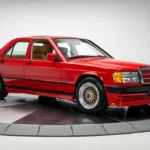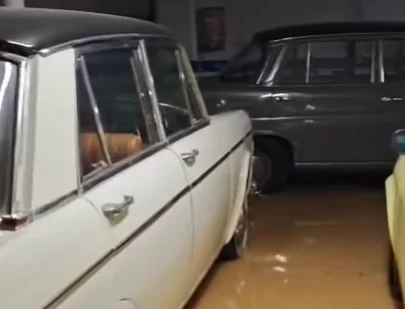
GRANOLLERS, Catalonia — In the span of just a few hours, a routine weather warning transformed into a catastrophic event for the Spanish film industry. A massive warehouse belonging to Expomotor Auto Museum Film Services—the country’s premier supplier of cinematic vehicles—was submerged under more than a meter of water in Granollers, Catalonia. The sudden overflow of the nearby riu Congost (Congost River) trapped and ruined over a hundred historic, luxury, and cult classic vehicles that had previously graced the silver screen in dozens of Spanish and international productions.
What remains inside the cavernous, mud-filled hangar are heartbreaking silhouettes of once-glistening sheet metal: vintage cruisers, high-end sports cars, and reliable everyday sedans sitting silently with waterlines reaching their window sills. Behind the ruined upholstery and fuel-contaminated floodwaters lies a profound blow to Spain’s automotive and cinematic heritage. Yet, amidst the staggering financial losses and existential threat to the company, a powerful wave of national solidarity has begun to emerge from the wreckage.
1. Main Facts: A Cinematic Graveyard of Steel and Chrome
The scale of the disaster at the Granollers facility is immense. Expomotor, a titan in the specialized logistics and vehicle-provision sector for television and film, lost a staggering portion of its localized inventory in a single afternoon.
- The Location: A major storage facility (nave) in the industrial zone of Granollers, situated in the northeastern region of Catalonia.
- The Damage: More than 1.2 meters of water and thick river sludge flooded the compound, rendering interiors entirely unsalvageable and inflicting severe hydro-mechanical shock on engines and electrical systems.
- The Toll: Out of the 113 vehicles stored in this specific warehouse, total devastation has been reported. The lost fleet includes legendary nameplates and luxury marques such as Ferrari, Corvette, and Bentley, alongside rare classic European models routinely used as period-accurate props.
- The Broader Context: Expomotor operates across Madrid, Barcelona, and Bilbao, managing a massive network covering over 15,000 square meters of storage space and a portfolio exceeding 700 vehicles. These cars have starred in critically acclaimed and box-office hits, including El confidente, Ruega por nosotros, La infiltrada, Torrente presidente, and Las leyes de la frontera.
Speaking to the automotive publication El Motor, José Manuel Reyes, head of cinema vehicles for Expomotor, summarized the tragedy with stark gravity:
"At that location, we had more than 113 vehicles stored and, unfortunately, they have all been destroyed, among them vehicles from major brands like Ferrari, Corvette, or Bentley. The destruction was total… This is one of the worst tragedies that has ever happened to us."
2. Chronology: How the Disaster Unfolded
The disaster did not occur over days, but evolved with terrifying speed, catching staff and local authorities off-guard as unrelenting rains battered the Catalan region.
The Buildup
For days, meteorological agencies had placed parts of eastern and northeastern Spain on alert for severe storms. However, the exact trajectory and volume of rainfall caught local industrial zones vulnerable. The riu Congost, which meanders near the commercial and industrial sectors of Granollers, began swelling rapidly due to intense runoff from surrounding elevated terrain.
The Breach
Within hours, the river broke its banks. Torrents of muddy water, mixed with urban runoff and agricultural debris, surged directly toward the industrial park. Because the Expomotor hangar was designed primarily for storage and logistical staging rather than as a flood barrier, the water easily breached the threshold.
The Inundation
Water levels inside the facility rose with shocking velocity, peaking at over 1.2 meters. Employees who rushed to the scene found themselves helpless against the hydraulic pressure and rapidly deepening muck. The water reached past the floorboards, soaking dashboards, short-circuiting electrical harnesses, and filling combustion chambers with silt and contaminated water. By the time the rains subsided and the waters receded, the facility had been transformed into an industrial marshland, sealing the fate of the cinematic treasures inside.
3. Supporting Data: The Anatomy of Expomotor and Movie Car Logistics
To understand the magnitude of the loss at Granollers, one must examine the specialized infrastructure required to support modern filmmaking. Supplying vehicles for cinema is not a passive rental business; it is a high-stakes, precision-driven industry.
- Fleet Diversity: Expomotor’s inventory spans over 700 units, ranging from rusted 1970s utility vans required for gritty historical dramas to pristine, high-performance supercars needed for action sequences.
- Specialized Support: The company does not simply drop off vehicles. It employs dedicated transport fleets (often working alongside specialized networks like Movescar Group), professional precision drivers, and on-set mechanical technicians who maintain the cars under grueling filming conditions.
- Historical and Cultural Value: Movie cars are unique historical artifacts. Unlike museum pieces kept strictly behind ropes, these vehicles are mechanically maintained to run, crash, stunt, and express character traits on screen. The loss of a Ferrari or Bentley from a film archive is not merely an economic insurance claim; it represents the erasure of specific cultural touchstones that helped define contemporary Spanish cinematography.
- Economic Vulnerability: Operating a niche fleet of hundreds of classic cars involves immense overhead. Maintenance, specialized indoor storage, insurance, and delicate restoration work require continuous cash flow. The sudden loss of 113 prime assets in a single operational hub creates a financial shockwave that threatens the viability of the enterprise as a whole.
4. Official Responses and Ironies of Fate: The Echoes of Valencia
In the immediate aftermath of the flooding, statements from Expomotor’s leadership reflected a profound mix of personal devastation, philosophical resignation, and bitter irony.
Just two years prior, in October 2024, Spain was rocked by the catastrophic DANA (Depresión Aislada en Niveles Altos) weather phenomenon that devastated parts of the Valencian Community with historic floods. During that tragedy, Expomotor did not sit on the sidelines. The company dispatched heavy machinery, including one of its own industrial cranes, alongside dedicated teams of workers to travel south and aid local residents in grueling rescue and cleanup operations.
Reflecting on this grim twist of fate, José Manuel Reyes noted the cruel irony in a statement shared across the company’s communication channels:
"Life takes many turns and has many paradoxes; I never thought that what they experienced down there in Valencia could happen to me."
The psychological toll of transitioning from a provider of aid to a helpless victim is heavy. Reyes admitted that the reality of the disaster forced a total paradigm shift in how the company views natural catastrophes:
"We couldn’t understand the suffering they were living through until the same thing happened to us. And in my case, I can tell you that I have already understood what it is like to experience a DANA and suffer irreparable damage that perhaps will lead us to have to close or restructure the company in a certain way in order to continue working."
Despite these grim prospects, management has emphasized that they are evaluating every possible path forward, balancing the immediate demands of site clearance with long-term corporate survival strategies.
5. Implications: The Wave of Solidarity and the Road Ahead
While the economic projections remain grim and the physical destruction of the Granollers warehouse is absolute, the narrative of the disaster has taken an unexpectedly hopeful turn through an outpouring of community support.
The Grassroots Rescue Effort
As news of the flooded cinematic archive spread, the response from the local community and the broader Spanish automotive world was immediate. Neighbors, local car enthusiasts, and professional mechanics who had no prior affiliation with Expomotor began showing up at the industrial hangar with shovels, pumps, and high-powered tools.
Mechanics from distant provinces have reportedly offered to travel to Granollers pro bono, with preliminary discussions springing up among trade professionals to organize a nationwide volunteer "mechanics’ summit" dedicated to salvaging whatever mechanical components can be rescued from the waterlogged carcasses.
Gratitude Amid the Mud
Overwhelmed by the response, Expomotor released heartfelt statements acknowledging the army of anonymous volunteers who stepped forward without asking for anything in return. Reyes shared his deep appreciation despite being swamped by messages of encouragement:
"Thank you to everyone who came to help us voluntarily, and thank you also for all the messages of support, which are numerous… I cannot answer everyone, I feel overwhelmed by all the support we have received these past days from many people who want to help without asking for anything. Today, fortunately, we were able to get a few more vehicles out and, even though there is still a lot of work to do, we are on the right track."
The Long-Term Outlook
Moving forward, the survival of Expomotor will depend heavily on targeted assistance, insurance resolutions, and the continued goodwill of the European automotive community. The company has made it clear that while specialized heavy equipment and logistical backing are urgently needed to complete the rehabilitation of the site, the emotional fuel provided by volunteers has been the primary catalyst keeping the operation alive.
The tragedy in Granollers stands as a stark reminder of the increasing vulnerability of industrial infrastructure to extreme weather events driven by shifting climate patterns. Yet, buried beneath the mud and ruined chrome of Spain’s lost movie cars, the resilience of a dedicated team—supported by a nation of petrolheads and film lovers—ensures that the final chapter for Expomotor has not yet been written.