

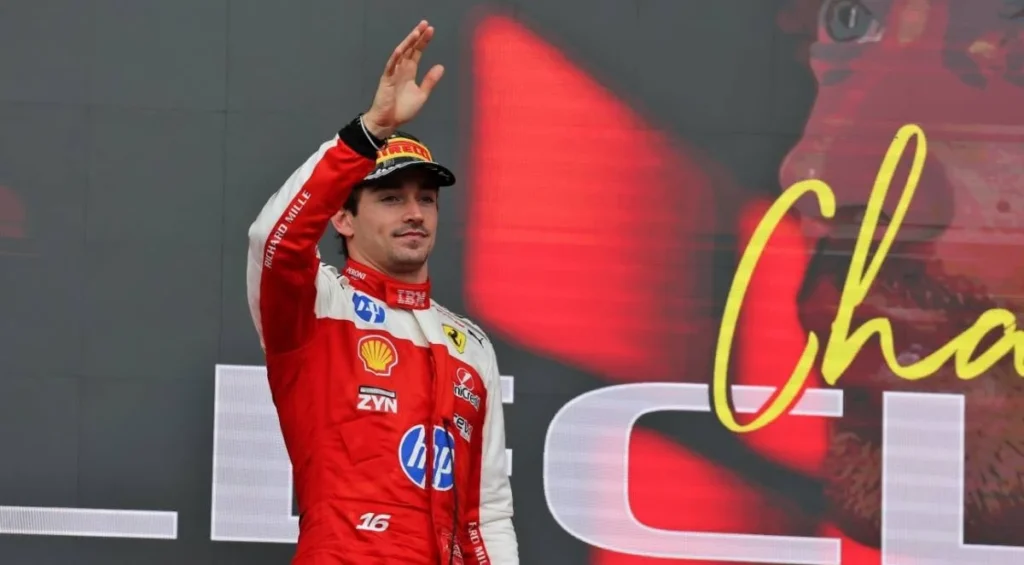
The Formula 1 circus descended upon the Circuit of the Americas (COTA) in Austin, Texas, this weekend for a Grand Prix that offered a microcosm of the 2024 season’s tactical evolution. In a race defined by diverging strategic philosophies and intense wheel-to-wheel combat, Charles Leclerc secured a brilliant second-place finish for Scuderia Ferrari. While the top step of the podium remained elusive—claimed by a peerless Kimi Antonelli—Leclerc’s performance served as a powerful statement of intent for the Maranello-based squad.
The Strategic Divide: Ferrari’s Boldness vs. Mercedes’ Efficiency
The narrative of the United States Grand Prix was dictated by a fundamental split in strategic approach. While the grid saw a mixture of tire management philosophies, the spotlight focused on the battle between Ferrari’s aggressive two-stop strategy and Mercedes’ gamble on a single pit stop.
Starting from the fourth position on the grid, Leclerc found himself in the thick of the action from the opening lights. The SF-26, which had shown flashes of brilliance during Friday’s free practice sessions, proved to be a formidable machine over long stints. However, the initial phase of the race was far from straightforward. Leclerc later admitted that the opening stint was fraught with complications, noting that the thermal degradation of the tires forced Ferrari to move away from the one-stop strategy that Mercedes was so expertly executing.
"The first stint was quite difficult," Leclerc explained in the post-race media pen. "We had to manage the tires carefully, and when we saw the pace Mercedes could maintain on a single stop, it became clear that we couldn’t replicate that. Our package today was optimized for two stops, and while it gave us the speed to charge through the field, it wasn’t enough to challenge Kimi."
Indeed, Kimi Antonelli was the protagonist of the afternoon. The Mercedes pilot drove an imperious race, managing his rubber with a precision that bordered on surgical. By committing to a one-stop strategy, Antonelli effectively neutralized the threat posed by the charging Ferraris and Red Bulls, maintaining a gap that allowed him to control the tempo of the race from the front.
A Chronology of the Texas Duel
The race began with a frantic dash into the steep, uphill Turn 1, a signature of the Austin circuit. Leclerc, having qualified fourth, was immediately forced into a defensive posture against a pack hungry for positions. The first ten laps saw a flurry of overtakes, as the field jockeyed for clean air.
By the second stint, the race began to crystallize into a strategic chess match. Ferrari brought Leclerc into the pits early to equip him with the hard compound tires, aiming to undercut his rivals and utilize his fresher rubber to hunt down the leaders. This maneuver worked perfectly to leapfrog the Red Bull of Max Verstappen and the McLaren of Lando Norris.
The middle phase of the Grand Prix became a tactical slog. Leclerc had to balance the need for outright pace with the critical necessity of preserving his energy recovery systems (ERS). As he began to close the gap to Antonelli, the Ferrari driver faced a series of technical hurdles. The SF-26, while fast, required significant battery deployment to defend against the late-race surges of the chasing pack.
The final ten laps were a showcase of defensive driving. Verstappen, sensing a vulnerability in the Ferrari, launched a series of probing attacks. Leclerc, despite running low on electrical energy, held the line with remarkable composure. Every corner was a battle of millimeters, with the Monegasque driver successfully managing his car’s limitations to secure the runner-up spot behind the untouchable Mercedes.
Supporting Data: Why the SF-26 Found Its Mojo
The performance of the SF-26 at COTA provides critical data for the Ferrari engineers as they look toward the final races of the season. Telemetry data from the weekend showed that Ferrari had finally unlocked the elusive "sweet spot" of the car’s aerodynamic floor, particularly in the high-speed sections of the first sector of the track.
On the hard compound tires, Leclerc’s lap times were consistently among the fastest on the circuit. In the final fifteen laps, he was often a tenth or two quicker than the cars surrounding him, a testament to the improved balance Ferrari has achieved through recent upgrades. However, the data also highlights a lingering issue: the car’s reliance on ERS management. Compared to the Mercedes, the Ferrari still appears to consume its electrical reserves more aggressively, forcing the driver to switch to energy-harvesting modes earlier than their competitors. This technical debt, while manageable, proved to be the difference between a podium finish and a potential victory charge.
Official Responses: The Drivers’ Perspectives
Following the checkered flag, the atmosphere in the paddock was one of respect and reflection. For Charles Leclerc, the race was a bittersweet success. "It was a good race, definitely," he said. "We didn’t achieve our primary goal, which was to win, but there is a lot to be proud of. The team worked hard to give me a car that could fight, and we were in the mix with the best today. Racing Max and Lando is always a challenge, and I enjoyed the battle. It was tight, particularly when I was low on battery, but it’s exactly what you want from Formula 1."
On the other side of the garage, the mood was more contemplative. The strategic failure to match the one-stop strategy will likely be the subject of a deep-dive investigation at the Maranello factory. While the team is satisfied with the podium, they are acutely aware that in a championship fight, every missed opportunity to outscore Mercedes is a blow to their development trajectory.
Kimi Antonelli, now on the verge of championship glory, remained humble in his victory. "It wasn’t easy to keep the pace up, but the car felt fantastic today. We stuck to our plan, and the team made the right call on the strategy. It’s an incredible feeling to win here in Austin."
Implications for the World Championship
The United States Grand Prix has effectively signaled the end of the 2024 title race. With Antonelli’s victory and his current points tally, the Mercedes driver now only requires a measly two points in the remaining rounds to secure the World Drivers’ Championship. For the rest of the field, the narrative shifts from hunting the leader to securing the best possible finishing position in the Constructors’ standings.
For Ferrari, the priority is now twofold: first, to consolidate their position as the clear second-fastest team, and second, to continue the development of the SF-26 to ensure they hit the ground running for the 2025 season. Leclerc’s resilience in Austin proves that when the car is right, he remains the most dangerous challenger on the grid.
As the paddock prepares for the final stretch of the season, the focus shifts to the upcoming flyaway races. The momentum generated by this performance will be vital for the Scuderia. If they can replicate the pace shown in Texas while refining their strategic flexibility, they have a genuine chance to disrupt the order once more before the curtain falls on the current campaign.
In conclusion, the Austin weekend was more than just a race; it was a testament to the high-stakes nature of modern Formula 1. It was a race of grit, tactical ingenuity, and, ultimately, the confirmation of a new dominant force in Kimi Antonelli, while Charles Leclerc reminded the world that Ferrari is never a team to be counted out. As the championship nears its inevitable conclusion, the sport remains as compelling as ever, with the promise that every remaining point will be fought for with the same intensity witnessed under the Texas sun.
