

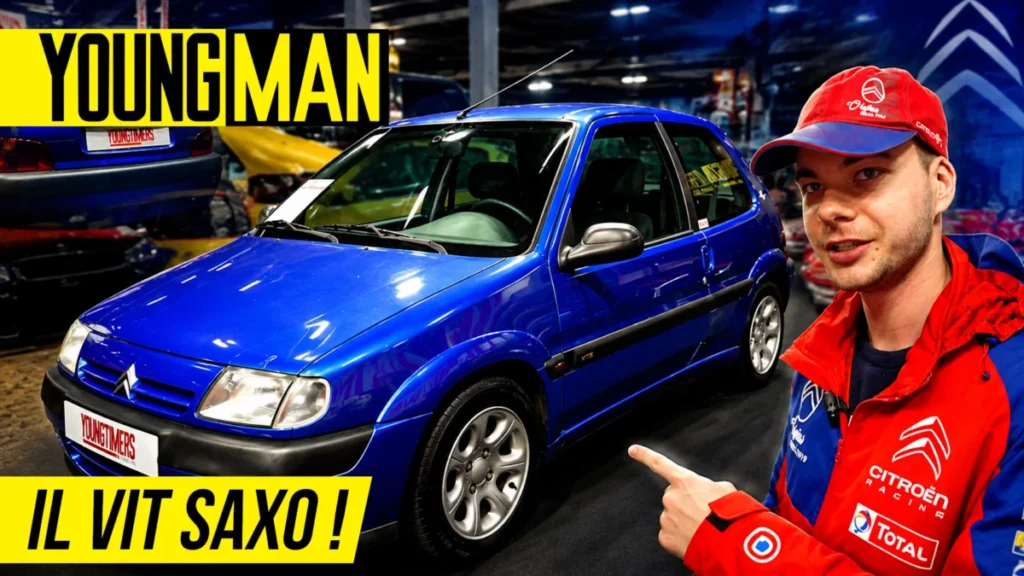
In the pantheon of 1990s and early 2000s automotive legends, few vehicles evoke as much visceral nostalgia as the French "GTI" pocket rockets. Among these, the Citroën Saxo VTS 16v stands as a titan of agility, raw performance, and accessible thrills. Today, we delve into the world of Jordan, a dedicated enthusiast and proud owner of a pristine "Bleu Grand Pavois" Saxo VTS, to understand why this compact powerhouse remains a cornerstone of the Youngtimer movement.
Main Facts: The Anatomy of a Cult Classic
The Citroën Saxo VTS 16v is not merely a car; it is a cultural artifact of an era where lightness was prioritized over complex electronic intervention. Equipped with a high-revving 1.6-liter 16-valve engine, the VTS was designed to be a driver’s car in the purest sense.
Technical Specifications at a Glance:
- Engine: 1.6L 16v (TU5J4)
- Power: 118 hp (88 kW)
- Weight: Approximately 935 kg
- Performance: 0–100 km/h in roughly 7.7 seconds
- Cultural Status: A benchmark for handling and power-to-weight ratio in the late 90s.
Jordan’s specific model, finished in the iconic Bleu Grand Pavois, serves as a testament to the longevity of the platform when maintained with precision. The VTS did not just compete; it dominated the rally-inspired hatchback market, offering a chassis that could communicate every nuance of the road surface to the driver.
Chronology: A Journey with the Saxo
The relationship between an enthusiast and their vehicle is rarely a linear path. For Jordan, the Saxo VTS is the culmination of a lifelong fascination with Citroën’s sporting heritage.
The Acquisition Phase
The search for a clean, unmolested Saxo VTS is a daunting task in the current market. Jordan describes the process of finding his specific vehicle as a "needle in a haystack" operation. As prices for original, low-mileage examples climb, the market has become saturated with heavily modified or poorly maintained chassis. Jordan’s success in securing his VTS relied on patience and a meticulous vetting process, focusing on original paint, structural integrity, and the history of the TU5J4 engine.
The Emotional Connection
Jordan’s story is rooted in family history and a deep-seated appreciation for Citroën’s involvement in motorsport. From the early days of the AX Sport to the later dominance of the Saxo in the WRC, the brand fostered a specific type of loyalty. For Jordan, the Saxo VTS represents a bridge between his childhood admiration for the brand and the mature reality of driving one of the most balanced chassis ever produced by a French manufacturer.
Supporting Data: Why the VTS Still Holds Ground
To understand the enduring appeal of the Saxo VTS, one must look at the data surrounding the "Youngtimer" market. Youngtimers—vehicles generally aged between 20 and 30 years—have seen a massive surge in interest as younger generations seek analog driving experiences in an increasingly digital world.
The Power-to-Weight Advantage
Modern hot hatches are objectively faster, but they are also significantly heavier, often exceeding 1,400 kg. The Saxo VTS, weighing in well under a metric ton, provides a sensation of speed that modern cars often mask with sound insulation and electronic chassis control. This "lightness" is the primary variable that makes the VTS feel alive.
Market Trends
Data from the pre-owned market indicates that prices for "Phase 3" Saxo VTS models have doubled in the last five years. Enthusiasts are no longer viewing these cars as disposable commuters but as blue-chip investments. The scarcity of clean, non-tuned examples is driving a premium on models with documented service histories, original interiors, and factory-standard components.
Official Perspectives: The Expert’s Guide to Ownership
In our comprehensive interview, Jordan provides an essential guide for prospective buyers. Owning a car that is over two decades old requires a specific mindset—one that balances passion with mechanical prudence.
Key Maintenance Points
Jordan emphasizes that the TU5J4 engine is robust but unforgiving if neglected. Critical maintenance tasks include:
- Timing Belt Intervals: A failure here is catastrophic. Jordan recommends replacing the belt well ahead of the factory-recommended mileage.
- Chassis Health: Check for hidden rust in the rear arches and floor panels, which are common weak points in the platform.
- The Rear Axle: A classic PSA group issue. Ensure there is no "negative camber" visible in the rear wheels, which signifies failing needle bearings.
The Interior Experience
While some critics point to the "plasticky" nature of 90s French interiors, Jordan argues that the cockpit of the VTS is functional and driver-focused. The bucket seats provide the necessary support for spirited driving, and the simple, analog instrument cluster allows the driver to focus on the essential telemetry: RPM and oil temperature.
Implications: The Future of the Pocket Rocket
What does the persistence of the Saxo VTS tell us about the future of car culture? The implications are twofold: first, there is a clear demand for "analog" automotive experiences. As electrification becomes the industry standard, the demand for cars like the Saxo—which prioritize mechanical connection—will likely continue to rise.
Second, the Saxo VTS serves as a benchmark for the "GTI" identity. Whether compared to the Peugeot 106 S16 (its sibling under the skin) or the Clio RS, the Saxo holds its own through its unique blend of rally-bred DNA and everyday usability.
A Call to the Community
Jordan’s experience highlights that the ownership of such a vehicle is not a solitary endeavor. It is part of a broader ecosystem of enthusiasts who share parts, knowledge, and advice. The question posed to the community remains: Would you choose the Saxo VTS, the 106 S16, or the Clio RS?
Each of these cars offers a distinct flavor of the 90s performance era. The Saxo, however, remains the quintessential choice for those who value purity of design and the thrill of a lightweight chassis.
Conclusion: Why Jordan Won’t Let Go
As we conclude our deep dive, it is clear why Jordan has no intention of parting with his Blue Grand Pavois Saxo. In a world where cars are increasingly treated as appliances, the Saxo VTS is a reminder of the passion and engineering bravery that once defined the French automotive industry.
For the prospective buyer, the message is clear: buy with caution, maintain with rigor, and drive with enthusiasm. The Saxo VTS is more than just a car; it is a gateway to a disappearing world of pure driving pleasure. As the sun sets on the era of internal combustion, vehicles like these will only become more precious, serving as a testament to a time when a simple, light, and powerful engine was all you needed to feel truly alive on the open road.
For those interested in seeing the full, detailed breakdown of Jordan’s ownership experience, including his tips on sourcing parts and his thoughts on future classic status, watch the full feature on Youngtimers La Chaîne.
Join the conversation: What is your favorite 90s hot hatch? Are you an advocate for the Saxo VTS or a loyalist to the Clio RS? Let us know in the comments below, and don’t forget to subscribe to Youngtimers La Chaîne for more in-depth looks at the icons of the road.
