

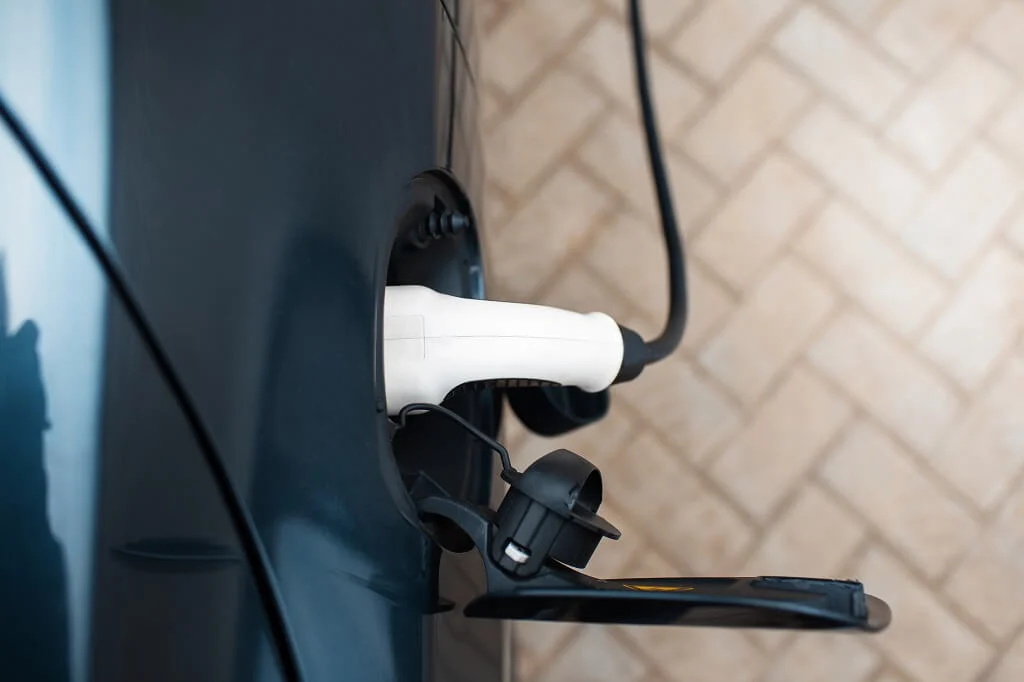
As the global automotive landscape undergoes its most radical transformation in a century, electric vehicles (EVs) have firmly transitioned from a niche luxury to a mainstream reality. Walk down any urban street or pull into a modern commercial parking lot, and you will witness the ubiquitous presence of EV charging infrastructure. Cities are rapidly electrifying, municipalities are introducing low-emission zones, and automakers are phasing out internal combustion engines (ICE) at an unprecedented pace.
Yet, for millions of new EV owners, the quintessential question is no longer if they should buy an electric car, but how they will manage its energy needs. While public charging networks continue to expand, a paradigm shift is quietly taking place in residential driveways and apartment garages. An escalating number of EV owners are bypassing public infrastructure altogether, opting instead to install dedicated home charging stations, commonly known as Wallboxes.
This comprehensive report delves into the mechanics of residential EV charging, exploring the various power outputs available, the profound economic and practical advantages of home installation, regulatory requirements, and the broader implications for the future of green energy and urban mobility.
Main Facts: Decoding Residential EV Charging
At its core, a home charging station is more than just a heavy-duty extension cord; it is a sophisticated, bidirectional energy management system designed to safely deliver high-amperage electricity to an electric vehicle’s onboard battery management system.
When transitioning from public charging to home infrastructure, consumers are generally presented with three primary tiers of alternating current (AC) power output, measured in kilowatts (kW):
- The 3.7 kW Charger (Slow Charging): Typically operating on a standard single-phase domestic circuit, this entry-level option is well-suited for plug-in hybrid electric vehicles (PHEVs) or fully electric cars with smaller battery packs, or for drivers with modest daily commutes who park for extended periods.
- The 7 kW Charger (Standard Home Charging): Widely considered the residential gold standard, a 7 kW Wallbox provides an optimal balance between charging speed and electrical load on a standard residential home. It can comfortably replenish a mid-sized EV battery overnight.
- The 22 kW Charger (High-Power Fast Charging): Representing the upper echelon of residential charging capabilities, a 22 kW unit requires a three-phase electrical supply. It is designed for drivers with heavy daily mileage or those operating larger battery packs who require rapid turnaround times at home.
However, moving up the power spectrum is not without its logistical hurdles. Installing high-capacity units—particularly the 22 kW variants—requires specialized electrical engineering. In many jurisdictions, homeowners are legally and technically obligated to enlist certified professionals, such as specialized IRVE (Infrastructure de Recharge de Véhicules Électriques) certified installers. These certified technicians ensure that the home’s electrical panel, wiring gauge, and safety breakers can handle the sustained thermal and electrical load. Furthermore, various energy suppliers and grid operators conduct rigorous safety inspections on newly integrated high-power residential systems to prevent local grid destabilization.
Chronology: The Evolution of the Residential Charging Market
To understand the current boom in home charging installations, it is essential to look at the historical trajectory that brought the industry to this juncture.
Phase 1: The Infancy of Electromobility (2010–2015)
In the early days of modern mass-market EVs, charging infrastructure was sparse. Early adopters relied heavily on standard domestic wall sockets (Level 1 charging), which delivered a trickle charge of roughly 2.3 kW. Recharging a vehicle could take upwards of 24 hours, making the EV experience cumbersome and limited primarily to short-distance urban commuting. Public infrastructure consisted of erratic, experimental slow chargers managed by disparate municipal programs.
Phase 2: The Rise of Public Infrastructure and Level 2 Standardization (2015–2020)
As automakers introduced second-generation EVs with extended ranges (surpassing 200 miles on a single charge), the demand for faster charging surged. Governments worldwide invested heavily in public fast-charging networks (DC fast chargers) and semi-public AC charging stations at supermarkets and workplaces. Concurrently, the 7 kW AC Wallbox emerged as a viable residential product, replacing makeshift garage setups with sleek, weather-resistant, and smart-enabled hardware.
Phase 3: The Residential Boom and Smart Integration (2020–Present)
The post-pandemic landscape catalyzed an unprecedented surge in EV adoption. Supply chain pressures, rising fossil fuel costs, and aggressive government carbon-reduction targets forced a dramatic shift in consumer behavior. Public charging stations—while more numerous—began to suffer from overcrowding, maintenance issues, and unpredictable surge pricing. Consequently, the market pivoted back to the home. The modern era of residential charging is characterized by "smart" Wallboxes capable of communicating with home solar arrays, shifting charging times to off-peak hours automatically via smartphone apps, and integrating seamlessly with home energy management systems (HEMS).
Supporting Data: The Numbers Behind Home Charging
Market analyses and consumer reports consistently highlight why home charging has become the preferred method for over 80% of EV owners globally. The economic, operational, and environmental metrics paint a clear picture.
Financial Dynamics
- Cost per kWh: Public fast chargers (DC) often levy premium pricing, factoring in commercial real estate costs, demand charges, and service fees, sometimes costing upwards of €0.40 to €0.80 per kWh. In contrast, residential electricity rates—especially during off-peak night hours—remain significantly lower, often ranging between €0.15 and €0.25 per kWh.
- Long-Term Amortization: While the initial hardware and installation costs of a quality Wallbox (including labor and electrical upgrades) can range from €1,000 to €2,500, studies show that an average driver recoups this investment within 18 to 36 months solely through the delta between public and residential electricity tariffs.
- Insurance Incentives: An emerging trend in the insurance sector involves risk mitigation partnerships. Forward-thinking insurance providers now offer premium discounts for homes equipped with professionally installed, certified EV charging units, recognizing the advanced thermal management and automatic shut-off safety features built into modern Wallboxes compared to makeshift household plug setups.
Practical Reliability Metrics
- Availability: Consumer satisfaction surveys consistently rank "station availability" as the number one pain point for public charging users. Broken screens, ICE-vehicle blocking (gas-car "icing"), and queue times are entirely eliminated with a private home charger.
- Time Efficiency: A standard 7 kW home charger adds approximately 25 to 40 kilometers of range per hour of charging. Parked for an average of 10 hours overnight, a vehicle easily transitions from a depleted state to a 100% state of charge without requiring a single minute of conscious time management from the driver.
Official Responses: Regulatory Bodies, Utilities, and Automakers
The exponential growth of home charging has forced a coordinated response from governments, electrical grid operators, and the automotive industry.
Government Subsidies and Tax Credits
Recognizing that public infrastructure alone cannot support national fleet electrification goals, numerous governments have introduced robust financial incentive programs. Tax credits, direct cash rebates, and zero-interest loans for the purchase and professional installation of residential charging units have become standard policy tools across Europe, North America, and parts of Asia. These programs aim to democratize EV ownership, ensuring that residents in suburban and rural detached homes have financial assistance to upgrade their domestic electrical infrastructure.
Grid Operators and Utility Stances
Electrical utility companies have adopted a dual approach of encouragement and caution. On one hand, utilities welcome the predictable, steady load profile of overnight residential charging, which helps balance baseload power generation. On the other hand, widespread adoption of high-power 22 kW chargers poses localized transformer stress if concentrated in specific neighborhoods.
Consequently, grid operators are actively promoting "smart charging" mandates. These regulations allow utilities to communicate directly with home chargers via smart meters, temporarily throttling or pausing charging speeds during peak grid hours (typically late afternoon and early evening) and rewarding homeowners with ultra-low tariffs for charging during deep-night troughs.
Automaker Ecosystems
Automobile manufacturers have largely abandoned the strategy of building cars in isolation, transitioning instead into comprehensive energy ecosystem providers. Major brands now partner directly with certified home installation networks, offering bundled packages where a Wallbox and its professional installation are included—or heavily discounted—at the point of vehicle purchase. This ensures a seamless handoff from showroom floor to residential driveway.
Implications: The Macro-Level Impact of Home Charging
While the installation of a single Wallbox is an individual consumer decision, the collective proliferation of millions of home chargers carries profound economic, environmental, and infrastructural implications.
The Decoupling from Fossil Fuels and True Green Mobility
One of the most compelling arguments for residential charging lies in its synergy with renewable energy. While public charging stations draw power from the regional grid—which may be powered by a mix of coal, natural gas, and renewables—a home charging setup offers the unique opportunity for localized decarbonization.
When paired with residential rooftop photovoltaic (solar) panels and home battery storage systems (such as stationary lithium-ion or sodium-ion home batteries), a home charging station enables true zero-emission driving. Homeowners can program their Wallbox to activate strictly when their solar panels are generating surplus electricity during midday, or to draw from stored green energy at night. This decouples personal mobility from both oil conglomerates and traditional centralized power grids, shrinking individual carbon footprints to near-zero.
Urban Sprawl, Equity, and the Multi-Family Dilemma
Despite its numerous benefits, the home charging revolution exposes a significant socio-economic divide: the disparity between single-family homeowners and multi-family apartment dwellers.
While homeowners with private garages enjoy seamless, cost-effective, and environmentally pristine motoring, urban renters and residents of multi-family housing complexes frequently struggle to access reliable overnight charging. Retrofitting historic apartment buildings with dozens of individual high-capacity chargers presents immense logistical, financial, and legal challenges regarding property management, shared electricity metering, and load balancing.
If cities fail to address this structural inequality through innovative municipal solutions—such as destination curbside charging, shared residential co-ops, and subsidized commercial parking retrofits—the transition to electric mobility risks leaving urban renters behind.
The Future: Vehicle-to-Home (V2H) and Vehicle-to-Grid (V2G)
Looking toward the horizon, the home charging station is evolving from a one-way energy valve into an active participant in the domestic energy grid. The next generation of bidirectional home chargers, coupled with compatible EV models, enables Vehicle-to-Home (V2H) and Vehicle-to-Grid (V2G) capabilities.
In a V2H scenario, your electric vehicle ceases to be merely a transport mechanism; it becomes a massive mobile power bank. During a regional power outage or a severe storm, the energy stored in your car’s battery can be routed backward through your Wallbox to keep your refrigerator running, your lights on, and your home heated. Furthermore, through V2G protocols, millions of parked EVs connected to home chargers can collectively feed surplus energy back into the national grid during moments of peak demand, stabilizing the grid against fluctuations caused by intermittent wind and solar power.
Conclusion
The evolution of home electric vehicle charging is no longer a peripheral topic in the automotive sphere; it is the cornerstone of modern sustainable mobility. As power outputs diversify to match driver lifestyles, and as smart integration transforms static appliances into dynamic energy nodes, the residential Wallbox is cementing its status as an indispensable household utility.
While challenges remain—particularly regarding multi-family housing equity and electrical grid modernization—the economic savings, unmatched convenience, and profound environmental benefits of home charging ensure that the future of the open road begins right inside the residential garage.
