

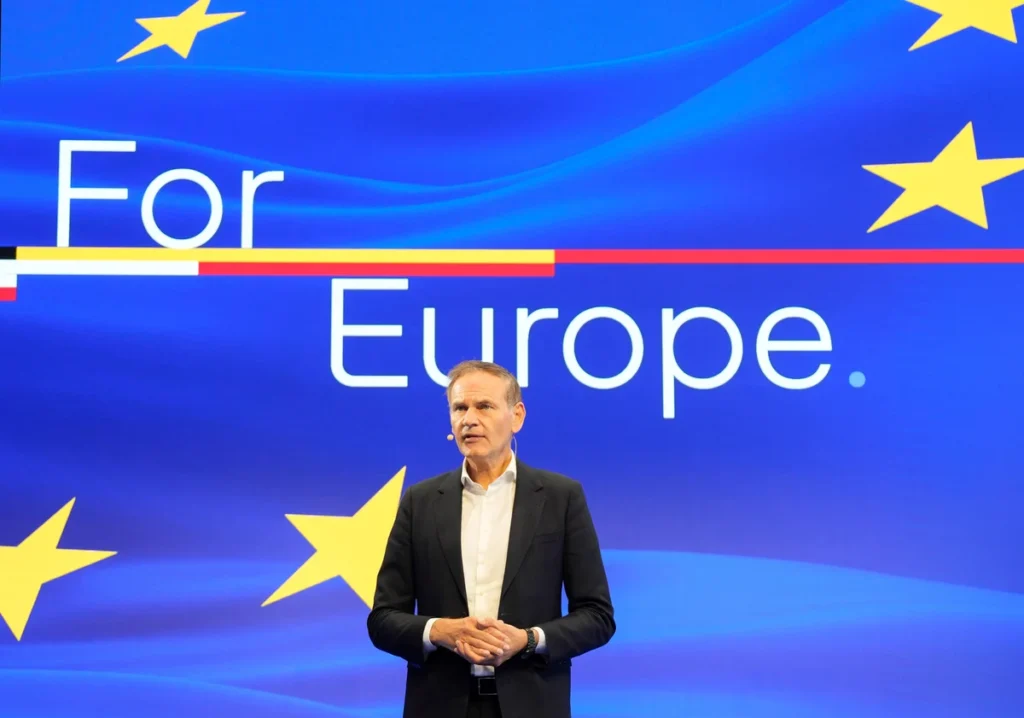
PARIS — Amid the glittering displays and high-voltage reveals of the Paris Motor Show, the mood among Europe’s automotive heavyweights is decidedly grim. On October 13, 2026, Volkswagen Group CEO Oliver Blume used the global stage not just to market new product lines, but to deliver a blunt, urgent warning regarding the existential pressures bearing down on legacy European automakers.
Faced with a pincer movement of aggressive Chinese market penetration, tightening regulatory constraints, and a slowing domestic economy, Europe’s traditional volume manufacturers are fighting for survival. Blume’s appeal to policymakers for regulatory flexibility and robust local production incentives underscores a widening panic in European boardrooms: the continent’s foundational automotive industry is rapidly losing its competitive edge.
Main Facts: A Perfect Storm for European Volume Manufacturers
The European automotive landscape—dominated by the triad of Volkswagen, Stellantis, and Renault, which collectively account for over 60% of the continent’s total auto production—is navigating a multi-front crisis.
- The Margin Trap: Generalist automakers rely on high-volume production. However, their profit margins are traditionally much lower than those of luxury competitors. Financing the massive pivot toward vehicle electrification while absorbing surging R&D and compliance costs has strained this economic model to its breaking point.
- The Chinese Influx: Chinese electric vehicle (EV) manufacturers, facing a saturated and slowing domestic market, have targeted Europe with unprecedented aggression. Bringing highly competitive, technologically advanced, and aggressively priced cars to the continent, these new market entrants are directly undercutting European manufacturers where it hurts most: the affordable segments.
- Internal Restructuring: To cope with the hemorrhaging of profits, industry leaders are turning to drastic internal measures. Volkswagen, under Blume’s leadership, is currently pushing through the most severe restructuring program in its corporate history—a plan involving tens of thousands of potential job losses and the unthinkable prospect of domestic plant closures, sparking fierce resistance from labor unions.
- Regulatory Gridlock: European executives argue that the European Union’s rigid decarbonization timelines and regulatory compliance frameworks are penalizing domestic players at a time when they are least equipped to absorb additional administrative and financial burdens.
Chronology of the Crisis: From Pandemic Recovery to the 2026 Paris Showdown
To understand how Europe’s automotive sector arrived at this precarious crossroads, it is necessary to examine the timeline of compounding pressures that have battered the industry over the past half-decade:
- 2020–2022 (The Supply Chain Shocks): The COVID-19 pandemic, followed closely by a severe global semiconductor shortage and skyrocketing raw material costs, crippled production lines across Europe. While volumes plummeted, automakers prioritized scarce chips for high-margin premium models, temporarily masking structural weaknesses in the volume segment.
- 2023 (The Chinese Awakening): As supply chains stabilized, Chinese EV makers—bolstered by state subsidies and vertically integrated supply chains—began exporting in earnest. Brands like BYD, MG, and others established robust footprints at European auto shows, offering feature-rich EVs at prices legacy European brands could not match.
- 2024–2025 (The Growth Plateau and Policy Friction): European EV adoption rates hit a temporary plateau due to the phased withdrawal of consumer purchase subsidies in key markets like Germany. Simultaneously, strict EU fleet emissions targets loomed closer, forcing automakers to push electric models that consumers were hesitant to buy at current price points.
- Late 2025 (The Internal Boiling Point): Realizing that business-as-usual would lead to insolvency, Volkswagen announced sweeping cost-cutting measures, throwing down the gauntlet with labor representatives and signaling that the German industrial model was in jeopardy.
- October 13, 2026 (The Paris Motor Show Flashpoint): Taking the podium in Paris, Oliver Blume officially transitions Volkswagen’s internal alarm into a public, political crusade. He issues a stark warning that Europe’s export-led growth model is dead and demands immediate government intervention, regulatory relief, and localized manufacturing protection.
Supporting Data & Market Metrics
The scale of the threat facing European automakers is quantified by stark market realities. According to industry reports from Reuters and market analysts at the Paris Motor Show:
- Market Concentration: Volkswagen, Stellantis, and Renault command over 60% of total European auto manufacturing output. Any systemic weakness in these three groups threatens to destabilize thousands of Tier-1 and Tier-2 suppliers across the continent.
- The Cost-Price Gap: Chinese automakers are reportedly able to land EVs in Europe at prices 20% to 30% lower than comparable models produced on European soil, driven by lower labor costs, dominant control over battery supply chains (such as lithium and rare earth elements), and domestic overcapacity.
- The Affordability Equation: European consumers face persistent cost-of-living pressures and high fuel prices, driving demand for affordable EVs. Yet, European legacy builders have struggled to profitably manufacture an EV priced under €25,000 without sacrificing margins.
- The Restructuring Toll: Volkswagen’s ongoing austerity measures involve potential headcount reductions affecting upwards of 30,000 workers in Germany alone, alongside structural threats to shutter historical manufacturing facilities that have operated for decades.
Official Responses and Stakeholder Positions
The deepening crisis has triggered a high-stakes standoff between corporate executives, political regulators, and labor unions.
Volkswagen and the Industry Lobby
Oliver Blume’s stance at the Paris exhibition was unequivocal: European manufacturers cannot trade their way out of this crisis using export profits alone. Blume stressed that the fundamental business model of volume production is under "enormous pressure." He called for a pragmatic overhaul of European regulations, arguing that environmental targets must be synchronized with industrial reality. Without state-backed incentives for local production and consumer subsidies for European-made EVs, the industry risks deindustrialization.
Policymakers and the Regulatory Dilemma
Brussels finds itself caught between two competing imperatives: maintaining its landmark climate commitments—specifically the push to phase out internal combustion engine (ICE) vehicles by 2035—and preserving millions of blue-collar jobs tied to the automotive sector. While the European Commission has previously initiated anti-subsidy investigations and provisional tariffs on Chinese EV imports, industry leaders argue these measures are too little, too late, and fail to address internal regulatory overreach.
Labor Unions and Social Unrest
For labor unions representing workers at Volkswagen, Stellantis, and Renault, corporate calls for "flexibility" are often viewed as code for wage suppression, outsourcing, and job destruction. The hardline restructuring plans announced by Volkswagen have already catalyzed militant union responses, strikes, and tense negotiations. Labor leaders argue that workers should not bear the brunt of strategic miscalculations made by executive leadership during the early transition to electrification.
Implications for the Future of European Mobility
The warnings issued at the 2026 Paris Motor Show signal a pivotal turning point for the European economy. The implications of this unfolding crisis extend far beyond corporate boardrooms:
- Deindustrialization Risks: If legacy automakers cannot achieve profitability in the volume and affordable EV segments, European manufacturing could see permanent plant closures. This would trigger a cascading collapse across the vast European automotive supply chain, which employs over 13 million people.
- Consolidation and Partnerships: To share the astronomical costs of next-generation software, battery development, and platform engineering, European automakers may be forced into unprecedented cross-border alliances, or risk being acquired by or absorbed into foreign conglomerates.
- A Redefined Green Transition: The friction between climate goals and industrial survival may force the European Union to temporarily soften or delay its rigid regulatory milestones. Policymakers will likely have to choose between strict adherence to green deadlines and the economic stability of Europe’s manufacturing heartland.
Ultimately, as Le Blog Auto’s analysis highlights, the alarm bells rung by Volkswagen are symptomatic of a broader malaise. For Europe to retain its status as a global automotive superpower, it must urgently reconcile its environmental ambitions with an economic framework that allows local manufacturers to compete, survive, and thrive in a radically shifting global marketplace.
