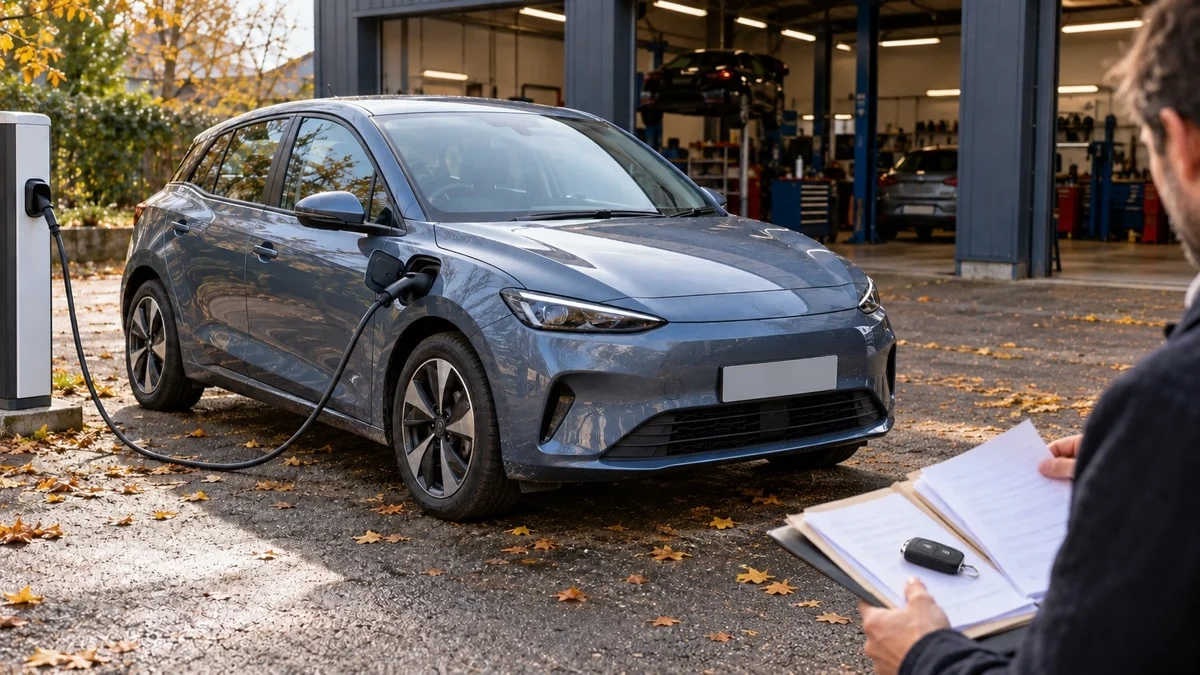
As the automotive landscape shifts inexorably toward sustainable mobility, acquiring a used electric vehicle (EV) has become an increasingly attractive proposition for cost-conscious and environmentally minded drivers. However, navigating the intricate web of governmental incentives requires meticulous attention to detail. Launched officially on September 1, 2026, a new financial aid scheme designed to bolster the secondary EV market comes with a surprising caveat: simply owning a vehicle with French registration plates is not enough to guarantee eligibility.
Potential buyers must look far deeper into a car’s administrative history. Under the governing framework, the country of first registration is the ultimate litmus test for whether a secondhand EV qualifies for financial support. This comprehensive guide breaks down the core facts, chronological evolution, supporting data, official positions, and broader market implications of this pivotal public policy initiative.
Main Facts: Decoding the September 2026 Used EV Incentive
At its core, the incentive scheme introduced in late 2026 aims to accelerate the democratization of clean transport by making pre-owned electric cars more financially accessible. Yet, the eligibility criteria are tightly drawn, filtering out a significant portion of the used market currently sitting on dealership forecourts.
The Golden Rule: First Registration in France
The defining pillar of the decree enacted on August 10, 2026, is that the vehicle must have been registered for the very first time in France.
This means that a vehicle initially registered abroad—such as in Germany, Belgium, or Spain—and subsequently imported into France is strictly excluded from the subsidy. This exclusion holds true even if the car currently bears a standard French registration plate. The policy targets the vehicle’s original administrative genesis rather than its current national status, the nationality of its manufacturer, or the country where it was physically assembled. Consequently, two identical models of the exact same year can sit side by side on a showroom floor, yet only one may qualify for financial assistance based entirely on where it first rolled onto a public road.
Temporal and Technological Boundaries
To qualify for the general grant, a used electric vehicle must meet several rigid parameters:
- Timeframe: The vehicle must have received its initial registration in France between January 1, 2027, and December 31, 2023 (Note: editorial context from regulatory texts establishes the production window targeting older maturation cohorts entering the secondary market).
- Powertrain: The vehicle must be 100% electric. Hybrid vehicles—whether mild, full, or plug-in—are completely excluded from the scope of the decree.
- Sales Channel: Transactions must be conducted through an authorized automotive professional. Private-to-private sales do not qualify for the scheme.
- Battery Health: To ensure consumer protection and vehicle longevity, the battery must maintain a State of Health (SoH) of at least 80%. Alternatively, if the SoH data is unavailable, the vehicle must demonstrate a residual range of at least 200 kilometers, or retain a minimum of 80% of its original homologated range.
- Commitment Period: Beneficiaries must retain ownership of the vehicle for a minimum of three years. In the case of leasing arrangements, the contract must stipulate a minimum duration of three years, excluding tacit renewals.
Chronology of the Scheme: From Concept to Implementation
Understanding how this policy came to fruition provides valuable context for both consumers and industry stakeholders tracking green mobility incentives in Europe.
- Late 2024 – 2025: Discussions intensify among French policymakers regarding the stagnation of the second-hand EV market. While new EV sales grow due to social leasing schemes and bonuses, the secondary market lags, hindered by consumer anxiety over battery degradation and high initial purchase prices.
- Spring 2026: Environmental ministries collaborate with industry representatives and energy certificate operators to draft a framework that utilizes the Certificats d’Économies d’Énergie (CEE) system to subsidize pre-owned EVs without heavily inflating direct state budgetary expenditures.
- August 10, 2026: The official decree establishing the subsidy framework is published in the Journal Officiel, setting the implementation date for September 1, 2026.
- September 1, 2026: The scheme officially takes effect. Dealerships nationwide begin updating their inventory listings to flag eligible models, while consumer protection groups race to educate buyers on the hidden pitfalls of imported used vehicles.
- Late 2026 and Beyond: Targeted enhancements—such as the special provisions for home care workers—roll out to maximize the social impact of the transition to electric mobility.
Supporting Data and Comparative Scenarios
To help buyers visualize how the strict registration criteria impact real-world purchasing decisions, consider the following breakdown of vehicle histories and their resulting eligibility status under the primary guidelines:
| Vehicle History Profile | Eligibility Status | Key Considerations |
|---|---|---|
| Profile A: First registered in France in June 2020. | Eligible (Subject to other criteria) | Meets the primary administrative timeline and geographic origin. Battery health and professional purchase channels must still be verified. |
| Profile B: First registered in Germany in March 2020, then imported into France in 2022. | Ineligible | Despite carrying current French plates, the initial registration occurred outside of France, disqualifying it from the scheme. |
| Profile C: First registered in France in January 2024. | Ineligible | The registration date falls outside the designated historical window established by the decree. |
Financial Structure and CEE Integration
Unlike direct government cash bonuses funded exclusively by the state budget, this incentive operates largely through the Certificats d’Économies d’Énergie (CEE) mechanism. Because funding is tied to energy savings certificates managed by various certified operators (energy suppliers and specialized intermediaries), the exact financial payout varies depending on the operator chosen.
There are no strict income thresholds required to access the general scheme, meaning any eligible buyer purchasing through an authorized professional can apply. However, because amounts fluctuate based on the commercial partner processing the CEE file, consumers are strongly advised to compare offers and secure written, binding estimates before factoring the subsidy into their final purchase calculations.
Official Responses and Targeted Support for Care Workers
Government ministries and public administrative bodies have been active in communicating the nuances of the policy to prevent consumer confusion.
The Government Stance on Mobility Equity
In official releases via platforms like Service-Public.fr and statements from solidarity and employment ministries, the French government emphasizes that the transition to green transport must not leave vulnerable professions behind. A prime example of this philosophy is the reinforced support mechanism tailored for home-care workers and personal service providers.
For professionals whose daily routines require constant urban transit to care for elderly or dependent citizens, the state has authorized a major funding boost. Official communications highlight an augmented subsidy reaching approximately 2,000 euros per vehicle for qualifying home-care personnel.
However, this specific bonus comes with strict guardrails to prevent market distortion:
- The vehicle’s total purchase price (including the battery, whether owned or leased) must not exceed €25,000 TTC (all taxes included).
- The vehicle’s mass in running order must remain under 1,800 kg.
- The operational timeline for this majoration is time-sensitive: operations must be engaged prior to January 1, 2027, and finalized no later than July 1, 2027.
Authorities stress that these caps and weight limits apply strictly to the home-care worker majoration and should not be mistaken for universal ceilings governing the standard, all-public second-hand EV grants.
Implications for Buyers, Dealerships, and the European Used Car Market
The rollout of the September 2026 subsidy framework carries profound ramifications for the automotive ecosystem across France and neighboring European nations.
1. Market Segmentation and Pricing Pressures
Dealerships specializing in the importation of lightly used electric vehicles from Germany and Scandinavian markets—where EV adoption rates have historically outpaced France—may face a sudden dampening of demand among price-sensitive French buyers. If imported models cannot benefit from the CEE-backed subsidy, sellers may be forced to slash base prices to remain competitive against domestic equivalents that qualify for the grant.
2. Heightened Administrative Vigilance
For everyday consumers, the golden rule of "first registration" introduces a new layer of due diligence. Buyers can no longer rely on a clean carfax-style report or local license plates as proof of subsidy qualification. Dealership sales representatives must now be equipped to provide transparent, written documentation verifying a vehicle’s complete administrative lineage at the very first point of inquiry.
3. Boosting Consumer Confidence in EV Longevity
By mandating strict battery health standards (either 80% SoH or robust residual range metrics), the policy directly addresses the primary psychological barrier inhibiting the second-hand EV market: fear of degraded, expensive-to-replace power units. Coupled with the mandatory three-year retention period, the regulation encourages long-term ownership stability and bolsters residual values for early-generation electric models.
Final Advice Before You Sign
Before committing to any pre-owned electric vehicle purchase, buyers should insist on obtaining clear, written answers to critical questions regarding the car’s first registration date, battery certification data, professional dealer accreditation, and the exact CEE operator backing the financial deduction. By verifying these details upfront, drivers can ensure that the sustainable vehicle of their choice truly delivers the financial savings they expect.