At the 2026 Mondial de l’Auto in Paris, Hyundai has made a bold statement in the competitive world of light commercial vehicles (LCVs). While the brand continues to command attention with its consumer-focused SUVs like the Tucson, the spotlight this year is firmly fixed on the introduction of the Hyundai Staria Cargo. This 100% electric van is not merely a utility vehicle; it is a meticulously engineered solution designed to meet the rigorous demands of European professionals who are increasingly navigating the complexities of urban logistics and environmental regulations.
Main Facts: The New Standard in Electric Commercial Mobility
The Staria Cargo arrives at a critical juncture for the automotive industry, where businesses are under immense pressure to transition to zero-emission fleets. Homologated as an N1 category vehicle, the Staria Cargo balances heavy-duty capability with the smooth, silent operation of an electric drivetrain.
At its core, the vehicle is powered by a robust 84 kWh lithium-ion battery. This power reservoir feeds a high-performance electric motor producing 218 horsepower (160 kW) and 350 Nm of torque. For fleet managers, the performance metrics are impressive: the van boasts a maximum speed of 184 km/h and, crucially, a WLTP-certified range of up to 450 kilometers on a single charge.
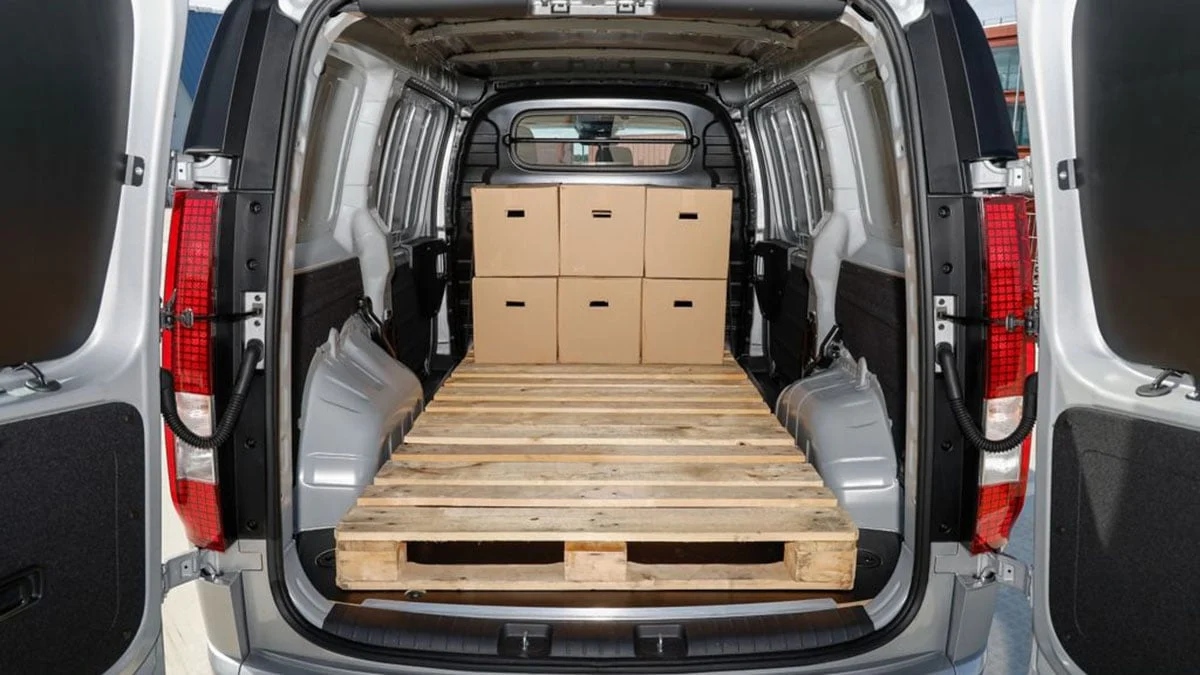
The physical configuration of the van has been optimized for productivity. With a cavernous load volume of 5.46 cubic meters, the Staria Cargo is specifically designed to accommodate three standard Euro-pallets. Accessibility is a key highlight, featuring dual side sliding doors with an 870 mm opening width and a rear hatch that opens to reveal a remarkably low loading sill height of just 573 mm. This ergonomic design is intended to reduce physical strain on workers and expedite the loading and unloading process, a vital factor for high-frequency delivery operations.
Chronology: The Evolution of the Staria Lineup
The journey of the Staria from a futuristic people-mover to a dedicated cargo solution represents a strategic shift in Hyundai’s portfolio.
- Initial Conceptualization: Originally debuted as a design-forward MPV, the Staria line turned heads for its “spaceship-like” aesthetics. Market feedback quickly indicated that the platform’s modularity and space efficiency would be perfectly suited for a cargo variant.
- The Development Phase (2024-2025): Throughout this period, Hyundai engineers focused on transitioning the platform to a dedicated electric architecture. The primary objective was to maintain the vehicle’s high-roof interior dimensions while integrating a heavy-duty battery pack without compromising payload capacity.
- Market Testing (Early 2026): Pilot programs in major European cities tested the real-world efficiency of the 800-volt charging system, confirming that the van could meet the tight turnaround schedules of delivery companies.
- The Global Reveal (October 2026): The Mondial de l’Auto serves as the grand unveiling, positioning the Staria Cargo as a cornerstone of Hyundai’s commercial fleet strategy for the latter half of the decade.
Supporting Data: Engineering and Performance Metrics
The technical specifications of the Staria Cargo underscore Hyundai’s commitment to "work-ready" technology. The vehicle is built on an 800-volt architecture, which remains a gold standard in electric vehicle efficiency. This architecture is the secret behind the van’s "ultra-fast" charging capability, allowing it to replenish from 10% to 80% charge in just 20 minutes when connected to a high-power DC fast charger.
For depot-based charging or overnight stops, the vehicle includes an 11 kW AC onboard charger. Beyond its movement capabilities, the Staria Cargo serves as a mobile power station via its Vehicle-to-Load (V2L) technology. This system allows the van to export up to 3,500 W of electricity, enabling professionals to power heavy-duty tools, refrigeration units, or charging stations for other equipment directly from the vehicle’s battery.
Technical Specification Table
| Feature | Specification |
|---|---|
| Battery Capacity | 84 kWh |
| Motor Output | 218 hp (160 kW) |
| Peak Torque | 350 Nm |
| Range (WLTP) | 450 km |
| Payload Capacity | 1,040 kg |
| Towing Capacity | 2,000 kg |
| Charging (10-80%) | 20 minutes (DC Fast Charge) |
Official Perspectives: What Hyundai Says
During the press conference at the Paris Motor Show, Hyundai representatives emphasized that the Staria Cargo was not an afterthought, but a purpose-built tool. "Our goal was to eliminate the compromise between range and utility," noted a company spokesperson. "The Staria Cargo provides the reliability that European business owners demand, coupled with the cutting-edge electrification that is becoming a regulatory necessity in urban centers."
The company highlights the interior cockpit as a reflection of modern professional needs. The inclusion of the "Connected Car Navigation Cockpit" (ccNC), featuring a 12.3-inch touchscreen and a digital instrument cluster, ensures that drivers have real-time access to vehicle diagnostics, route optimization, and fleet management software. The safety suite is equally comprehensive, featuring multi-collision braking (MCB), active lane-keeping assistance, and adaptive cruise control with Stop&Go functionality, ensuring that operator safety is prioritized alongside efficiency.

Implications: Changing the Face of Urban Logistics
The introduction of the Staria Cargo has several far-reaching implications for the logistics and commercial transport sectors.
1. Regulatory Compliance
With many European cities implementing Low Emission Zones (LEZs), diesel-powered vans are increasingly being restricted or subjected to high access fees. The Staria Cargo provides an immediate path to full compliance, ensuring that businesses can continue to operate in city centers without fear of future-proofing obsolescence.
2. Fleet Total Cost of Ownership (TCO)
While the upfront investment in electric vehicles is typically higher, the TCO is significantly lowered through reduced maintenance costs—thanks to the fewer moving parts in an electric drivetrain—and lower electricity costs compared to fluctuating diesel prices. The 2,000 kg towing capacity and 1,040 kg payload ensure that the transition to electric does not require a reduction in operational throughput.
3. Driver Retention and Ergonomics
In a competitive labor market, the comfort of the driver is a significant factor in retention. By providing a cabin that feels more like a passenger car than a traditional, spartan van—complete with modern infotainment and a suite of driver-assist systems—Hyundai is aiming to elevate the standard of the working environment for delivery personnel.
4. Integration into the Energy Grid
The V2L functionality hints at a future where commercial fleets act as decentralized energy storage units. Businesses with large fleets of Staria Cargo vans could potentially use their parked vehicles to balance energy demand or provide emergency power, creating a new layer of utility for the asset beyond simple transportation.
Conclusion: A New Chapter for Hyundai
The Hyundai Staria Cargo is more than just an addition to the company’s lineup; it is a manifestation of the brand’s vision for the future of work. By blending the avant-garde design of the Staria MPV with the rigorous, utilitarian requirements of a commercial cargo hauler, Hyundai has created a vehicle that is likely to disrupt the status quo.
As the automotive world gathers at the Paris Motor Show, the Staria Cargo stands as a testament to the fact that the transition to sustainable logistics is not only feasible but potentially more productive than the legacy systems it aims to replace. For businesses looking to scale their operations in an era of electrification, the Staria Cargo offers a compelling blend of range, speed, and intelligence that will be hard to ignore.
The exhibition in Paris runs until October 18, 2026, providing a firsthand look at how Hyundai intends to lead the charge in the electric utility sector. For the professional, the message is clear: the future of your fleet has arrived, and it is silent, efficient, and ready to work.