

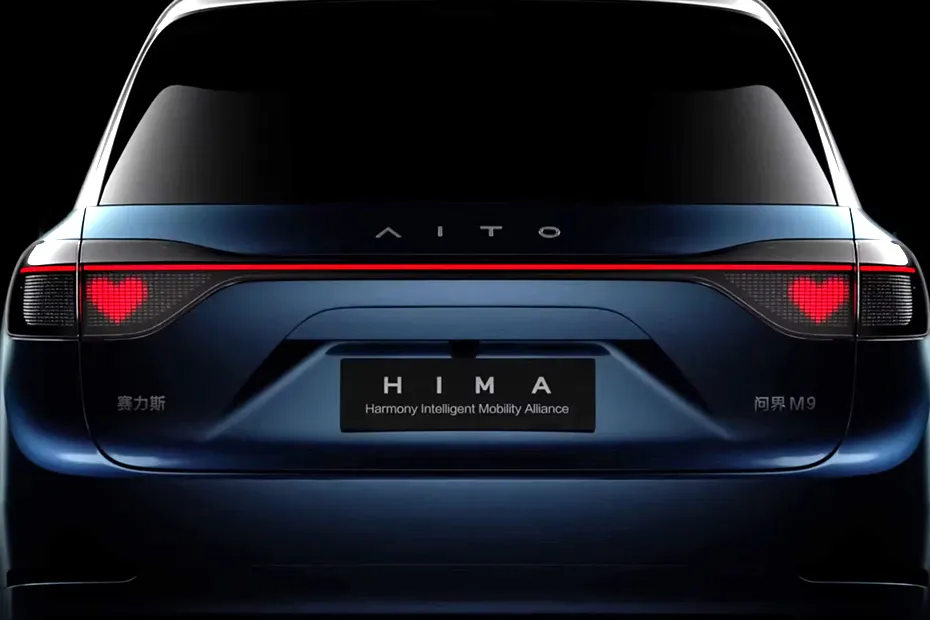
SHANGHAI — In the hyper-competitive landscape of China’s automotive sector, technological arms races are fought on multiple fronts. While horsepower, battery range, and in-cabin computing power have long dominated marketing brochures, exterior lighting has recently emerged as a primary battleground. Automakers have increasingly turned to avant-garde, customizable, and flamboyant lighting arrays to capture the attention of tech-savvy consumers in showrooms and online.
However, Beijing has decided enough is enough. The Chinese government has introduced stringent new regulatory measures aimed at curbing the unchecked proliferation of automotive lighting "gimmicks." The new rules spell an immediate end to whimsical exterior displays—such as scrolling text, animated pictograms, and expressive graphic bars pioneered by brands like Lynk & Co, Aito, and IM Motors. More critically, the crackdown targets the widespread, unauthorized use of blue and turquoise exterior lighting designed to mimic autonomous driving modes.
As regulatory authorities step in to reassert control over road safety and visual clutter, the automotive industry faces a mandatory design overhaul.
Main Facts: What the New Regulations Entail
The sweeping regulatory adjustments target two primary categories of exterior automotive illumination: decorative/communicative pixel displays and autonomous driving status indicators.
- Ban on Whimsical and Interactive Displays: Automakers are officially prohibited from utilizing exterior pixel matrices, LED strips, or projection systems capable of displaying text messages, moving animations, or custom icons to the outside world. These features, while popular on social media and at auto shows, have been deemed a significant distraction to other motorists.
- Strict Limitation on Autonomous Driving Lights: The use of turquoise or blue exterior lighting—widely adopted to signal that a vehicle is operating under automated driving systems—is now heavily restricted. Moving forward, only vehicles that have achieved formal governmental homologation for Level 3 autonomy (or higher) will be legally permitted to feature these operational indicators.
- Standardization of Authorized Indicators: For manufacturers permitted to use autonomy-status lights, the Wild West era of bespoke hues, variable intensities, and erratic placements is over. The Chinese government will mandate precise standards regarding color shade, physical positioning, and luminosity.
- The Gray Area of Road Projections: Interestingly, the current regulatory wave leaves ground-projection technologies—systems that beam navigation arrows, pedestrian warnings, or vehicle status information directly onto the asphalt—largely unaddressed, leaving a potential regulatory loophole for future scrutiny.
Chronology: How the Lighting Arms Race Led to Regulatory Intervention
To understand how exterior lighting became a matter of national regulatory concern, one must trace the rapid evolution of China’s domestic electric vehicle (EV) market over the past five years.
- 2019–2021: The Rise of Smart Exterior Screens. As software-defined vehicles matured, Chinese startups began exploring ways to make their cars communicative. Early concepts featured simple welcome animations. By 2021, brands were integrating high-resolution LED matrices into front grilles and tailgates, allowing cars to "talk" to pedestrians and other drivers.
- 2022–2023: The Autonomous Marketing Pushes. Facing intense competition, brands sought ways to stand out in the advanced driver assistance systems (ADAS) space. Following government crackdowns on misleading marketing terminology—specifically the prohibition of terms like "L3 Ready" or "L2+" in public advertising—automakers pivoted to hardware-based signaling. They adopted turquoise exterior lights to visually broadcast their advanced capabilities to the public.
- Late 2023–Early 2024: Proliferation and Fragmentation. Without uniform standards, every manufacturer implemented its own version of the autonomous indicator. Vehicles rolled off production lines with varying shades of blue and cyan, mounted on side mirrors, front fascias, and rear light bars. Simultaneously, interactive exterior displays became increasingly chaotic, with vehicles flashing animations in bumper-to-bumper traffic.
- October 2024: Global Exposure at the Paris Motor Show. Chinese manufacturers proudly showcased these luminous innovations on the international stage at events like the Paris Motor Show, drawing both fascination and concern from global industry observers regarding regulatory harmonization.
- Late 2024: Beijing Steps In. Recognizing the mounting risks of road distraction and consumer deception, Chinese regulatory bodies finalized new compliance frameworks to rein in exterior lighting, setting the stage for strict enforcement across current and upcoming model lineups.
Supporting Data and Industry Context: The Anatomy of a Visual Arms Race
The crackdown addresses a phenomenon born out of commercial desperation. In China’s crowded automotive market—where dozens of new EV brands launch vehicles annually—differentiation is a matter of survival.
According to market research from various automotive consultancies in Shanghai, over 65% of new energy vehicles (NEVs) launched in China between 2023 and 2024 featured some form of non-traditional exterior lighting capability. This included customizable welcome lights, interactive matrix headlights capable of projecting crosswalks, or customizable rear-window messaging boards.
The financial and engineering investments poured into these features were substantial. Tier-1 suppliers developed dedicated micro-LED control units just to handle exterior communication animations. However, traffic safety experts warned that these systems traded genuine safety for marketing value. A 2023 study by a coalition of Chinese transport safety institutes noted a 14% increase in driver fixation incidents on highways where vehicles utilized dynamic exterior displays, as surrounding drivers attempted to read or interpret scrolling messages.
Furthermore, the premature adoption of turquoise lighting created a false sense of technological maturity. While international standards organizations (such as the SAE and UNECE) have designated turquoise as the prospective universal color for automated driving system activation, true Level 3 systems—where the vehicle legally assumes liability from the driver—remain rare on public roads. By outfitting Level 2+ vehicles with Level 3-style indicator lights, automakers blurred the lines of consumer accountability.
Official Responses and Industry Reactions
The regulatory shift has elicited a mixed, though largely resigned, response from the automotive sector.
The Government Perspective
Ministry of Industry and Information Technology (MIIT) officials have emphasized that vehicle lighting must strictly adhere to its primary functional purpose: illumination and clear, standardized signaling. Speaking on condition of anonymity, a regulatory policy advisor noted:
"The road is not a canvas for digital art installations or marketing billboards. Exterior lighting must communicate vital safety states unambiguously. When every manufacturer invents its own visual language for autonomy, or turns their bumpers into moving message boards, the cognitive load on human drivers reaches dangerous levels."
Automaker Adjustments
Established disruptors and legacy brands alike are now scrambling to re-engineer their export and domestic pipelines.
- IM Motors (backed by SAIC Motor), known for its advanced digital light systems capable of painting roadway symbols, is reportedly reworking software updates to disable non-compliant external display modes for the Chinese market.
- Aito and Lynk & Co, both recognized for pioneering expressive exterior LED arrays, are adjusting their vehicle configuration roadmaps to comply with the impending enforcement deadlines.
Industry analysts point out that while the changes will require costly software patches and potential hardware redesigns, compliance is non-negotiable for any brand wishing to maintain its license to sell in the world’s largest automotive market.
Implications: What This Means for the Future of Car Design
The crackdown on lighting gimmicks carries profound implications, extending far beyond China’s borders and touching upon global automotive design, safety standards, and the future of autonomous driving communication.
1. A Return to Functional Minimalism
The era of the "rolling billboard" is effectively over in China. Exterior design teams will be forced to pivot away from superficial gimmicks and refocus on classic automotive styling, aerodynamic efficiency, and core functional lighting performance (such as matrix high-beam safety and energy-efficient LED architecture).
2. Clarifying the Autonomous Driving Hierarchy
By restricting turquoise lighting strictly to homologated Level 3 vehicles, Beijing is enforcing a vital link between hardware signaling and legal reality. This move protects consumers from overestimating the capabilities of their vehicles. If a car displays the authorized autonomous signature, other road users—and law enforcement—will know with absolute legal certainty that the machine, not the human, is in control.
3. The Looming Challenge of Road Projections
As noted by industry watchers, the one area left unaddressed by the current decree is ground-projection technology. Many luxury and tech-focused EVs now project navigation cues, lane boundaries, or pedestrian warning paths directly onto the road surface.
While effective when a single vehicle utilizes the technology, experts warn of a "tragedy of the commons" scenario. Imagine a multi-lane highway at night during a rainstorm, where dozens of autonomous and semi-autonomous vehicles simultaneously project competing, overlapping digital arrows and warnings onto the wet asphalt. The resulting visual cacophony could be catastrophic. Analysts anticipate that road projections will be the inevitable next target for Chinese regulators once the current lighting guidelines are fully codified.
4. Global Ripple Effects
Because many Chinese automakers are aggressively expanding into Europe, Latin America, Southeast Asia, and the Middle East, regulations established in Beijing frequently influence global product strategies. Vehicles engineered to comply with China’s strict new lighting controls are likely to feature standardized lighting profiles worldwide, potentially preempting a fragmented global regulatory landscape for autonomous vehicle signaling.
Conclusion
China’s decisive intervention into automotive lighting marks the end of an eccentric chapter in modern vehicle design. By reining in distracting pixel displays and putting a stop to premature "autonomous" light shows, Beijing has prioritized cognitive road safety over showroom spectacle. For automakers, the message is clear: innovation must serve safety, not marketing hype. As the industry adapts to these new boundaries, the highways of tomorrow promise to be a little less flashy—and significantly safer for everyone.
