

Published: July 23, 2026
Choosing between a conventional internal combustion engine (ICE) vehicle and a zero-emission electric vehicle (EV) involves evaluating a complex matrix of acquisition costs, energy expenses, and maintenance overhead. However, a critical metric has recently shifted: the cost of insuring these vehicles.
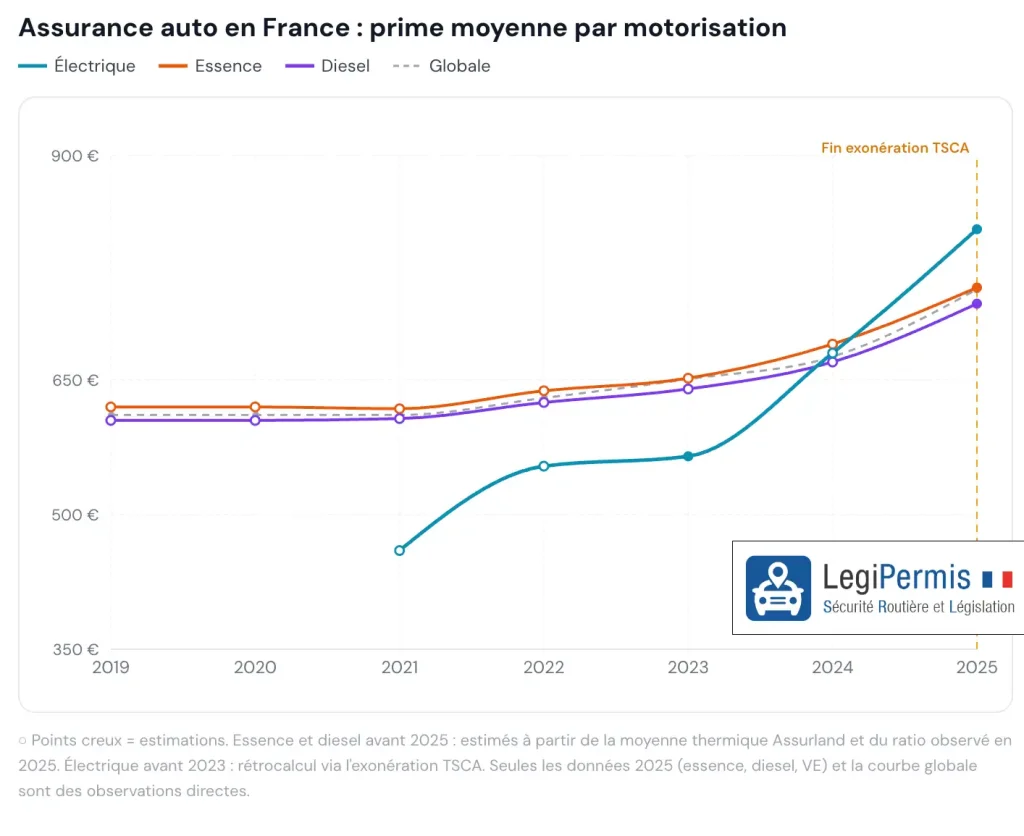
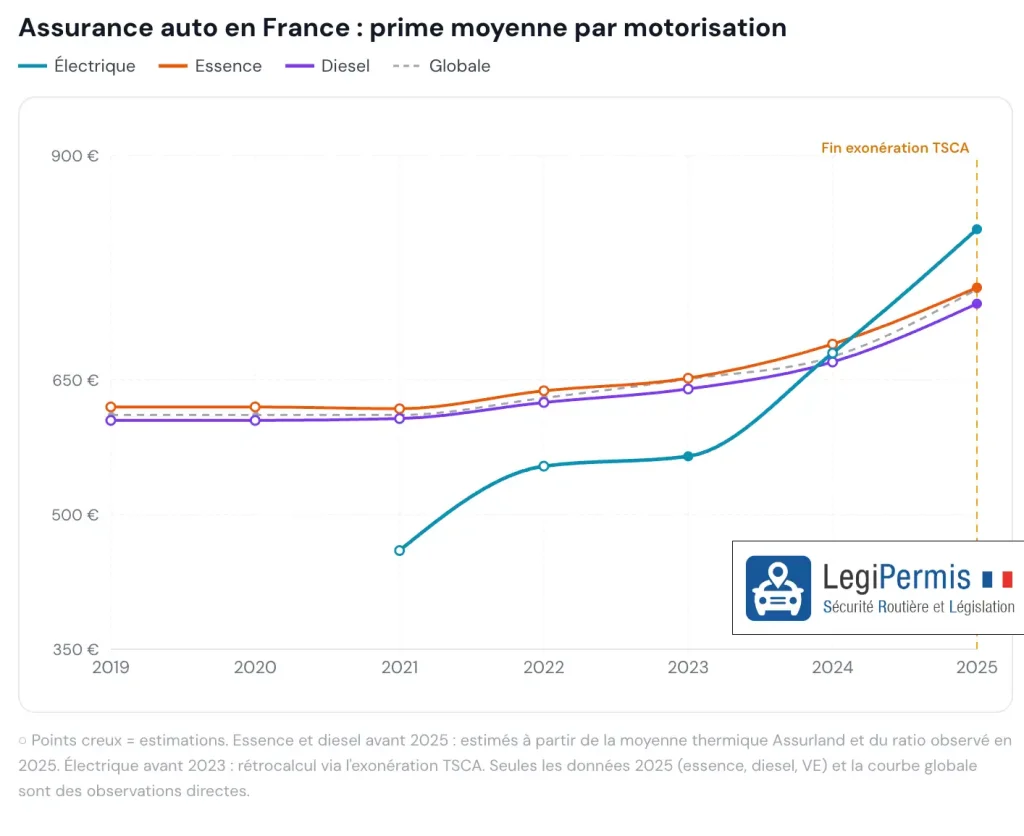
According to data compiled by industry analysts and prominent comparison platforms, the historical financial advantage of insuring an EV has evaporated. Based on quote panels evaluating 2025 data published in early 2026, the average annual premium for an electric vehicle has surpassed that of a comparable petrol-powered car.
While this inversion reflects a specific panel’s data rather than an exhaustive census of the entire French insurance market, it highlights a profound structural shift across Europe. This comprehensive report examines the data, analyzes the driving forces behind the trend, evaluates international benchmarks, and outlines actionable strategies to optimize your auto insurance budget in 2026.
1. Main Facts: The 2026 Insurance Landscape
The automotive insurance market is experiencing a period of adjustment. For years, driving an electric vehicle offered financial perks beyond fuel savings, frequently extending to reduced insurance premiums. That dynamic has reversed.
The Numbers at a Glance
Data derived from the Assurland quote panel for the 2025 policy year (published in early 2026) outlines the current financial baseline:
- Electric Vehicles (EVs): €818 average annual premium
- Petrol Vehicles: €753 average annual premium
- Diesel Vehicles: €735 average annual premium
Within this specific sample, electric vehicle insurance carries an approximate +8.6% surcharge compared to petrol counterparts. These figures fluctuate depending on the driver’s risk profile, geographic location, chosen coverage tier, and the underwriting algorithms of individual providers.
This environment stands in stark contrast to 2023, when insuring an electric vehicle in France was, on average, roughly €80 cheaper than insuring an equivalent thermal vehicle. Within a span of two years, the trend flipped entirely.
2. Chronology: How the EV Insurance Advantage Vanished
To understand how electric vehicle insurance premiums overtook combustion engines, it is necessary to trace the regulatory, industrial, and economic milestones that reshaped the European automotive insurance sector between 2023 and 2026.
2023: The Peak of the Incentive Era
- Tax Exemptions: EVs enjoyed comprehensive exemptions from special insurance taxes, notably the TSCA (Taxe Spéciale sur les Conventions d’Assurance), which imposes heavy levies on civil liability (33%) and property damage guarantees (18%).
- Favorable Rates: Insurers actively subsidized or underpriced EV policies to attract early adopters, resulting in insurance costs that were lower than those of conventional fuel vehicles.
2024: The Regulatory Tipping Point
- Phasing Out Tax Breaks: The French government initiated the rollback of the TSCA exemption. Contracts initiated in 2024 saw the exemption reduced to 75%, locked in for a 24-month duration.
- Rising Claims Costs: Independent bodies like the SRA (Sécurité et Réparation Automobile) began publishing collision data indicating that EVs were materially more expensive to repair following accidents due to specialized labor and sensor-laden body panels.
2025: Structural Realities Set In
- Full Tax Application: Tax exemptions for new policies starting in 2025 were entirely eliminated, exposing EV owners to the full weight of standard insurance taxation.
- Major Industry Studies: Comprehensive market studies published toward the end of the year by France Assureurs and international federations confirmed persistent surcharges in repair times, parts costs, and total loss thresholds.
2026: Market Stabilization and Adaptation
- Current Reality: Insurers have fully integrated the real-world costs of EV maintenance, battery logistics, and structural weight into their actuarial models.
- Emerging Solutions: The market is beginning to see targeted adjustments, including specialized EV packages, telematics-driven pay-as-you-drive policies, and discussions surrounding standardized repairability indexes.
3. Supporting Data & International Benchmarks
Insurance cost inflation for electric vehicles is not an isolated French phenomenon; it mirrors a broader continental and global trend driven by engineering realities.
Cross-Border Comparisons
- United Kingdom: According to data from the Association of British Insurers (ABI), the insurance cost gap between electric and thermal vehicles peaked at a staggering +39% in early 2024. By late 2025, increased market maturity compressed this gap to between +10% and +20%. Nevertheless, ABI notes that repairing an electric vehicle still costs roughly 25% more than repairing a combustion vehicle.
- Germany: Data updated in August 2025 by the German Insurance Association (Gesamtverband der Versicherer – GDV) reveals a nuanced picture. Under comprehensive Vollkasko coverage, EVs experience 10% to 15% fewer claims frequency than comparable thermal vehicles. However, when an accident does occur, the average cost per claim remains 15% to 20% higher than for conventional models.
Comprehensive Claims Data Summary
| Indicator | Key Metric | Source and Scope |
|---|---|---|
| EV Collision Repair Surcharge | +14.3% | SRA Collision Claims Observatory (2024) |
| Overall Indemnification Surcharge | +11.0% | France Assureurs (EVs and plug-in hybrids vs. same-generation thermal) |
| Windshield/Glass Claims Surcharge | +28.0% | France Assureurs (Same perimeter) |
| Spare Parts Price Inflation (since 2020) | +29.0% | SRA Data |
| Parts Replacement vs. Repair Rate | 72.0% | SRA Data |
4. Official Responses and Industry Analysis
Insurance federations and regulatory bodies point to three primary drivers behind the higher cost of insuring electric vehicles: fiscal policy, repair complexities, and the financial exposure represented by high-voltage traction batteries.
1. The Rollback of Tax Exemptions (TSCA)
The loss of the Special Tax on Insurance Contracts represents an immediate financial blow. While the removal of the exemption does not trigger a universal, mechanical 20% price hike across all contracts—as the impact depends heavily on the specific policy’s guarantee weight and an insurer’s internal pricing strategy—it introduces a structural baseline tax disadvantage that insurers must pass on to policyholders.
2. Complex and Costlier Repairs
Data published by France Assureurs in late 2025, encompassing a study of 1.9 million vehicles, demonstrates that electric and plug-in hybrid vehicles incur an average indemnification surcharge of +11% across all guarantees compared to thermal equivalents. This rises to +14% for property damage and an alarming +28% for glass replacement, largely due to embedded sensors, cameras, and radar systems housed within windshields and bumpers.
Furthermore, the SRA Observatoire des Sinistres confirms that EVs cost 14.3% more to repair following a collision than the national vehicle park average. This is compounded by an industry-wide rise in spare parts costs (+29% since 2020) and a high component replacement rate (72%) rather than repair.
3. The Battery Liability Risk
The traction battery remains the single largest financial exposure for insurers. While replacement costs and valuations vary widely based on capacity, chemistry, vehicle age, and manufacturer policies, industry estimates suggest a battery pack can account for 30% to 50% of a vehicle’s total value, with replacement costs running anywhere from €8,000 to €20,000.
Thatcham Research notes that a battery pack frequently represents around 40% of a brand-new EV’s value. Compounding this issue, France Assureurs points out that only about half of automotive manufacturers currently offer truly repairable battery designs. Consequently, a minor impact to the lower chassis or protective casing can result in a vehicle being written off as economically irreparable (Économiquement Irréparable), driving up total loss claim payouts.

Finally, the sheer physical mass of electric vehicles—weighing on average 41% more than equivalent thermal vehicles according to France Assureurs—magnifies the kinetic energy transferred during a collision, leading to more severe structural damage and higher repair bills.
5. Market Implications and Key Nuances
Despite the headline-grabbing insurance surcharges, industry data highlights several important nuances that challenge blanket assumptions about electric vehicle risk:
- Lower Theft Rates: Data from Argos and France Assureurs indicates that electric vehicles are stolen less frequently than their thermal counterparts, aided by advanced native GPS tracking, digital immobilizers, and smartphone connectivity.
- The "All-Risks" Bias: Statistical comparisons are often skewed by consumer behavior. Between 88% and 93% of EV owners select premium "All-Risks" (Tous Risques) coverage, compared to only 44% to 54% of thermal vehicle owners. This artificially inflates the average cost of EV insurance policies in raw market panels without reflecting a proportionally higher risk profile for identical coverage tiers.
- Usage Profiles: Data from the Cerema usage study shows that EV drivers average roughly 45.5 kilometers per day—comparable to the 41.1 kilometers recorded for thermal drivers—dispelling the myth that EVs are driven significantly less or exclusively on urban short-hops.
6. Looking Ahead: Will the Price Gap Close?
Market indicators suggest that the current insurance price disparity between electric and thermal vehicles may level out over the coming years:
- Declining Battery Production Costs: Global industrial costs for battery packs continue to trend downward, eventually trickling down to replacement logistics and aftermarket provisioning.
- Specialized Repair Competency: As collision repair networks complete specialized high-voltage training and safety certifications, labor overheads and repair times are expected to normalize.
- Repairability Metrics: Industry initiatives led by France Assureurs and the SRA to introduce a formal vehicle "repairability index" aim to pressure manufacturers into designing cars that are simpler and cheaper to fix.
However, countervailing pressures—such as the rising technological complexity of Advanced Driver Assistance Systems (ADAS) and broader inflationary trends pushing up all auto insurance premiums by 4% to 6%—will continue to exert upward pressure on rates.
7. Practical Advice: How to Lower Your EV Insurance Costs
If you own or plan to purchase an electric vehicle, several strategies can help mitigate insurance expenses:
- Compare Quotes Before Buying: Insurance pricing varies drastically across models. Historically, smaller city EVs like the Renault Zoe incurred significantly lower premiums than performance-oriented models like the Tesla Model 3. Check insurance rates before signing a purchase order.
- Shop Around Specialized Insurers: Pricing discrepancies between insurance companies are wider for electric vehicles than for conventional cars. Some legacy insurers maintain overly cautious risk grids, while others offer dedicated green mobility discounts, battery-specific coverages, and charging-failure roadside assistance.
- Opt for Pay-How-You-Drive Policies: If you maintain a modest annual mileage, telematics-based or kilometer-based insurance formulas (pay-as-you-drive) are exceptionally well-suited to modern, connected electric vehicles.
- Scrutinize Battery Coverage: Verify whether your policy explicitly covers damage to the traction battery, particularly if you utilize a long-term lease (LOA/LLD) where battery ownership terms can complicate claims processing.
Conclusion
The evolution of car insurance in 2026 demonstrates that while insuring an electric vehicle currently carries a noticeable premium over a petrol vehicle—driven by specialized repair costs, structural weight, and the phase-out of tax incentives—it must be weighed against ongoing savings in fuel and routine maintenance.
As battery technology matures, repair networks adapt, and market competition intensifies, the insurance gap is poised to stabilize. In the meantime, the single most effective action a motorist can take is to run comparative insurance quotes across multiple providers before committing to a vehicle purchase, ensuring total transparency over the true total cost of ownership.
