

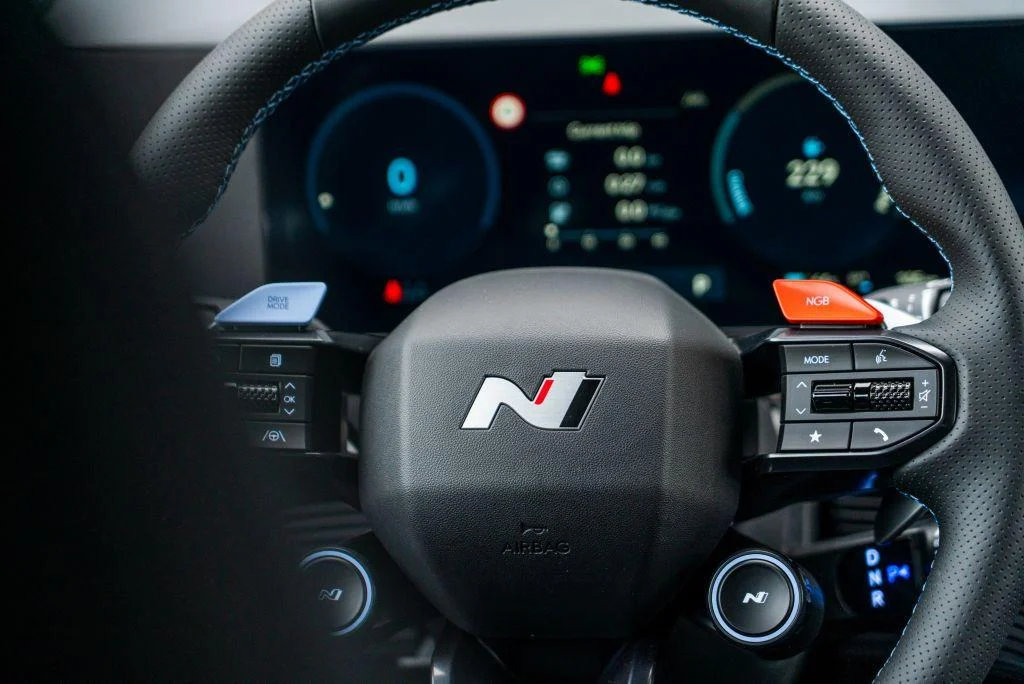
October 6, 2026 – In the rapidly evolving landscape of automotive engineering, Hyundai has achieved what many industry skeptics once deemed impossible: reconciling the sterile efficiency of electric powertrains with the visceral, raw emotion of internal combustion performance. With the introduction of the Ioniq 5 N, the South Korean manufacturer successfully pioneered a "virtual" driving experience, utilizing simulated gearboxes and artificial soundscapes to bridge the gap between two disparate eras of motoring.
However, recent patent filings suggest that Hyundai is not merely content with simulating gears; the company is now moving to replicate the mechanical nuance of engine braking. This development signals a broader, industry-wide shift toward "emotional engineering," where the goal is no longer just speed, but the preservation of the soul of the driving experience in a post-combustion world.
The Chronology of the "N" Revolution
To understand the significance of Hyundai’s latest technological endeavor, one must look back at the trajectory of the N division, Hyundai’s high-performance sub-brand.
- 2023: The Paradigm Shift: The launch of the Ioniq 5 N marked a watershed moment. Unlike its competitors, who focused purely on 0–60 mph acceleration figures, Hyundai introduced the N e-Shift and N Active Sound+ systems. These features allowed drivers to simulate the jolts of a dual-clutch transmission and the roar of a high-revving turbo engine, effectively gamifying the electric driving experience.
- 2026 (Early): Scaling the Concept: Following the success of the Ioniq 5 N, the integration of these features became a standard expectation for the brand’s performance line, including the recently announced Ioniq 6 N.
- 2026 (Mid-Year): The Pursuit of Mechanical Fidelity: Hyundai began exploring hybrid transmission concepts, including patents for systems that mimic the tactile feel of manual gated gearboxes, inspired by high-end hypercar manufacturers like Koenigsegg.
- October 2026: The Patent Reveal: New documentation reveals that Hyundai is refining software-driven regenerative braking, specifically designed to mirror the deceleration characteristics of a downshifting combustion engine.
Breaking Down the Innovation: The Virtual Engine Brake
The core of Hyundai’s latest patent lies in the manipulation of regenerative braking intensity based on the "virtual gear" currently selected. In a traditional electric vehicle (EV), regenerative braking is typically linear or adaptive based on speed and traffic. Hyundai’s new system, however, aims to introduce a non-linear, mechanical-feeling resistance.
How it Works
The system operates as a software layer that intercepts the driver’s inputs and modulates the torque recovery of the electric motors. When the driver "downshifts" using the steering wheel paddles, the software increases the regenerative braking force, creating a deceleration profile that mimics engine braking.
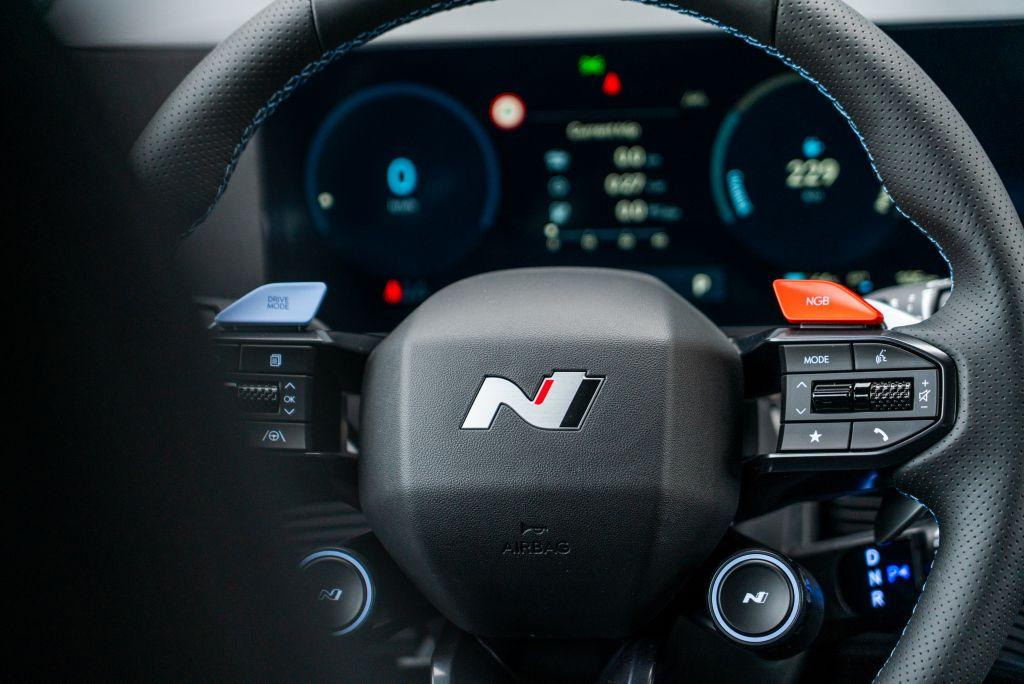
- Low Gear Simulation: When in first or second gear, the system applies maximum regenerative torque, forcing the vehicle to slow down abruptly—mirroring the behavior of a low-gear downshift in a combustion car.
- High Gear Simulation: Conversely, when in a higher virtual gear, the resistance is dampened, allowing the vehicle to carry more inertia through corners.
This is a masterclass in "haptic feedback." By adjusting the intensity of the electric motor’s resistance, the engineers have created a physical sensation of mechanical engagement that, while entirely digital, translates directly into the driver’s seat.
Supporting Data: Why Simulation Matters
Critics often argue that simulating mechanical sensations is a superficial gimmick—a "fake" experience that does not belong in the future of mobility. However, data from the Ioniq 5 N’s market performance suggests otherwise.
Surveys conducted by automotive research firms in 2025 indicated that nearly 70% of performance EV owners expressed a "disconnect" from their vehicle during spirited driving. The lack of acoustic and physical feedback resulted in a lower perceived level of control.
Hyundai’s internal data shows that owners of the Ioniq 5 N spend significantly more time in the "N e-Shift" mode than in the standard "EV" mode. This suggests that the customer base is not buying these cars because they are electric; they are buying them because they are engaging. The "false" sensation of a rev-limiter or a downshift provides the driver with sensory cues that allow for more precise control during technical driving, effectively making the car easier to drive quickly.
The Industry Perspective: A Shift in Philosophy
Hyundai is not alone in this realization. The industry is currently witnessing a massive pivot among legacy performance brands.
Porsche, AMG, and Ferrari
Porsche has been experimenting with synthesized sound profiles and weight distribution simulation, while Mercedes-AMG has begun incorporating active sound generators into its EQ line to combat the "silence" of their high-performance EVs. Ferrari, currently developing its first electric supercar, has been vocal about the need to retain the "Ferrari feeling," which they define as an inseparable combination of longitudinal acceleration, acoustic character, and dynamic handling.
The industry has collectively realized that the "EV transition" cannot simply be a transition to faster, quieter boxes. If performance manufacturers lose the "emotion" associated with the internal combustion engine, they risk alienating the very demographic that sustains the high-end sports car market.
Implications: The Future of the "Soulful" EV
The implications of Hyundai’s patents are profound. If a manufacturer can successfully replicate the sensation of a six-cylinder engine, the crispness of a manual gearbox, and the subtle, mechanical deceleration of engine braking, we are forced to ask: Is the internal combustion engine truly necessary for the enthusiast?
1. The Death of Mechanical Necessity
If the experience can be replicated through software, the necessity of the combustion process becomes purely ideological. For those who value the "feel" of a car, the electric powertrain may eventually become the preferred platform because it offers the sensation of a manual car without the maintenance, heat, or mechanical failure points of an ICE engine.
2. The Standardization of "Character"
We may soon enter an era where car "character" is an OTA (Over-The-Air) update. Drivers could theoretically download the "personality" of different engine architectures. One day, your car feels like a high-revving V10; the next, it mimics the torque curve of a classic muscle car. This customization turns the car into a digital platform for performance history.
3. The Risk of the "Uncanny Valley"
Despite the benefits, there is a risk. As these simulations become more sophisticated, they risk falling into the "uncanny valley"—where the experience is almost perfect, but the slight lack of true mechanical friction or heat makes the experience feel hollow. The success of Hyundai’s future models will depend entirely on the fidelity of this feedback.
Conclusion
Hyundai’s latest moves confirm that the company is playing a long game. By prioritizing the driver’s emotional connection, they are securing their position as a leader in the next generation of performance vehicles.
Whether these simulations are a necessary crutch for a generation transitioning away from fossil fuels, or a new way to enjoy the possibilities of software-defined dynamics, one thing is clear: the era of the "soulful" electric car has begun. We are no longer waiting for the future of the sports car; we are currently re-coding it, one virtual gear at a time.
For further updates on the N division’s upcoming releases and the latest in EV performance technology, follow our ongoing coverage of Hyundai’s technological roadmap.
