

Introduction: A Grand Finale Under the Shadow of Crisis
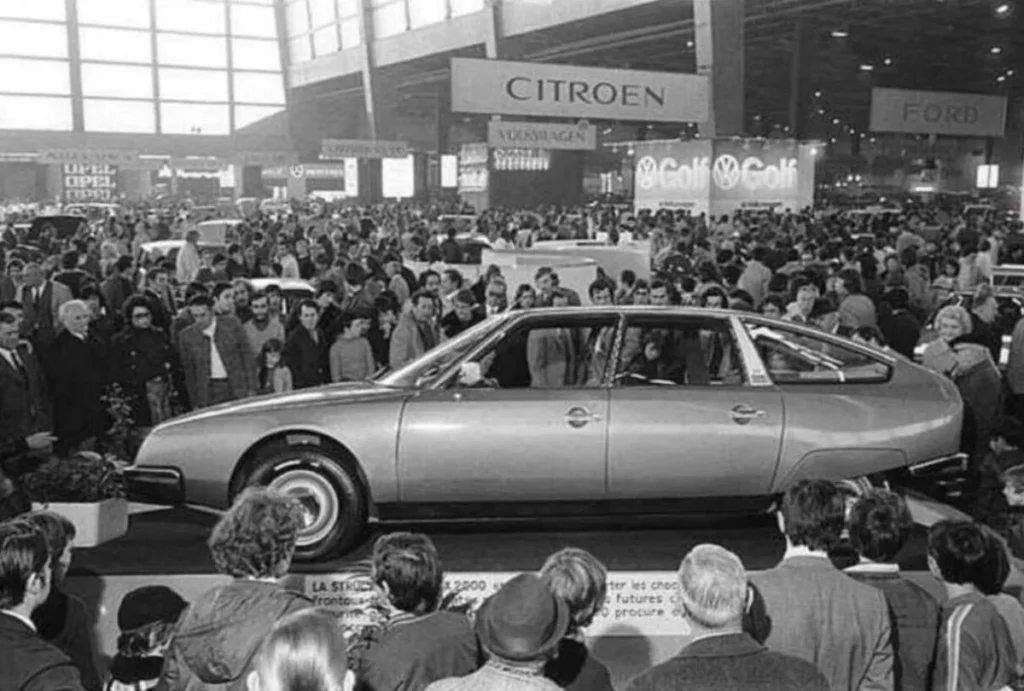
On October 13, 1974, the curtain fell on the 61st Paris Motor Show at the Porte de Versailles. For the casual observer, the event was a resounding success, defined by the debut of the Citroën CX 2000—a vehicle that looked as if it had been plucked from the future. Yet, behind the polished chrome and the dazzle of the spotlight, a somber reality permeated the Citroën stand. The "Quai de Javel" brand, synonymous with French avant-garde engineering, was breathing its final moments of autonomy.
The atmosphere in the exhibition halls was thick with a malaise previously unseen in the history of the French automotive industry. The 1973 oil crisis had fundamentally altered the global landscape, making gasoline a luxury and speed an obsolete virtue. As the government tightened speed limits and fuel prices soared, the Citroën CX stood as a defiant, albeit fragile, monument to a dream that had cost the company its very soul.
Chronology of a Corporate Collapse
The downfall of Citroën as an independent entity was not a sudden accident but the culmination of a decade of over-ambitious projects and financial mismanagement.
- 1968–1970: The Era of Hubris. Citroën, under the leadership of Pierre Bercot, embarked on a series of acquisitions and R&D programs that would stretch its coffers to the breaking point. This included the purchase of Maserati, the development of the high-risk Wankel rotary engine (via the Comotor joint venture with NSU), and the construction of the massive, state-of-the-art manufacturing plant at Aulnay-sous-Bois.
- 1973: The Perfect Storm. The Yom Kippur War triggered the first major oil shock. Suddenly, the fuel-hungry rotary engines that were supposed to power the future of the brand became commercial pariahs.
- June 24, 1974: The Marriage of Necessity. With a treasury deficit exceeding 300 million francs and Michelin—the long-time parent company—refusing to provide further life support, the announcement was made: Citroën would be integrated into the Peugeot Group.
- October 13, 1974: The Final Curtain. The CX makes its public debut at the Paris Salon, hailed as a masterpiece of design, while the company’s executives prepare for the inevitable absorption into the Sochaux-based giant.
- December 6, 1974: Peugeot officially assumes operational control of Citroën, effectively ending the era of the independent "sorcerers of Javel."
The Masterpiece: Robert Opron’s Vision
The Citroën CX 2000 was the last great project conceived by the independent Citroën design bureau under the direction of Robert Opron. It was, in every sense, a spiritual successor to the legendary DS, yet it brought a new vocabulary of form to the table.
Design and Aerodynamics
The CX was a masterclass in airflow management. With a drag coefficient (Cx) of 0.39—a record for its time—it was sculpted like a teardrop. Opron’s most striking feature was the concave rear window, a brilliant engineering solution that allowed for the evacuation of rainwater without the need for a rear wiper, preserving the car’s sleek, unbroken silhouette.
The "Lunule" Interior
Inside, the CX pushed boundaries even further. Designer Michel Harmand replaced the traditional dashboard with the "lunule" (the crescent). Gone were the clumsy analog needles; in their place sat a rotating, backlit drum displaying speed, viewed through a magnifying glass. The control satellites were clustered around the single-spoke steering wheel, allowing the driver to operate lights, wipers, and signals without ever taking their hands off the wheel. It was a cockpit designed for the pilot, not just the driver.
Supporting Data: The Engine Paradox
One of the most poignant aspects of the CX’s debut was the disconnect between its revolutionary body and its conservative heart.
Initially, the "Project L" (the internal codename for the CX) was designed exclusively for the Wankel rotary engine. The engineers envisioned a 1.5-liter birotor, with a trirotor variant capable of producing 160 horsepower. However, the energy crisis turned these engines into liabilities.
When the Comotor program was shuttered, engineers were left with a chassis designed for a compact engine but no powerplant to fill the void. In a desperate scramble, they opted to use the four-cylinder, two-liter cast-iron engine inherited from the DS 20. To fit this "anachronistic" lump under the CX’s low, sloping hood, they had to tilt the engine forward by 30 degrees and pair it with a new transverse gearbox. While the engine was reliable, it lacked the technical panache that the chassis deserved, creating a fascinating contrast between the car’s exterior space-age aesthetics and its mid-century mechanical soul.
Official Responses and Industry Outlook
In the boardrooms of 1974, the mood was one of quiet resignation. François Rollier, the head of Michelin, viewed the merger as a cold, clinical necessity. For him, the survival of the Citroën brand—and the thousands of jobs at stake—outweighed the sentimental value of its independence.
The French government, fearing mass layoffs and the collapse of a national champion, applied significant pressure for the merger with Peugeot. For Peugeot, the deal was an opportunity to acquire a legendary design team and a massive, modern production facility (Aulnay-sous-Bois) at a bargain price. The official line was that the two brands would remain distinct, a promise that kept the Citroën faithful hopeful, even as the "chevrons" were brought under the administrative umbrella of Sochaux.
The Implications: A Legacy Secured
The takeover of Citroën by Peugeot on December 6, 1974, marked the end of an era of unfettered, often reckless, genius. The "sorcerers of Javel" were known for their willingness to gamble everything on innovation. While this spirit led to their financial ruin, it also produced some of the most important automobiles of the 20th century.
The CX, ironically, became the bridge between these two worlds. It was a commercial success, selling over one million units over its 16-year production life. It was even crowned "European Car of the Year" in 1975, proving that despite the financial tragedy surrounding its birth, the engineering brilliance of the old guard remained peerless.
Reflections on the "Citroën Way"
The transition in late 1974 was not merely a change in ownership; it was a shift in philosophy. Peugeot brought a culture of industrial rigor, cost-efficiency, and standardized platforms. Citroën brought a culture of invention, where the suspension, the steering, and the aesthetics were paramount, regardless of the development cost.
As the 1974 Paris Motor Show concluded, the automotive press realized that while the CX would thrive, the soul of the company that built it had been fundamentally changed. The CX remains a testament to that last moment of independence—a car that was simultaneously a product of its time’s crisis and a beautiful, defiant look at what might have been had the resources remained to push the boundaries of what a car could be.
In the final analysis, the story of the 1974 CX is a cautionary tale of how even the most brilliant engineering vision can be eclipsed by economic reality. Yet, for those who admire the history of the automobile, the CX stands as a glorious, aerodynamically perfect exclamation point at the end of a sentence that Citroën had been writing for over fifty years.
