

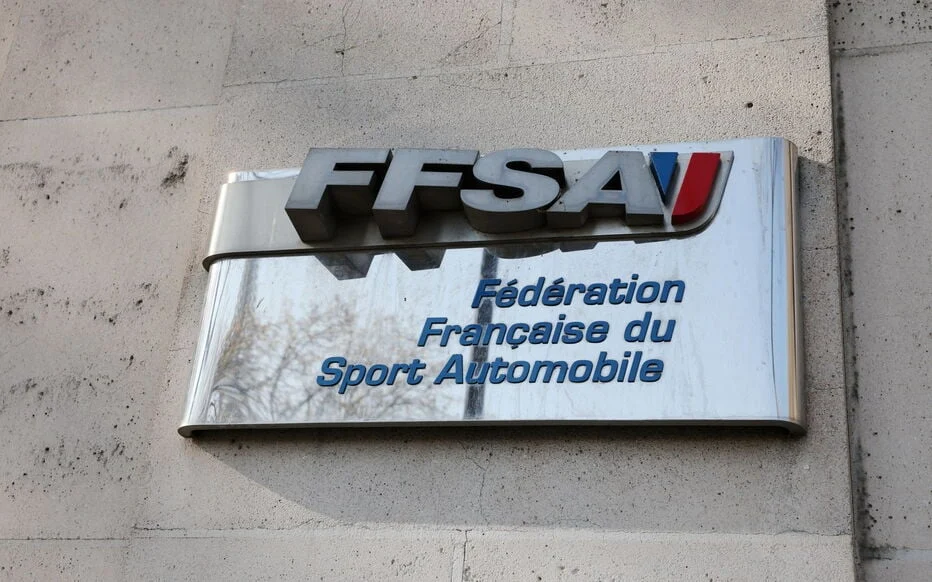
The landscape of French motor sport is currently engulfed in a storm of unprecedented proportions. In a move that has sent shockwaves through the halls of the Fédération Française du Sport Automobile (FFSA), the Minister of Sports, Marina Ferrari, has officially announced the initiation of a procedure to withdraw the federation’s government accreditation (agrément). This administrative “nuclear option” represents one of the most severe sanctions at the disposal of the French state regarding a national sports governing body, signaling a total collapse of confidence in the current leadership.
With the survival of the institution hanging in the balance, the FFSA has been granted a narrow window of fifteen days to present its formal observations and defend its position before a definitive decision is rendered.
A Crisis of Governance and Internal Health
The move by the Ministry of Sports is not a sudden reaction but the culmination of years of simmering discontent. At the heart of the government’s grievances are profound dysfunctions that call into question the federation’s adherence to the French Sports Code. Specifically, the ministry has flagged significant failures regarding the democratic functioning of the federation’s governing bodies and a lack of transparency in its statutes.
Beyond the dry legalistic concerns, there is a human dimension that has reportedly pushed the ministry to act: a deeply concerning social climate within the organization. Reports reaching the ministry suggest that employees are working in an environment of significant psychological distress. These accounts of systemic internal suffering, coupled with allegations of poor management, have painted a picture of an institution that has lost sight of its primary mission: to foster and support the sport.
For years, the FFSA has been criticized by various factions within the motor racing community. The criticism centers on a perceived "closed-shop" culture, where power remains concentrated in the hands of a few, insulated from the democratic accountability expected of a public service-delegated body.
A Chronology of Leadership and Contention
The governance of the FFSA has been characterized by long, uninterrupted tenures that some observers argue have led to institutional sclerosis. The lineage of leadership is often scrutinized by opposition groups who claim that the culture of the organization has remained static for decades.
- The Jacques Régis Era (1996–2007): After over a decade at the helm, Jacques Régis stepped down, leaving behind a legacy that was, even then, the subject of intense debate regarding the modernization of the federation.
- The Nicolas Deschaux Years: Succeeding Régis, Nicolas Deschaux oversaw a long period of federation management. During his tenure, critics grew increasingly vocal about the lack of transparency, arguing that the decision-making process was opaque and unresponsive to the needs of the grassroots racing community.
- The Pierre Ragues Transition: More recently, the arrival of Pierre Ragues to the top of the organization was intended to signal a fresh start. However, the persistence of the same criticisms suggests that a change of personnel has not been sufficient to address the structural issues that have plagued the FFSA.
This history of leadership is now being framed by detractors as a clear illustration of a systemic failure to evolve with the times. The movement for change, led by prominent figures like former rally legend Bernard Darniche and his collective "Pour une nouvelle FFSA" (For a New FFSA), has been the primary engine driving the call for administrative reform. For them, the current ministerial intervention is not an act of aggression, but a long-overdue intervention to restore democratic legitimacy.
Implications: The Specter of State Trusteeship
Should the withdrawal of accreditation be finalized, the consequences for the FFSA would be immediate and seismic. The federation would lose its legal standing as the sole body representing motor sport in France, effectively stripping it of its power to issue licenses, organize national championships, and receive public funding.
To prevent the collapse of the sport, the Ministry has hinted at the implementation of a transitional administration. A commission, potentially placed under the authority of the French National Olympic and Sporting Committee (CNOSF), would be tasked with:
- Ensuring Continuity: Keeping the gears of French motor racing turning, from karting to national rallies, to ensure that local and regional competitions are not disrupted.
- Administrative Oversight: Taking control of the federation’s financial and legal obligations to stabilize the organization.
- Institutional Reform: Overseeing a complete overhaul of the federation’s statutes, leading to a new, transparent, and democratic electoral process.
This path of "forced restructuring" aims to purge the systemic inefficiencies of the current regime while preserving the legacy of French motor sport. It is a gamble, however; the loss of official accreditation could lead to a period of uncertainty that might alienate sponsors and participants alike.
The International Void: A Nation Adrift
A critical component of this crisis is the decline of France’s footprint on the global stage. Once a titan of international racing, France now finds itself conspicuously absent from the world’s most prestigious calendars.
The nation has lost its hosting rights for the Formula 1 French Grand Prix, and there is a glaring absence of a French leg in the World Rally Championship (WRC). With the notable exception of endurance racing—which remains a bastion of French excellence largely due to the efforts of the Automobile Club de l’Ouest (ACO) and the legendary 24 Hours of Le Mans—France is no longer a central player in the global governing body’s (FIA) marquee events.
Critics argue that this international decline is a direct reflection of the FFSA’s internal preoccupation. By focusing on power struggles and administrative maintenance rather than commercial strategy and international diplomacy, the federation has allowed France to slip into the background of global motor sport.
Official Responses and the Path Forward
Minister Marina Ferrari has been careful to frame this action as a necessary measure for the health of the sport, rather than a desire to dismantle it. Her rhetoric suggests a clear distinction between the "governance" of the federation and the "discipline" of motor sport itself. The Ministry’s goal is to protect the thousands of enthusiasts, mechanics, drivers, and volunteers who form the backbone of the sport, even if it means severing the head of the current administration.
The departure of Christophe Lollier, the National Technical Director and president of the FFSA Academy, has added another layer of complexity to the narrative. While his exit is officially separate from the ministry’s intervention, it is widely viewed by industry observers as a symptom of the same instability that has paralyzed the leadership.
As the fifteen-day clock ticks down, the atmosphere within the FFSA headquarters in Paris is reported to be one of profound tension. The federation is now in the unenviable position of having to convince the government that it is capable of reforming itself from within.
A Turning Point for French Sport
The intervention by the Ministry of Sports marks a watershed moment. Whether the FFSA manages to retain its accreditation through drastic internal concessions, or whether it is forced into a state-led restructuring, the status quo is dead.
For the supporters of the "Pour une nouvelle FFSA" movement, this is the first step toward a future where the federation is no longer a fortress for the elite, but a service organization for the racing community. For the Ministry, it is a test of its ability to hold sports federations accountable to the standards of modern governance.
Ultimately, the future of French motor sport will depend on how the federation addresses these allegations. If it chooses to fight the ministry’s findings, it risks a long and drawn-out legal battle that could further alienate the racing community. If it chooses to cooperate, it faces the difficult task of dismantling the very structures that have kept its current leaders in power.
One thing remains certain: the FFSA will never be the same. The coming weeks will determine whether this represents the end of an era of mismanagement or the beginning of a painful but necessary rebirth for one of France’s most storied sporting institutions. The world of motor sport is watching, waiting to see if France can reclaim its position on the grid—not just as a participant, but as a leader.
