

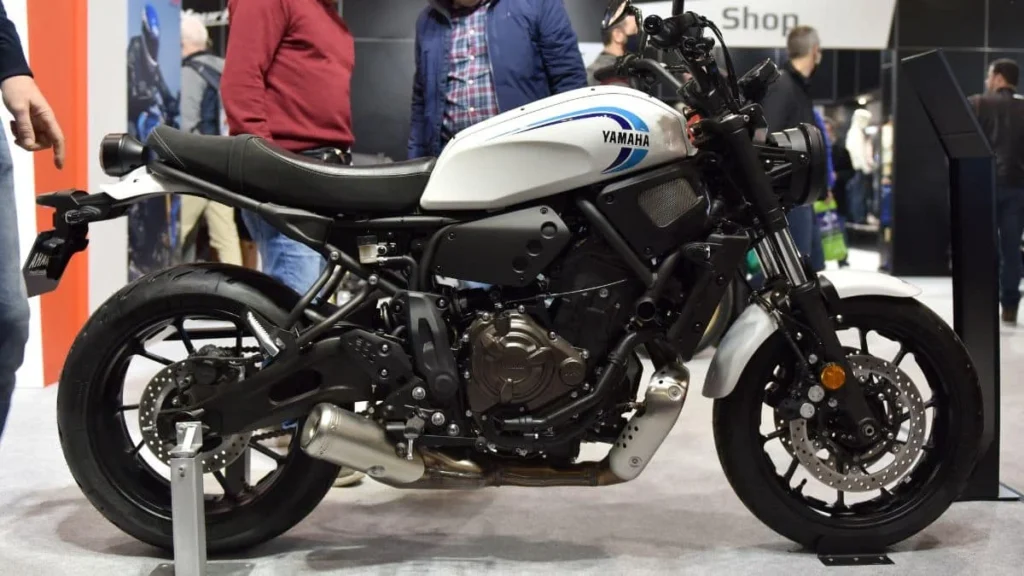
Since its inception in the late 19th century, the Yamaha brand has transcended the typical boundaries of industrial manufacturing. While many global conglomerates diversify for the sake of market share, Yamaha’s journey is defined by a singular, ethereal thread: the pursuit of resonance. Whether through the vibration of a piano string or the combustion cycle of a high-revving motorcycle engine, the company has mastered the art of translating sound into sensation.
The Genesis: A Symphony of Steel and Sound
The story begins in 1887 with Torakusu Yamaha, a visionary craftsman who sought to harmonize Japanese manufacturing precision with the intricate world of Western musical instruments. Initially focused on organs and pianos, the company’s foundational DNA was rooted in acoustics, craftsmanship, and a deep understanding of harmony. This "musical" perspective is not merely a brand narrative; it is the cornerstone of their engineering philosophy.
When Yamaha transitioned into the automotive sector in 1955 with the establishment of Yamaha Motor Co., the company did not pivot away from its heritage—it expanded it. The release of their maiden model, the YA-1 (famously nicknamed "The Red Dragonfly"), a 125cc two-stroke machine, was a revelation. By winning its inaugural race at Mount Fuji, the YA-1 did more than prove mechanical viability; it established the "Yamaha rhythm"—a blend of performance, reliability, and emotional kinetic energy.
Chronology of an Industrial Evolution
To understand the trajectory of Yamaha, one must view its history as a series of movements in a grand orchestral composition:
- 1887–1954: The Acoustic Era: Torakusu Yamaha refines the art of piano making, setting the bar for global acoustic standards.
- 1955: The Mechanical Debut: Yamaha Motor Co. is officially incorporated. The YA-1 hits the market, signaling the beginning of a new era.
- 1960s: The Competitive Surge: The company establishes itself as a global force in Grand Prix racing, turning the racetrack into an R&D laboratory.
- 1970s–1980s: The Diversification Decade: Yamaha expands its portfolio, pushing boundaries in marine engines, robotics, and watercraft, while redefining the sportbike category with the legendary RD series.
- 1990s–2010s: The Era of Refinement: The development of the "Crossplane" crankshaft technology fundamentally alters the sound and feel of the liter-class motorcycle, bringing the "musical" heartbeat to the street.
- 2020–Present: The Electric Pivot: The launch of the E01 electric scooter and investments in autonomous mobility platforms mark the transition toward a sustainable, high-tech future.
Supporting Data: Engineering the "Kando"
The Japanese term Kando—meaning the simultaneous feeling of deep satisfaction and intense excitement—is the metric by which Yamaha measures its success. Data from their research and development divisions suggest that the company allocates a disproportionately high budget to "human-machine interface" studies.
Unlike competitors who prioritize raw specs (such as maximum horsepower or weight reduction), Yamaha’s engineering team often prioritizes the "torque curve" and the "exhaust note." In clinical testing, Yamaha’s engines are designed to mimic the harmonic frequencies that humans find most engaging. This explains why a Yamaha motorcycle, even in a crowded market, possesses a unique acoustic fingerprint that enthusiasts can identify with their eyes closed.
Furthermore, the company’s diversification into marine propulsion and unmanned systems is supported by a robust intellectual property portfolio. Yamaha holds over 15,000 active patents globally, focusing heavily on power-to-weight efficiency and emission reduction technologies that integrate seamlessly with their electronic control units (ECUs).
Official Perspectives: The Philosophy of the Machine
In recent corporate briefings, Yamaha executives have articulated a vision that moves beyond traditional "transportation." According to the company’s leadership, the goal is not to produce vehicles, but to "create products that resonate with the user’s spirit."
"Our engineering is an extension of our acoustic research," says a representative from Yamaha’s design bureau. "When we build a chassis, we think about rigidity and flexibility in the same way a luthier thinks about the resonance chamber of a violin. If the machine does not feel ‘alive’ to the rider, it has failed, regardless of how fast it is on paper."
This philosophy has shielded Yamaha from the "blandness" that often plagues mass-market manufacturers. By maintaining a boutique approach to engine architecture—such as their signature inline-four and triple-cylinder configurations—they ensure that the rider’s connection to the machine is never severed by excessive electronic interference.
Implications: The Road Ahead
As the global automotive industry faces the existential pressure of electrification, Yamaha finds itself in a unique position. The shift toward battery-powered propulsion poses a challenge to a brand defined by the "sound" of its engines. However, Yamaha’s response has been characteristically innovative.
The Electric Transition
The E01 electric scooter is not just an appliance; it is a laboratory for "sensory feedback." Yamaha is currently experimenting with haptic feedback systems and synthetic acoustic profiles that allow electric motors to provide the same rhythmic engagement as their combustion predecessors. By focusing on the feeling of acceleration rather than the noise of combustion, they are successfully migrating their brand equity into the post-petrol era.
Technological Convergence
Yamaha’s reach now extends into artificial intelligence and robotics. The integration of "Yamaha Motor Robot" technology into their two-wheeled platforms implies a future where the motorcycle actively assists the rider in achieving the perfect cornering line, effectively creating a "co-pilot" that enhances, rather than replaces, the human instinct.
Conclusion: A Legacy in Motion
Yamaha remains an anomaly in the industrial world. It is a company that could have easily become a faceless conglomerate, yet it chose to remain an artisan-engineer hybrid. From the precision of a piano key to the raw power of a MotoGP prototype, the brand maintains a commitment to the "human-centric" experience.
As we look toward an increasingly automated future, Yamaha’s insistence on the "rhythm" of the machine serves as a vital anchor. For the rider, this means that even as the technology beneath them changes from pistons to electrons, the core promise remains: a machine that does not just move the body, but speaks to the soul.
In the grand orchestra of the automotive world, Yamaha does not just play the notes; they define the tempo. Whether on the track, the mountain road, or the urban grid, the brand continues to prove that mechanical engineering is not merely about function—it is about the pursuit of a perfect, resonant performance.
