

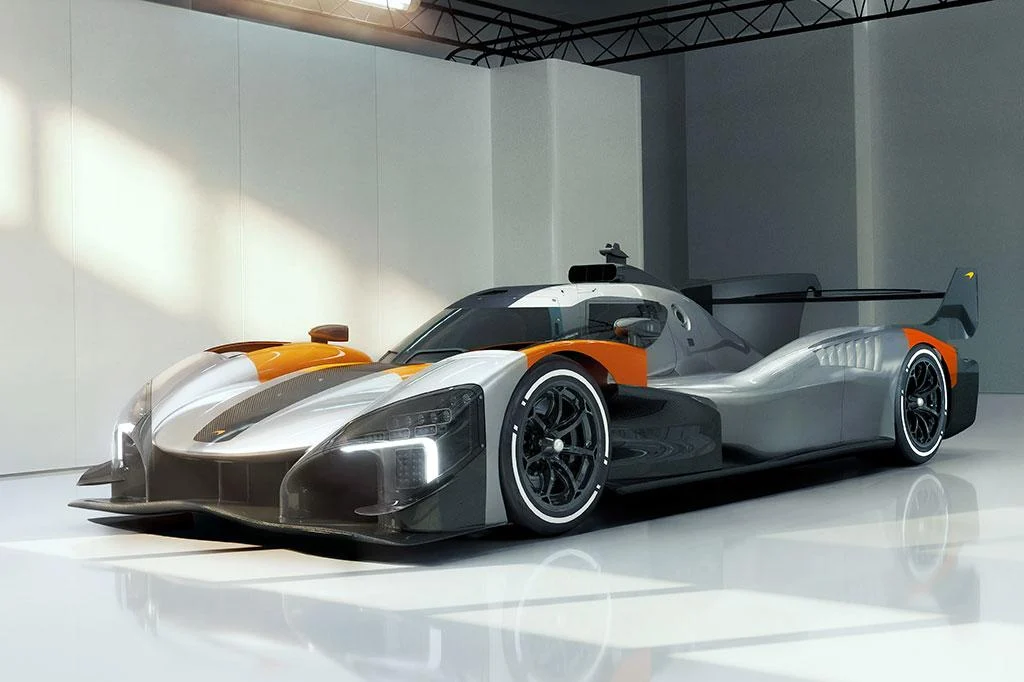
Three decades after the iconic F1 GTR stunned the world at the 24 Hours of Le Mans, McLaren Automotive has officially signaled its return to the summit of endurance racing. In a move that blends historical reverence with cutting-edge engineering, the Woking-based manufacturer has unveiled the MCL-HY, a dual-pronged program that promises to redefine the landscape of the FIA World Endurance Championship (WEC) and the world of high-end track-only hypercars.
By unveiling both a factory-backed Hypercar and a track-exclusive "GTR" variant, McLaren is not merely participating in the sport; it is attempting to reclaim its status as a titan of the "Triple Crown."
1. The Main Facts: A Dual-Assault Strategy
The announcement centers on the MCL-HY platform, a carbon-fiber masterpiece designed to dominate the endurance circuit. The strategy is split into two distinct, yet technically related, streams:
- The MCL-HY FIA Hypercar: This is the homologated racing machine slated for a full-season entry in the 2027 WEC. It is designed to navigate the complex Balance of Performance (BoP) regulations, aiming specifically for the top step of the podium at the 24 Hours of Le Mans.
- The MCL-HY GTR: In a move that has sent ripples through the collector market, McLaren has confirmed a customer version. Unbound by FIA regulations, this variant is designed to be faster, lighter, and more powerful than its racing counterpart, offering a "pure" track experience for the world’s most elite drivers.
2. Chronology: The Road to 2027
McLaren’s path back to Le Mans has been years in the making, meticulously planned to ensure that when they return, they do so with a winning pedigree.
- Pre-Development (2024-2025): McLaren engineers initiated the core design philosophy, focusing on the monocoque architecture and aerodynamic efficiency.
- May 2026 (Upcoming): The official track testing phase for the factory MCL-HY begins. This window is critical for gathering data on hybrid system efficiency and tire degradation.
- 2027 Season Opener: The official debut of the factory team in the WEC.
- Late 2027: The first customer deliveries of the MCL-HY GTR are scheduled to commence, marking the beginning of an exclusive two-year immersive ownership program.
3. The Paradox of Power: Why the GTR Outperforms the Racer
In an era where "factory racing" is often defined by regulatory constraints, McLaren has highlighted a fascinating paradox: the version available to the public is, by every metric, superior to the car racing for the championship.
The FIA Constraint
The factory MCL-HY Hypercar must operate within the strict confines of the FIA’s Balance of Performance. This includes power caps and weight minimums (set at 1,030 kg) to ensure parity with competitors like Toyota, Ferrari, and Porsche. The LMDh-compliant hybrid powertrain is capped at 697 hp (520 kW), necessitating a delicate balance between electric torque and internal combustion output.
The GTR Freedom
The MCL-HY GTR, conversely, is a "no-compromise" machine. By discarding the heavy, complex hybrid architecture, McLaren has achieved a significant weight reduction. In place of the hybrid system, the GTR utilizes a bespoke 2.9-liter twin-turbocharged V6, pushed to an output of 720 hp. Without the need to comply with BoP, the GTR features more aggressive aerodynamics and an engine map tuned exclusively for raw performance rather than fuel efficiency or longevity.
4. Engineering and Design: Aesthetics of Velocity
Both the FIA Hypercar and the GTR share the same DNA, built upon a high-rigidity carbon-fiber monocoque. The silhouette is defined by a "teardrop" shape, optimized for minimal drag and maximum downforce.
Key Design Features:
- Aero-Efficiency: The vehicle features a long-wheelbase setup with massive carbon-fiber underbody channels and diffusers.
- Visual Transparency: The front wheel arches are deliberately open, a nod to prototype design that exposes the slick tires and reduces pressure buildup.
- Signature Lighting: A central fin runs the length of the rear, integrated with ultra-thin LED tail lights that wrap into the endplates of the rear wing, providing a futuristic, aggressive aesthetic.
Livery Differentiation
The factory car honors its heritage with a vibrant Papaya Orange livery, a tribute to the legendary M6A driven by Bruce McLaren. The GTR, meanwhile, adopts a sophisticated silver finish with orange accents, a direct visual homage to the iconic F1 GTRs that dominated the 1990s.
5. Official Responses and Industry Implications
"We aren’t returning to endurance racing just to make up the numbers," says a senior McLaren spokesperson. "We are returning to win. The MCL-HY project represents the pinnacle of what McLaren Automotive is capable of when we combine our Formula 1 expertise with the visceral demands of endurance racing."
The industry reaction has been largely one of excitement. By creating the "Project: Endurance" program, McLaren is effectively turning their customers into a factory-supported racing team. Each GTR buyer receives a dedicated team of mechanics, professional driver coaching, and a logistics package that handles the transport and setup of their car for global track events.
6. Strategic Implications for the WEC
The entry of McLaren into the WEC significantly alters the competitive landscape. With a brand as storied as McLaren entering the fray, the manufacturer grid for 2027 is shaping up to be one of the most competitive in the history of the sport.
Technical Prowess
The decision to focus on a 2.9L V6 for the GTR suggests that McLaren is betting on simplicity and high power-to-weight ratios over the complexity of hybrid systems for their privateer clients. This choice will likely be analyzed by other manufacturers who are currently struggling with the reliability and cost of complex hybrid endurance powertrains.
The Collector’s Market
By limiting production of the GTR to a "handful of selected clients," McLaren is ensuring that the car retains its value as a collector’s item while maintaining a controlled environment for the "Project: Endurance" program. This keeps the brand prestige high while ensuring that the cars are not just stored in garages, but are actively driven on tracks under the watchful eye of the manufacturer.
7. Conclusion: The Legacy Continues
The MCL-HY is more than just a car; it is a statement of intent. As McLaren looks toward 2027, the firm is balancing the pressure of modern racing regulations with the desire to build the ultimate driver’s car.
Whether it is the factory team chasing victory at Le Mans or the private owner pushing their GTR to the limit on a private circuit, the MCL-HY project represents a return to the roots of the McLaren brand: engineering excellence, a refusal to compromise, and an unwavering commitment to the pursuit of speed.
While the price of entry remains a closely guarded secret, the value of the experience—becoming part of the McLaren racing family—is already being touted as the ultimate reward for the brand’s most loyal enthusiasts. As the calendar counts down to May 2026, the world of endurance racing holds its breath, waiting to see if the Papaya orange will once again stand on the top step of the podium.
