

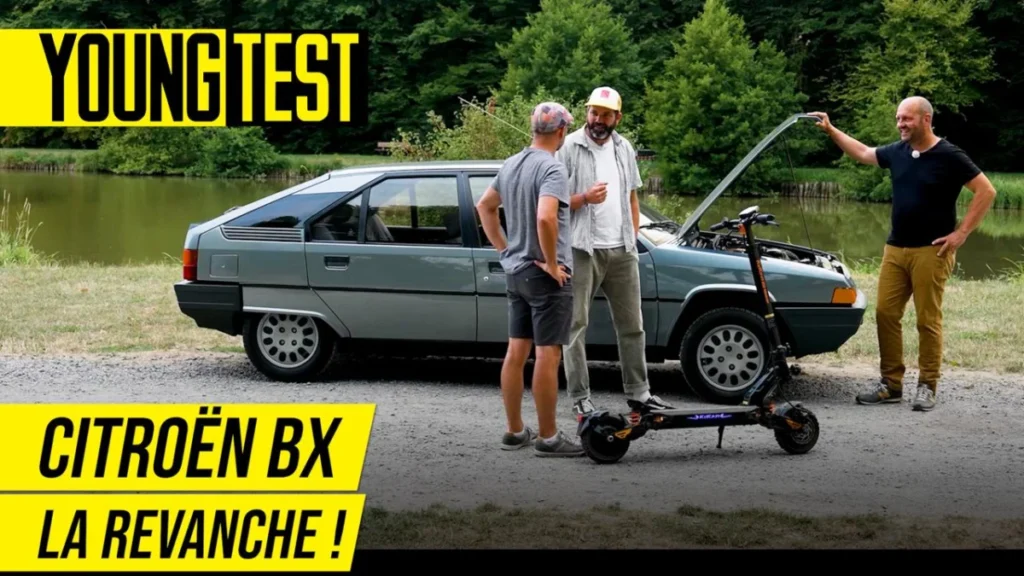
In the annals of automotive history, few vehicles have polarized public opinion quite like the Citroën BX. Launched in 1982, the BX was tasked with an impossible mission: bridging the gap between the quirky, high-tech heritage of the brand and the pragmatic requirements of a mass-market family car. Today, decades after its final production run, the BX has emerged from the shadow of its predecessors to become a highly coveted "youngtimer"—a classic car that is increasingly defined by its unique design, engineering ingenuity, and the nostalgic pull it exerts on a new generation of collectors.
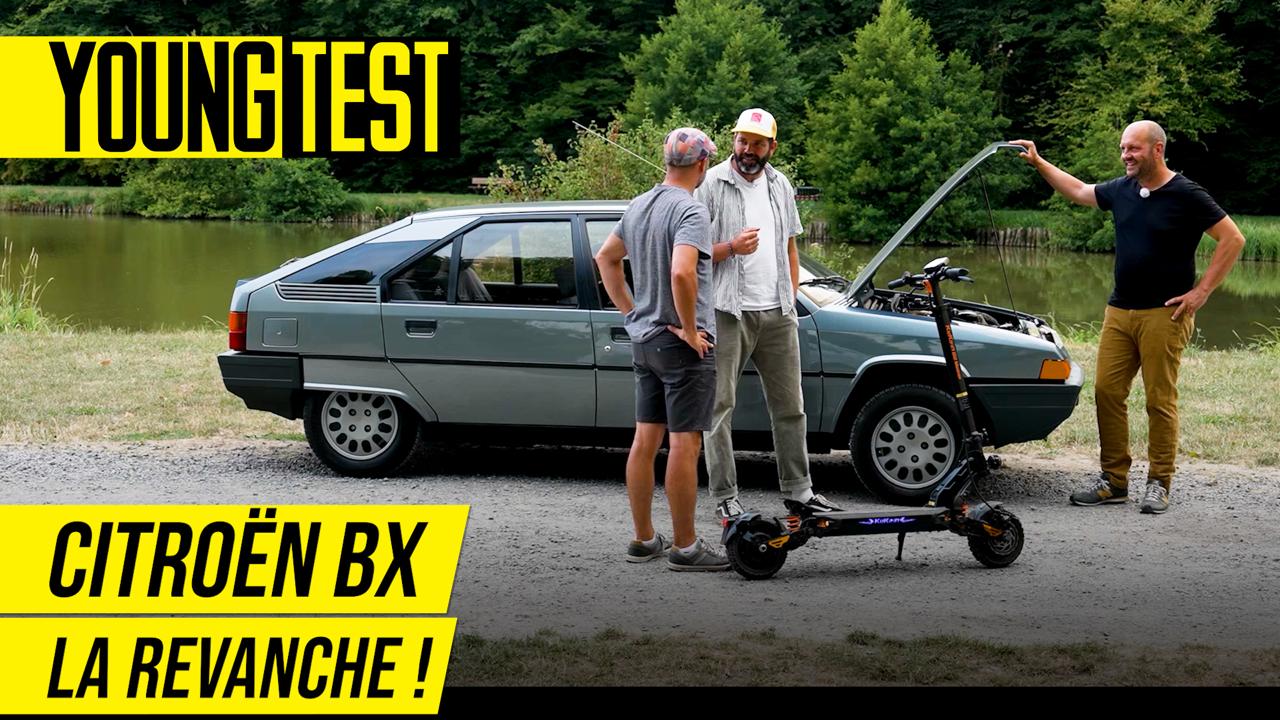
In our latest feature, we join automotive enthusiasts François-Xavier and Nicolas in the heart of the French countryside to rediscover this icon, putting a well-preserved BX 16 TRS to the test to determine if it truly lives up to its rising reputation.
Main Facts: The Anatomy of an Icon
The Citroën BX is, above all else, a masterclass in compromise. When it was unveiled under the shadow of the Eiffel Tower in September 1982, the automotive press was stunned. It was designed to replace the GSA and bridge the gap between the smaller Visa and the executive-class CX.
The vehicle’s technical specifications were a daring mix of traditional and revolutionary. It featured Citroën’s signature hydropneumatic self-leveling suspension—a system that provided a ride quality unmatched by any competitor in its class—housed within a lightweight, aerodynamic body. The BX was not merely a car; it was a statement of intent for a company that had spent the 1970s struggling to find its identity under the ownership of the PSA Group.

Nicolas, the proud owner of the BX 16 TRS featured in our investigation, acquired his specimen for €3,900. While some may scoff at spending nearly €4,000 on a car that was once considered a disposable utility vehicle, the reality of the current market tells a different story: clean, rust-free, and well-maintained BXs are becoming increasingly difficult to find.
A Chronology of the BX: A Decade of Evolution
The journey of the BX is a story of continuous refinement. Understanding its trajectory is essential to understanding why it is currently enjoying a resurgence.

1982: The Bold Arrival
The BX made its debut with a sharp, angular design that was light-years ahead of the rounded, utilitarian shapes common to the early 80s. It was an instant shock to the system. The interior, with its distinctive "satellite" controls and the iconic single-spoke steering wheel, cemented its reputation as a "space-age" vehicle.
1983–1986: Broadening the Appeal
Citroën quickly expanded the range. By 1983, the introduction of the BX 16 TRS, like the one featured in our video, solidified the car’s position as a comfortable, high-performance cruiser. It wasn’t long before the BX Sport and the legendary BX 4TC (the homologation special for Group B rallying) cemented the car’s performance credentials.

1987: The Facelift
The "Series 2" BX arrived in 1987. It smoothed out some of the more extreme edges of the original design, replacing the futuristic satellite controls with a more conventional dashboard layout. While purists preferred the original, the Series 2 was undoubtedly a more usable, reliable daily driver.
1994: The End of an Era
By the time production ceased in 1994, over 2.3 million units had been built. It was a commercial triumph for Citroën, though it took years for the car to shake its reputation as a "cheap" alternative to the more premium CX or XM.

The Marcello Gandini Connection
One cannot discuss the BX without acknowledging the man who penned its lines: Marcello Gandini. As the chief designer at Bertone, Gandini was responsible for some of the most exotic silhouettes in history, most notably the Lamborghini Countach and the Lancia Stratos.
To see the same hand that sketched the Countach at work on a humble family hatchback is a testament to the BX’s design pedigree. Gandini’s use of "lines cut by a scythe" created a profile that was sharp, aggressive, and undeniably modern. Even today, the BX looks like a concept car that accidentally made it into production. The wedge shape, the hidden rear wheels, and the low-slung stance remain a masterclass in geometry, proving that a family car doesn’t have to be boring.

Supporting Data: Maintenance and the Hydropneumatic Legacy
A major deterrent for many potential buyers is the complexity of the hydropneumatic suspension. This system, which uses high-pressure fluid and nitrogen-filled spheres to dampen road imperfections, is the "soul" of a Citroën, but it is also its most frequent point of failure if neglected.
This is where specialists like Sphère Discount prove indispensable. With nearly 40 years of expertise, they have become the gold standard for owners looking to keep these systems in peak condition. The durability of the BX is inextricably linked to the quality of its spheres; when properly maintained, the car offers a ride quality that even modern luxury sedans struggle to replicate. For the prospective buyer, the availability of parts from specialized vendors is a massive boost to the car’s viability as a long-term collector’s item.

Official Responses: The Market Speaks
The question of whether a BX is worth €4,000 is a subject of intense debate among enthusiasts. In the early 2000s, the BX was often relegated to the scrap heap or used as a "beater." However, the "Youngtimer" movement—a growing interest in cars produced between the late 1970s and the early 1990s—has shifted the narrative.
Collectors are now looking for cars that offer a tactile, mechanical driving experience that is largely absent in modern, computerized vehicles. The BX offers:

- Unparalleled Comfort: The suspension remains a benchmark in the automotive world.
- Design Integrity: It is a genuine piece of Bertone design history.
- Usability: It is practical enough for a weekend getaway, yet unique enough to turn heads at any classic car meet.
Industry experts note that while €4,000 may seem steep for a 16 TRS, a pristine example is effectively a blue-chip asset in the niche world of French classics. The appreciation of these vehicles has been steady, with many analysts predicting that as more original examples disappear, the value of surviving, well-maintained units will only climb.
Implications: Is the BX the Next Big Thing?
The implications for the classic car market are clear: the era of the "unloved" 1980s family car is over. The BX is no longer a budget option for those who couldn’t afford a Mercedes or a BMW; it is a destination in itself.

For the owner, the BX represents a lifestyle choice. Driving it requires a certain level of engagement—you must understand the nuances of the hydraulics and appreciate the quirks of the ergonomics. But for those who take the plunge, the reward is a driving experience that is quintessentially Citroën: smooth, confident, and utterly distinctive.
As we look toward the future, the BX stands as a bridge between the analog past and the digital future. It is a car that was born out of a desperate need to save a brand, and it ended up saving the very soul of French automotive innovation. Whether you are a seasoned collector or a newcomer to the hobby, the BX offers an accessible, stylish, and comfortable entry point into the world of classic motoring.

The Verdict
If you are considering investing in a youngtimer, the Citroën BX 16 TRS is a compelling choice. It combines the legendary engineering of the hydropneumatic system with the unmistakable aesthetic flair of Marcello Gandini. As long as you have the support of specialists to maintain the hydraulic system, there is no reason why a well-kept BX shouldn’t provide years of driving pleasure—and perhaps even a tidy return on your investment.
So, what is your take? Would you drop €4,000 on a piece of history? Let us know in the comments below.

For those looking to maintain their own slice of history, be sure to visit www.sphere-discount.com to explore their extensive range of components designed to keep the spirit of the Citroën hydraulic legacy alive for decades to come.
