

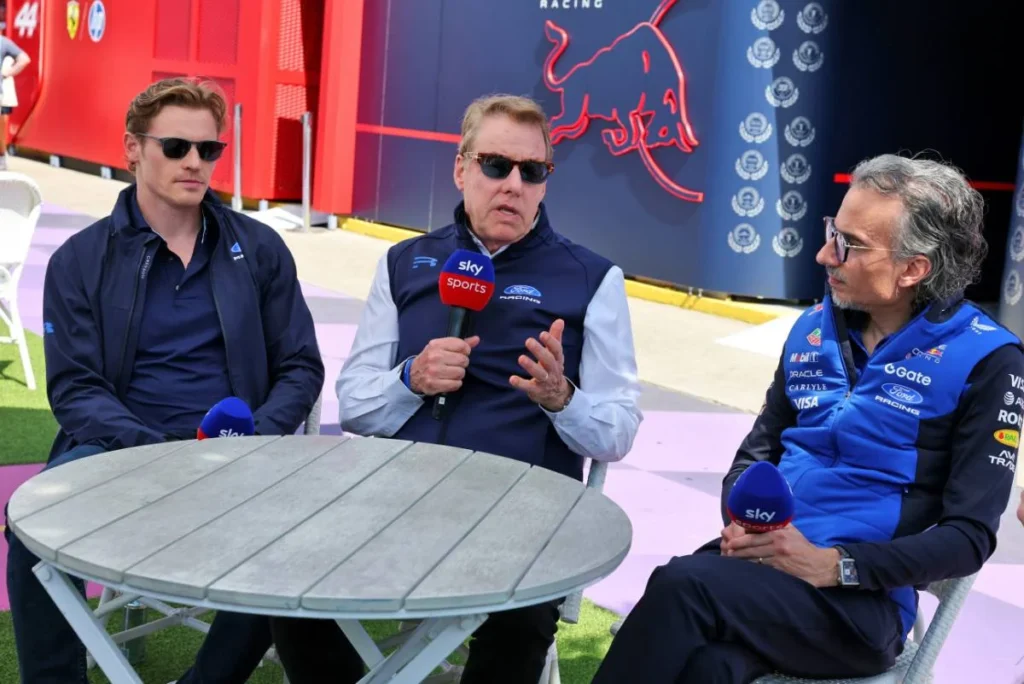
The landscape of Formula 1 is currently witnessing a tectonic shift in its power dynamics. As the sport accelerates toward the 2026 technical regulations, the emergence of Red Bull Powertrains—the independent engine division established by the Milton Keynes-based racing giant in partnership with Ford—has become the talk of the paddock. What was once viewed as an ambitious, perhaps even risky, venture for a team traditionally reliant on external engine suppliers has rapidly transformed into a symbol of engineering prowess. As the performance of the Red Bull and Racing Bulls teams continues to impress, rival outfits are beginning to cast envious eyes toward the Red Bull-Ford power unit.
The Genesis of an Independent Powerhouse
The decision by Red Bull Racing to establish its own engine manufacturing facility was born out of necessity. When Honda initially announced its departure from the sport, Red Bull was faced with a stark reality: either return to a "customer" status with legacy manufacturers, or take control of its own destiny. The latter path led to the creation of Red Bull Powertrains (RBPT).
This project was not merely an engine assembly line; it was a massive infrastructural investment. By partnering with Ford, Red Bull gained a strategic ally with vast manufacturing expertise and marketing reach, while retaining full technical control over the development of their 2026 power units. The goal was simple but daunting: build a competitive, state-of-the-art hybrid power unit from scratch, capable of challenging established giants like Mercedes, Ferrari, and the re-entering Audi.
Early projections suggested that the learning curve for a newcomer would be steep. However, the performance metrics observed throughout the current season have defied these expectations. The integration of the power unit into the chassis has shown a level of efficiency and power delivery that has caught the attention of several competitors, leading to rumors of potential supply deals for the 2027 season and beyond.
Chronology: From Concept to Competitive Reality
To understand the weight of the current speculation, one must look at the timeline of this bold endeavor:
- 2021: Red Bull officially announces the formation of Red Bull Powertrains, signaling the end of their reliance on Honda for long-term engine development, despite taking over the IP for the existing power units.
- 2022: Massive recruitment begins. Red Bull aggressively targets personnel from rival manufacturers, particularly Mercedes HPP, to build a world-class engineering team.
- 2023: The formal announcement of a technical partnership with Ford is made. The deal confirms Ford’s involvement in the electrification and battery development aspects of the 2026 power unit.
- 2024: The development phase enters its final stretch. Track testing and dyno simulations begin to yield performance data that exceeds the team’s internal benchmarks.
- 2025 (Current Season): The public perception shifts. As Red Bull and Racing Bulls demonstrate consistent reliability and performance, other teams—struggling with their own development trajectories—begin discreet inquiries about the viability of an RBPT engine supply.
The Voice of Caution: Laurent Mekies’ Stance
Despite the growing interest, the leadership at Red Bull remains focused on internal consolidation rather than commercial expansion. Laurent Mekies, Team Principal of the RB-branded team, has been the primary voice of caution regarding the commercialization of their power unit.
"We have benefited from a great deal of positive publicity, which we had not necessarily sought, concerning the performance of our engine," Mekies noted during a recent press briefing. "Naturally, that has sparked interest from a number of teams. However, are we having serious discussions with anyone to supply engines to another team? No. We do not believe we are ready for that."
Mekies’ rhetoric is rooted in the philosophy of "walking before running." In the world of Formula 1, the complexity of a power unit is unparalleled. Ensuring that the engine is not only fast but also seamlessly integrated into the specific aerodynamic needs of a chassis requires thousands of hours of fine-tuning. For Red Bull, the priority is to solidify the technical foundation of the current project before entertaining the logistical nightmare of becoming a third-party supplier.
"There is certainly still a lot of work to be done to improve the power unit, to optimize its integration into the car, and to reach the level of the top competitors," Mekies added. "Nothing will change in the coming year, or anytime soon."
The Aston Martin Conundrum: A Case Study in Market Volatility
One of the most persistent rumors in the paddock involves a potential pivot by Aston Martin. The Silverstone-based team is set to become the exclusive partner for Honda starting in 2026. However, their current campaign has been fraught with technical difficulties, leading to intense speculation about the strength of the Honda-Aston Martin marriage.
As the team grapples with the transition, observers have suggested that if the Honda power unit fails to deliver competitive results, Aston Martin might look for an exit strategy, with Red Bull-Ford being the only logical alternative. Yet, the leadership at Aston Martin remains steadfast.
Mike Krack, Team Principal at Aston Martin, has repeatedly dismissed these rumors, reaffirming the team’s commitment to their Japanese partners. "I can only say that we have a long-term partner in Honda," Krack stated firmly. "I am convinced that we will still be together when we achieve our first victory."
Furthermore, the legendary designer Adrian Newey, who has been instrumental in the success of both Red Bull and the sport’s technical evolution, has publicly defended the Honda project. Speaking at the United States Grand Prix, Newey highlighted that Honda possesses the resources, the engineering culture, and the technical depth required to rectify their current struggles. This public show of support from a figure of Newey’s stature acts as a firewall against rumors of an impending split, signaling to the paddock that the current difficulties are considered a temporary "growing pain" rather than a fundamental failure.
Implications for the Future of F1 Engine Regulations
The situation surrounding Red Bull Powertrains highlights a broader trend in Formula 1: the desire for autonomy. By successfully developing their own engine, Red Bull has challenged the traditional hierarchy of the sport. The implications of this are significant:
- The End of the Customer Era: If Red Bull proves that a team can successfully build its own power unit while remaining competitive, other teams may follow suit, potentially leading to a more fragmented and competitive engine landscape.
- Ford’s Strategic Pivot: Ford’s involvement proves that the 2026 hybrid regulations are attracting global automotive giants, but also that they are looking for "turnkey" performance solutions rather than building from zero.
- The "Workload" Barrier: Mekies’ comments underscore a critical reality in F1: the cost and human capital required to supply multiple teams are immense. Even for a giant like Red Bull, the focus remains on the "works" program. Providing customer support requires a secondary tier of engineering and logistics that can distract from the main objective: winning the World Championship.
Conclusion: Strategic Patience in a High-Speed Sport
The fervor surrounding the Red Bull-Ford power unit is a testament to the success of their development program. While the temptation to expand and capitalize on this success as a commercial engine supplier is undoubtedly present, the leadership’s commitment to internal excellence is the correct, if difficult, path.
As the sport prepares for the 2026 season, the competition will only intensify. The focus for Red Bull remains singular: to refine the integration, maximize the power output, and ensure that their power unit is not just a participant, but a dominant force. For other teams hoping to tap into this performance, the message is clear: the doors are closed for now. In the relentless world of Formula 1, where every millisecond counts, Red Bull has decided that their greatest asset is their focus, and they are not willing to trade that for the short-term gains of commercial expansion.
The coming seasons will reveal whether the Honda-Aston Martin partnership can reach its potential and whether Red Bull-Ford can cement its status as a permanent engine manufacturer. For now, the narrative is one of measured progress, professional caution, and the unwavering pursuit of technical perfection.
