
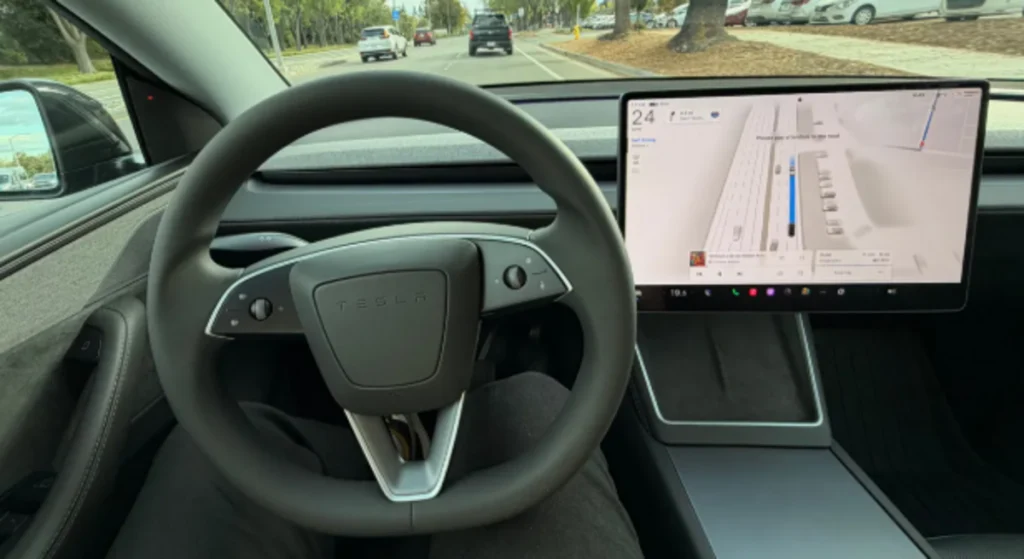
In a landmark development for the future of mobility in Europe, the Dutch vehicle authority (RDW) has officially granted provisional approval for Tesla’s "Full Self-Driving (FSD) Supervised" system. This decision, finalized on April 10, 2026, marks the first significant regulatory breach in the European Union’s historically conservative stance toward advanced driver-assistance systems (ADAS). While the approval is currently restricted to Dutch territory, it sets the stage for a high-stakes legislative battle within the European Commission that could redefine the relationship between artificial intelligence and road safety across the continent.
The Core Facts: A Local Green Light with Global Implications
The RDW’s decision is the culmination of an exhaustive 18-month evaluation period. Unlike previous iterations of Tesla’s Autopilot, which were largely confined to lane-keeping and adaptive cruise control on highways, "FSD Supervised" represents a leap in capability. The system is designed to navigate complex urban environments, interpret traffic signals, and execute turns at intersections—all while requiring the human driver to remain fully engaged and ready to intervene at a moment’s notice.
Key takeaways from the provisional approval include:
- Territorial Limitation: The permit is valid only within the borders of the Netherlands. Tesla vehicles equipped with the software cannot legally engage FSD Supervised once they cross into Belgium, Germany, or other neighboring states.
- Regulatory Classification: The system remains classified as SAE Level 2 automation. Despite the "Full Self-Driving" moniker, the driver retains 100% legal liability for the vehicle’s actions.
- The EU Gateway: The Netherlands often serves as a "Type Approval" authority for the European market. By securing Dutch approval, Tesla has effectively forced the European Technical Committee to put the software on its official agenda for a union-wide vote.
A Chronology of Testing: From California to the Arc de Triomphe
The path to the April 2026 approval was neither swift nor easy. Tesla’s journey to adapt a system trained primarily on North American "grid" cities to the idiosyncratic chaos of European roads involved several distinct phases:
1. The Shadow Testing Phase (2024–2025)
For over a year, Tesla operated a fleet of test vehicles across Europe in "shadow mode." During this period, the FSD software ran in the background, making "virtual" decisions without actually controlling the car. Tesla’s engineers compared the AI’s intended actions with the actual maneuvers performed by professional test drivers to refine the neural networks for European signage and lane markings.
2. The RDW Partnership (Late 2024)
The Dutch RDW entered into a formal data-sharing agreement with Tesla. This allowed regulators to view internal safety metrics that are usually guarded as trade secrets. The RDW focused on "disengagement rates"—how often a human had to take over—specifically in high-risk scenarios like school zones and construction sites.
3. The Pan-European Stress Tests (Winter 2025)
To prove the system’s versatility, Tesla conducted high-profile demonstrations in some of Europe’s most challenging driving environments. One notable test involved navigating the Arc de Triomphe in Paris—a multi-lane roundabout famous for its lack of markings and aggressive merging. Regulators also observed the system in Copenhagen, where it had to account for thousands of cyclists, a variable far more prevalent in Europe than in the United States.
4. The Provisional Verdict (April 10, 2026)
Following the successful completion of these trials, the RDW issued its provisional green light, triggering a mandatory review process by the European Union’s Technical Committee.
Supporting Data: Safety Metrics and Technical Hurdles
The RDW’s approval was supported by a dossier of performance data, though much of it remains under "commercial confidentiality" clauses. However, industry insiders and leaked reports suggest several key performance indicators (KPIs) swayed the Dutch regulators.
Urban Adaptation
In the Copenhagen trials, FSD Supervised reportedly demonstrated a 94% success rate in identifying and yielding to "vulnerable road users" (cyclists and pedestrians) without driver intervention. This was a critical metric for European regulators, who prioritize urban safety over highway convenience.
The Speeding Controversy
One of the most contentious data points involves the system’s tendency to match the flow of traffic rather than strictly adhering to posted speed limits. In many European jurisdictions, even a 2 km/h overage is a violation. Regulators noted that while the AI was "safer" when moving with the flow, it technically violated strict speed statutes. Tesla has since implemented a "Strict Compliance" mode for the European market.
Connectivity and Latency
Unlike US versions, the European FSD stack utilizes local mapping data from partners like TomTom to supplement Tesla’s vision-only approach. This hybrid data model ensures that the car is aware of "silent" regulations, such as ultra-low emission zones (ULEZ) and time-based pedestrian streets, which are common in historical European city centers.
Official Responses: A Continent Divided
The reaction to the RDW’s decision has exposed a deep rift between Northern European safety advocates and pro-innovation regulators.
The Nordic Resistance
Authorities in Sweden, Finland, Norway, and Denmark have been the most vocal critics. The Finnish Transport and Communications Agency (Traficom) expressed skepticism regarding the system’s performance in "Arctic" conditions. "We have seen insufficient evidence that the vision-only system can reliably distinguish between a snowbank and a white-painted curb at 80 km/h," a Finnish spokesperson stated.
Sweden’s regulators have gone a step further, targeting Tesla’s marketing. They argue that the term "Full Self-Driving" is inherently deceptive and creates a "false sense of security" that leads to driver distraction. They have called for a mandatory renaming of the product to "Advanced Assisted Driving" before it can be sold in the Swedish market.
The Dutch Defense
Conversely, the RDW maintains that the system, when used as intended (with supervision), is a net positive for road safety. "Our data suggests that the AI does not suffer from fatigue, distraction, or emotional volatility—the three leading causes of accidents in the Netherlands," the RDW stated in its official release.
Tesla’s Strategic Stance
Elon Musk and Tesla’s European policy team have framed the approval as a victory for AI-driven safety. For Tesla, the FSD suite is not just a feature; it is a high-margin software product essential for its long-term profitability. With European EV sales facing increased competition from Chinese manufacturers, Tesla views FSD as its "moat"—a unique technological advantage that competitors cannot easily replicate.
Implications: The Road to a Unified European Standard
The provisional Dutch approval is merely the opening salvo in a complex legislative process. The future of FSD in Europe now rests with the European Technical Committee.
The Qualified Majority Hurdle
To achieve EU-wide homologation, Tesla needs a "qualified majority" vote. This requires support from 15 out of the 27 member states, representing at least 65% of the total EU population. This means Tesla cannot simply rely on small, tech-friendly nations; it must win over heavyweights like Germany and France.
Germany, the heart of the European auto industry, is in a delicate position. While it wants to foster innovation, it also seeks to protect its domestic giants—Volkswagen, BMW, and Mercedes-Benz—who are developing their own rival autonomous systems (such as Mercedes’ Drive Pilot, which is already Level 3 certified in specific conditions).
The "Supervised" Legal Precedent
By keeping the "Supervised" label, Tesla avoids the most stringent requirements of Level 3 autonomy (where the manufacturer takes liability). However, this creates a gray area in European law regarding "driver inattentiveness." If a driver is using FSD Supervised and checks a text message, is the car "assisting" the distraction? Regulators are currently debating whether to mandate interior cabin cameras to track eye movement with 100% uptime while FSD is engaged.
The Robotaxi Horizon
Finally, this approval is a necessary stepping stone for Tesla’s "Robotaxi" ambitions. Tesla’s vision of a decentralized fleet of autonomous taxis relies on billions of miles of real-world data. Securing a foothold in Europe—a market with high population density and high transit costs—is essential for the global viability of the Tesla Network.
Conclusion: A Measured Leap Forward
The RDW’s decision on April 10, 2026, will likely be remembered as the moment the "autonomy debate" moved from theory to reality on European soil. While the approval is provisional and geographically limited, it has successfully forced the hand of European regulators.
As the Technical Committee prepares for its upcoming votes in July and October, the conversation will shift from if these systems should be allowed to how they must be governed. For Tesla owners in the Netherlands, the future has arrived. For the rest of Europe, the wait continues as the continent grapples with the fundamental question: are we ready to let an algorithm take the wheel, even if someone is watching?
