
More than fifteen years after the iconic Swedish manufacturer Saab declared its original bankruptcy, the final chapter of its industrial legacy is being written in the quiet town of Trollhättan. On May 30, the gates of the historic Saab factory will swing open one last time for a somber, highly symbolic event: an auction conducted by Klaravik that will see eight rare vehicles—the last remnants of a long-faded dream—sold to the highest bidder.
These are not merely cars; they are artifacts of a technological renaissance that never reached fruition. They represent the final, desperate, and remarkably innovative attempts to pivot a legendary aeronautical-inspired brand into the electric future. As these vehicles leave the site, an entire page of European industrial history is turned, marking the definitive end for one of the most idiosyncratic and beloved car manufacturers of the 20th century.
A Chronology of a Slow Decline and Faded Ambition
To understand the weight of this auction, one must look back at the trajectory of the brand. Saab, born from the wings of an aircraft manufacturer, launched its first production car in 1949. Over the next six decades, the brand carved out a reputation as the “thinking person’s car.” Known for its quirky design, obsession with safety, and pioneering work with turbocharging, Saab occupied a unique niche—neither a German luxury player nor a budget-oriented generalist.
However, the brand’s history is defined by a long, painful decline under the ownership of General Motors (GM). By the late 2000s, the financial strain on the American parent company led to the eventual abandonment of the Swedish subsidiary.
- 2011: Saab Automobile files for bankruptcy, ending decades of independent innovation.
- 2012: National Electric Vehicle Sweden (NEVS), a consortium with deep ties to Chinese capital, acquires the estate of Saab, including the Trollhättan production facility and the intellectual property for the 9-3 platform.
- 2014-2016: A period of "near-misses." NEVS attempts to restart production of the 9-3, incorporating electric powertrains.
- 2017-2022: The pivot to the future. NEVS develops advanced autonomous concepts and long-range electric platforms, including the ill-fated "Emily GT."
- 2023: Massive layoffs occur at the Trollhättan site. The dream of a resurrected Saab under the NEVS banner officially collapses following the financial disintegration of Evergrande, the Chinese property giant that served as the primary backer for NEVS.
- 2025: A massive clearance of spare parts, archives, and historical memorabilia occurs, stripping the factory of its remaining soul.
The Auction: A Collection of "What Could Have Been"
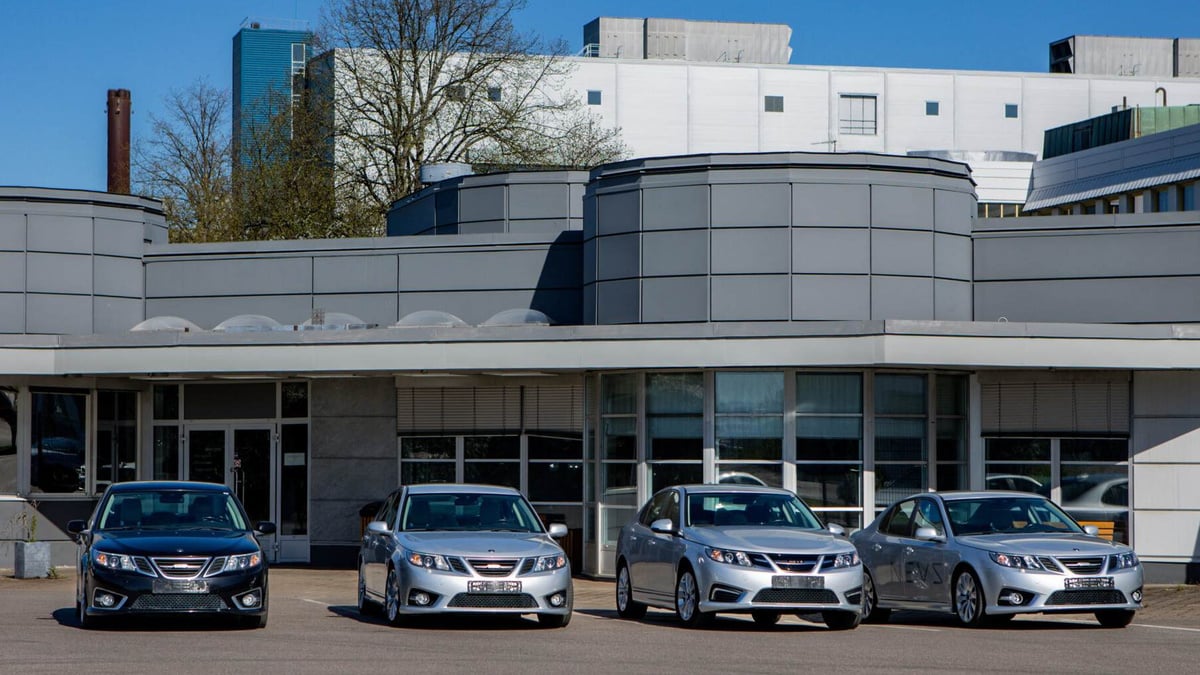
The eight vehicles going under the hammer represent a disjointed, yet fascinating, roadmap of the transition from internal combustion to the electric age. These are not polished showroom models; they are engineering "mules"—prototypes that were pushed to their limits in the pursuit of innovation.
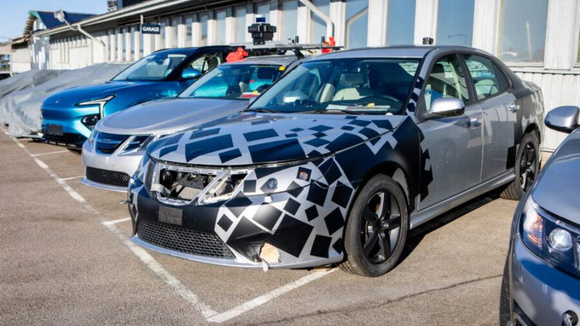
Among the lots are several Saab 9-3 pre-production models from 2014, updated with electric powertrains. More compelling, however, are the advanced experimental vehicles. One prototype features an experimental "in-wheel" electric motor system—a technology that remains at the cutting edge of automotive engineering today. Another served as a testbed for autonomous driving, complete with LiDAR sensors, advanced GPS arrays, and a suite of cameras that would have been state-of-the-art a decade ago.
There is also a model featuring a range-extender powertrain, a technology that many major manufacturers are only now fully embracing as the bridge to full electrification. Perhaps the most poignant inclusion is the Hengchi 5, a vehicle tied to the Evergrande group. One of the few units imported to Sweden, it shows just 46 kilometers on the odometer—a symbol of the short-lived, high-stakes international gamble that ultimately failed to save the factory.
Supporting Data: Why Saab’s Failure Still Resonates
The significance of this auction extends beyond nostalgia. Economists and automotive analysts often point to the fall of Saab as a cautionary tale of "innovation without scale."
- Engineering Capability: Despite financial insolvency, the engineering team in Trollhättan continued to produce designs with a drag coefficient of 0.28 or lower—figures that still compete with modern EVs like the Tesla Model 3.
- The "Emily GT" Factor: The project known as the Emily GT was perhaps the most painful loss for the Swedish automotive community. It was a high-performance electric grand tourer with a claimed range of over 1,000 kilometers. Its development proved that the spirit of Saab was not dead; it was simply unfunded.
- The Human Cost: The closure of the Trollhättan plant resulted in the loss of thousands of specialized jobs. The 2023 mass layoffs were not just an economic statistic; they represented the dispersal of one of the most experienced engineering talent pools in Northern Europe.
Official Responses and Industry Sentiment
While the official word from the auction house, Klaravik, focuses on the procedural nature of the sale, the subtext is heavy with finality. "These vehicles are not restored collector’s items; they are the tools of the trade," a spokesperson noted. By listing the vehicles with no reserve price and a starting bid of zero Swedish kronor, the sellers are acknowledging a grim reality: the market value of these objects is secondary to the necessity of emptying the building.
Industry experts see this as the "closing of the books." Historically, when a brand dies, the parts are sold, the brand name is licensed, and the buildings are repurposed. In the case of Saab, this has been an excruciatingly slow process. The industry sentiment is one of "sad inevitability." Analysts suggest that while Saab’s disappearance created a vacuum in the market for a distinct, character-driven vehicle, the rapid evolution of the Chinese EV market has effectively rendered the old Saab infrastructure obsolete.
The Broader Implications: A Shifting Automotive Landscape
What does the end of the Trollhättan experiment tell us about the future of the automotive industry?
First, it underscores the brutal nature of the transition to electric vehicles. Even with a brand as iconic as Saab, having the right technology is insufficient if the financial backing is tied to volatile global markets—in this case, the Chinese real estate sector.
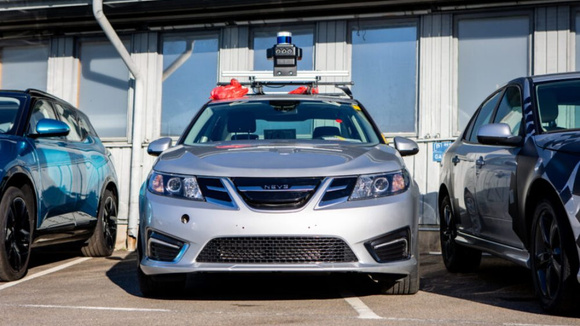
Second, it highlights the "prototyping paradox." The very technologies that Saab and NEVS were testing—in-wheel motors, autonomous sensor suites, and high-efficiency range extenders—are now standard features in the industry. Saab was, by all accounts, ahead of its time. However, being early to the market is often as fatal as being late if the capital isn’t there to sustain the long, grueling phase of mass-production scaling.
Finally, the sale is a reflection of the "dematerialization" of heritage. In the past, when a company closed, the factory might be turned into a museum. Today, it is simply liquidated. The auction of these prototypes signifies that the industry is no longer interested in the "Saab way" of doing things—a way that prioritized structural integrity, quirky aerodynamics, and human-centric ergonomics over pure, data-driven cost-efficiency.
Conclusion: Turning the Page
On May 30, when the final hammer falls in Trollhättan, the last physical ties between the modern world and the legacy of Erik Carlsson and the Saab 900 will be severed. The prototypes will go to private collectors, museums, or perhaps even scrapyards.
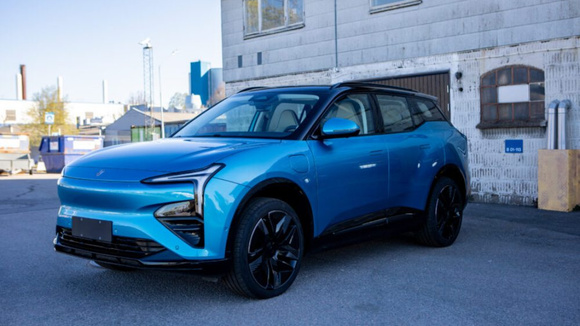
For the enthusiasts who have followed the brand’s roller-coaster ride from its golden age to its tragic end, this event is more than a simple auction. It is a funeral for an idea. Saab was always a brand that looked forward—to the next turbo, the next safety innovation, and eventually, the next electric revolution. That it failed to make the jump is not a reflection of its engineering genius, but of the unforgiving nature of the modern global industrial machine. As the factory stands empty, the world of automobiles will be a little less eccentric, a little less innovative, and ultimately, a little less human.