

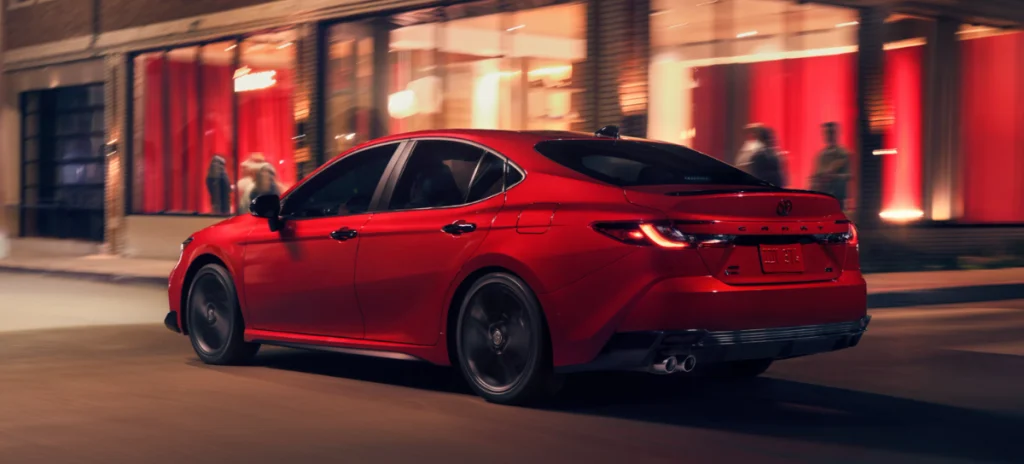
The landscape of the American automotive market is undergoing a significant transformation. While the global narrative has long pointed toward an inevitable and rapid transition to fully electric vehicles (EVs), recent market data suggests a more nuanced reality in the United States. Faced with the most significant fuel price hikes in four years, American consumers are not rushing toward battery-electric vehicles (BEVs) as once predicted. Instead, they are flocking to hybrid technology, signaling a "hybrid renaissance" that challenges the dominance of the EV-only transition strategy.
Main Facts: The Hybrid Surge and the EV Stagnation
The core of the current shift lies in a stark divergence between consumer interest and the available powertrain technologies. As of late April, the American Automobile Association (AAA) reported that gasoline prices in the United States surpassed the psychological and economic threshold of $4 per gallon. This represents the highest average since 2020, driven largely by geopolitical tensions in the Middle East and fluctuating global oil supplies.
In response to these costs, the demand for fuel-efficient vehicles has skyrocketed. However, the beneficiaries are not the 100% electric models that have dominated headlines for the last decade. According to data from the market analysis firm Motor Intelligence, sales of hybrid vehicles—which combine a traditional internal combustion engine with an electric motor and a small battery—surged by 37% in the two months following the escalation of geopolitical tensions in late February.
In contrast, the growth of the fully electric vehicle sector has been notably sluggish. During the same period, EV registrations in the U.S. grew by a mere 11%. When placed against the backdrop of the overall automotive market, which saw a 15% increase in total sales, it becomes clear that EVs are currently underperforming relative to the market average. Hybrids, meanwhile, are outperforming the market by more than double.
This trend highlights a growing "pragmatism" among American buyers. While the desire to reduce fuel costs is high, the willingness to commit to a purely electric lifestyle remains tempered by concerns over price, infrastructure, and the loss of familiar driving habits.
Chronology: From Tax Credit Expiration to Geopolitical Volatility
To understand how the U.S. market reached this inflection point, one must look at a series of events spanning the last twelve months:
The Autumn Chill: Expiration of Federal Incentives
The shift began in the autumn of the previous year. For several years, a federal tax credit of up to $7,500 served as a primary driver for EV adoption. However, the expiration and subsequent restructuring of these credits (under the Inflation Reduction Act’s stricter domestic sourcing requirements) meant that many popular EV models suddenly became significantly more expensive for the average consumer. This created an immediate cooling effect on the BEV market.
February: The Catalyst of Conflict
At the end of February, increased tensions involving Iran and the broader Middle East began to exert upward pressure on global crude oil prices. As the conflict threatened shipping lanes and production stability, energy markets reacted with volatility. For the American consumer, this translated almost immediately to higher prices at the pump.
March-April: The Hybrid Breakout
As fuel prices climbed toward and eventually over $4 per gallon in April, the search for alternatives intensified. Data from the automotive portal CarGurus showed a rapid uptick in consumer queries. In March, hybrids accounted for 12% of searches; by April, that figure had risen to 14%. While EV searches also grew (from 3.4% to 5%), they remained a fraction of the total interest, proving that when the "gas price pain" hit, consumers looked for the most accessible exit strategy: the hybrid.
Supporting Data: A Tale of Two Continents
The divergence between the U.S. and European markets provides a striking case study in how regulation and infrastructure shape consumer behavior.
The Transatlantic Gap
In Europe, the reaction to high fuel prices has been the polar opposite of the American response. Faced with similar energy cost increases, European consumers have doubled down on fully electric vehicles.
- The United Kingdom: In the two months following the late-February oil spike, EV sales in the UK surged by a staggering 79%.
- Germany: The German market saw a 39% increase in EV registrations, comfortably outstripping the growth of the general automotive market.
Why the U.S. is Different
Several data points explain why the U.S. remains a hybrid-first market:
- Price Sensitivity: The average transaction price for an EV remains higher than for a comparable hybrid or internal combustion engine (ICE) vehicle. Without the $7,500 "buffer" of the old tax credit, the ROI (Return on Investment) for an EV takes much longer for a consumer to realize, even with $4/gallon gas.
- Product Availability: The European market offers a wider array of small, affordable "city" EVs. The American market is dominated by large SUVs and trucks, segments where battery technology is either prohibitively expensive or results in decreased towing and hauling performance.
- Charging Infrastructure: While Europe has invested heavily in high-density charging networks, large swaths of the U.S. remain "charging deserts," making the self-charging nature of a hybrid significantly more attractive.
Official Responses and Expert Perspectives
Industry leaders and analysts are now recalibrating their expectations for the "electric revolution."
Kevin Roberts, Director of Industry Insights and Analytics at CarGurus, notes that the trend toward hybrids was already simmering beneath the surface. "Interest in hybrids was present well before the recent spike in gas prices," Roberts explained. "The rise in fuel costs didn’t create the trend; it acted as an accelerant for a shift that was already underway due to consumer pragmatism regarding price and utility."
From the dealership floor, the sentiment is even more pronounced. Brad Sowers, who owns several dealerships representing Kia, Stellantis, and General Motors in the St. Louis region, has seen the shift firsthand. Sowers reported that hybrids accounted for 35% of his Kia sales in April, up from 30% in March. "Customers are coming in looking for relief at the pump, but they aren’t necessarily ready to change how they live," Sowers said. "A hybrid gives them the fuel economy they want without the ‘range anxiety’ they fear."
Perhaps the biggest "official" winner in this shift is Toyota. Long criticized by environmental groups and some investors for its "Multi-Path" strategy—which prioritized hybrids over a rush to BEVs—the Japanese automaker now looks prophetic. Toyota’s "electrified" sales (primarily hybrids) rose by 34% in the U.S. following the February conflict. Models like the RAV4 Hybrid and the Camry Hybrid are seeing record demand, helping Toyota’s total U.S. sales grow by 23%, even as competitors struggling with an EV-only focus see stalled growth.
Implications: The "Bridge" That Became the Destination
The current market dynamics have profound implications for the future of the automotive industry and environmental policy.
The Infrastructure Hurdle
The preference for hybrids suggests that the U.S. charging infrastructure is not yet viewed as reliable or ubiquitous enough for the "one-car household." For a hybrid, the infrastructure is already built: it is the existing network of over 145,000 gas stations. Until the National Electric Vehicle Infrastructure (NEVI) Formula Program significantly changes the landscape of American highways, hybrids will likely remain the preferred choice for those living outside of major urban hubs.
Regulatory Pressure vs. Consumer Choice
The U.S. government and various states (like California) have set aggressive targets for phasing out internal combustion engines. However, the current data suggests a "reality gap" between policy goals and consumer willingness. If consumers continue to choose hybrids over BEVs, manufacturers may be forced to lobby for "plug-in hybrids" (PHEVs) or traditional hybrids to be counted toward zero-emission targets for a longer period.
The Survival of Legacy Automakers
For legacy automakers like Ford and GM, who have invested billions in EV platforms, the hybrid surge is a double-edged sword. While it provides a profitable way to meet fleet emission standards in the short term, it also complicates the transition to the "all-electric" future they promised investors. Toyota’s current dominance in the hybrid space gives it a significant "war chest" of profits that it can use to fund its eventually-arriving solid-state battery technology, while others may find themselves trapped between a cooling EV market and a lack of hybrid inventory.
Conclusion: A Pragmatic Transition
The American motorist has sent a clear message: the transition to green energy will be an evolution, not a revolution. By choosing hybrids, consumers are opting for a "best of both worlds" scenario—drastically reduced fuel consumption and lower tailpipe emissions, without the perceived risks of a purely electric ecosystem. As long as gas prices remain volatile and the price-gap between hybrids and EVs remains wide, the "middle ground" of the hybrid powertrain will likely be the most crowded space on the American road.
Editorial Note: This analysis reflects the shifting dynamics of the North American market as of Q2. While the "Road to 2035" remains the long-term goal for many, the detour through hybrid technology is proving to be longer and more influential than many analysts originally anticipated.
Illustration Credit: Toyota Motor Sales, U.S.A.
