

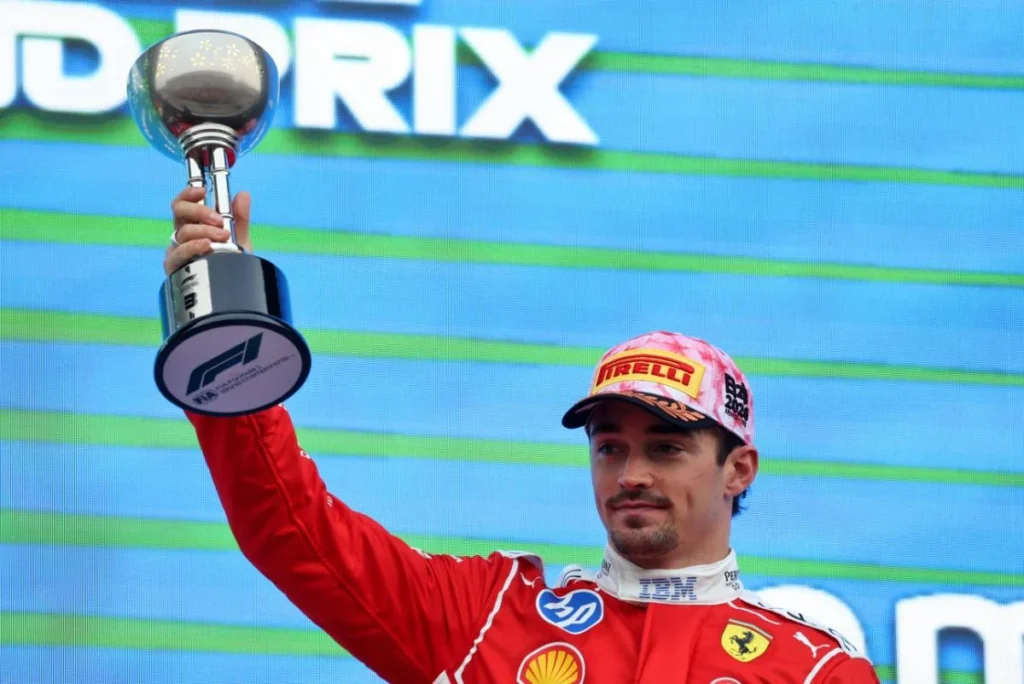
For most drivers who pull on the scarlet overalls of the Scuderia, being mentioned in the same breath as the legendary Michael Schumacher would be the pinnacle of a career. For Charles Leclerc, however, the comparison to the German icon—at least in terms of longevity—is a secondary consideration, overshadowed by a singular, gnawing ambition that remains unfulfilled.
As the Monegasque driver quietly inches toward one of the most symbolic records in the modern history of Ferrari, the narrative surrounding his tenure at Maranello has shifted from "prodigy" to "pillar." Yet, amidst the milestones and the contract extensions, one question looms larger than any statistic: Can Leclerc define his legacy by championship titles, or is he destined to become the most loyal, yet unrewarded, servant in the team’s illustrious history?
A Statistical Trajectory: The Shadow of the Kaiser
Michael Schumacher, the undisputed architect of Ferrari’s golden era, remains the benchmark by which all modern drivers are measured. Between 1996 and 2006, the German completed 180 Grands Prix for the Italian outfit. At the time, this was a monumental figure; in an era where the Formula 1 calendar consisted of 16 to 18 races per year, reaching 180 starts required a decade of sustained excellence and unwavering team support.
Charles Leclerc, now firmly anchored in the long-term strategic vision of Maranello, has already tallied 154 starts in the iconic red car. With a contract extension that secures his future at the team until at least 2029, the mathematics are clear: barring unforeseen circumstances, Leclerc is on a collision course to surpass Schumacher’s record of starts during the 2027 season.
However, when presented with this looming milestone, Leclerc’s reaction is neither triumphant nor particularly sentimental. "It’s strange," he admits, his tone measured and reflective. "I still feel very young, and I have the impression that my first year with Ferrari was yesterday. But it is special."
The Burden of Expectation: Beyond the Numbers
Leclerc’s rhetoric reveals a deep respect for the history of the sport, yet it is entirely devoid of obsession with the record books. In his mind, accumulating appearances is a hollow achievement if it is not accompanied by the only metric that truly matters in Maranello: the World Championship.
"I wouldn’t want to be remembered simply as the most experienced driver in Ferrari’s history," Leclerc states with conviction. "I want to be remembered as a World Champion with Ferrari, and that is something that still needs to be accomplished. That is where all my attention is focused. I wasn’t even aware of that statistic until it was mentioned. I am not looking to become number one in this category; I simply want to win a title. It is what I work for every single day, and I hope that moment arrives."
This singular focus defines the trajectory of Leclerc’s career since his arrival in 2019. He has become the emotional face of the Scuderia’s reconstruction—a driver adored by the tifosi for his blistering one-lap pace and his ability to drag a car beyond its natural limits. Yet, despite flashes of brilliance and several iconic victories, the most important trophy remains elusive.
The Schumacher Parallel: A Delicate Comparison
The comparison with Schumacher is inherently complex. While Schumacher brought five consecutive world titles to Maranello and transformed Ferrari into a dominant, clinical machine, Leclerc finds himself in a different epoch of the sport. The modern era of Formula 1 is defined by high-frequency calendars and shifting technical regulations that make sustained dominance significantly harder to achieve.
Furthermore, the history of Ferrari is notoriously unforgiving. It remembers its champions with golden statues and immortal status; those who come close but fail to capture the crown often fade into the category of "what could have been." Leclerc is acutely aware of this risk. He is currently walking the line between becoming a club icon—a driver synonymous with the brand—and falling into the category of immense talents who, despite their loyalty, could not cross the final hurdle.
Internal Perspectives: Team Principal’s Vision
Frédéric Vasseur, the current Team Principal of Ferrari, is quick to temper the noise surrounding these milestones. For Vasseur, the focus is strictly on the present and the immediate future, rather than the historical legacy of his lead driver.
"Charles has been part of the team for a very long time," Vasseur explains. "He was in the Ferrari Driver Academy, went to Sauber, and came back to us. He plays a crucial role in our performance, not just as a driver, but in the development, the cohesion, and the spirit of the team. I’m not a big fan of these statistics. We are much more focused on short-term performance than on numbers for 2027 or beyond."
Vasseur’s stance reflects a broader reality within the factory: the urgency to win is palpable. The modern iteration of Ferrari’s project has been built around Leclerc’s prime years. However, the history of F1 is littered with legendary drivers who waited in vain for the team to return to the summit—figures like Fernando Alonso and Sebastian Vettel, both of whom left Maranello without the championship they sought.
Implications: The Race Against Time
As Leclerc continues to close the gap on Schumacher’s record with every passing race weekend, the tension between his personal legacy and the team’s performance becomes more pronounced.
- The Loyalty Test: By committing to Ferrari through 2029, Leclerc has tied his career prospects to the technical success of a single team. This is a gamble that speaks to his belief in the project, but it also increases the pressure to deliver results within the current regulatory cycle.
- The "Tifosi" Factor: The emotional investment of the Italian fans creates a unique environment. They cherish Leclerc’s passion and his clear love for the brand, but the relationship is predicated on the expectation of victory.
- The Technological Gap: Ferrari’s ability to provide a championship-winning car consistently is the missing variable. While Leclerc has proven he can deliver in the cockpit, the challenge remains for the engineers to provide a machine that can rival the dominance of teams like Red Bull or McLaren.
Conclusion: A Legacy in the Making
For now, the record of 180 starts is simply a milestone waiting to be crossed. To the casual observer, it represents stability and consistency. To Charles Leclerc, it is a reminder of the time he has already invested and the ticking clock of his own prime.
As he approaches the threshold of becoming the most experienced driver to ever wear the Ferrari colors, the narrative remains fixed on the future. The record books may eventually list his name at the top of the "starts" column, but for the man from Monaco, that is merely a footnote. His true legacy will not be written in the number of races started, but in the gold of a trophy that has remained out of reach for too long.
Leclerc is not chasing history in terms of longevity; he is chasing immortality in the form of a championship. Whether he succeeds will define not just his career, but the modern history of the most storied team in motor racing.
