

Date: October 2, 2026
Sector: Global Automotive Industry & Energy Transition
Main Facts: The Crossroads of European Mobility
As the automotive landscape shifts inexorably toward electrification, a profound anxiety grips the capitals of Europe. Has the Old Continent missed the electric vehicle (EV) train?
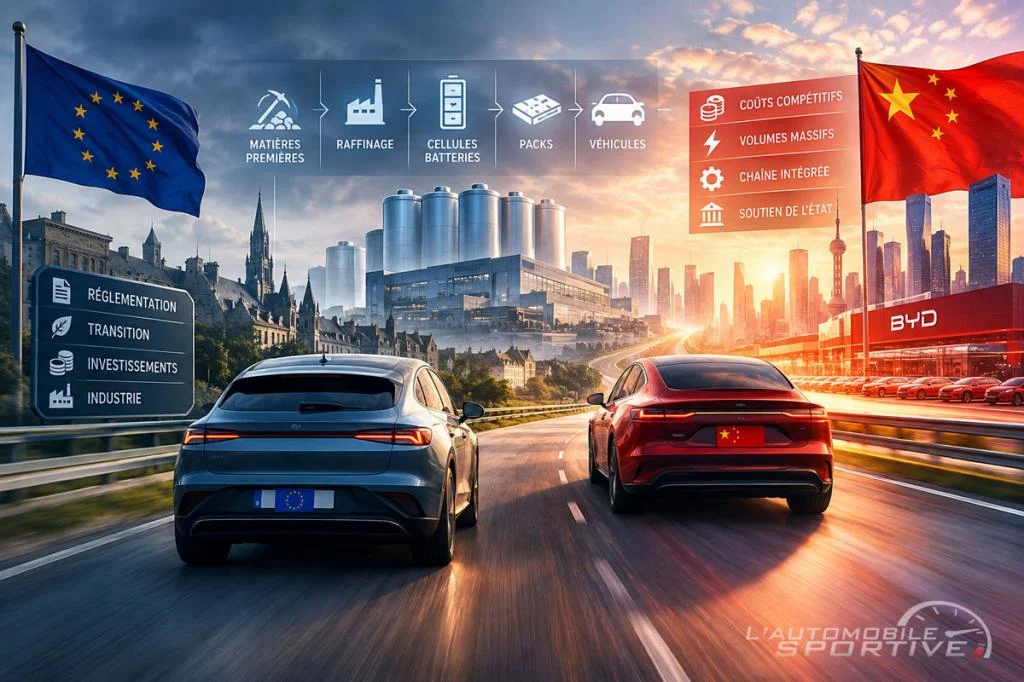
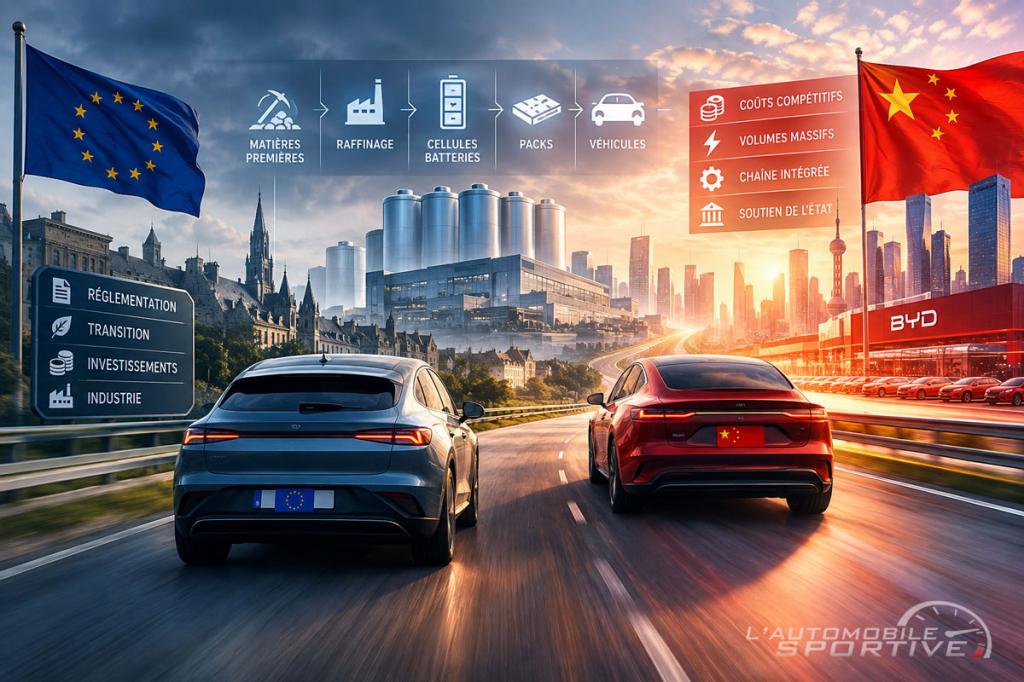
Today, China dominates a staggering majority of the global EV value chain, controlling everything from raw mineral refining and cutting-edge battery cell chemistry to high-volume, low-cost vehicle manufacturing. Meanwhile, European legacy automakers find themselves scrambling to close a strategic deficit that has accumulated over more than a decade.
Billions of euros are currently being poured into regional gigafactories, next-generation EV platforms, and more affordable consumer models. Yet, the battle is far from decided. According to recent data from the International Energy Agency (IEA), the cost of producing an electric vehicle in advanced Western economies remains over 30% higher than in China.
The core dilemma facing Europe is no longer a question of if the market will electrify—sales continue to climb across the continent—but whether Europe can catch up without blindly mirroring the Chinese industrial model. The race is no longer simply about building cars; it is about who will control the critical technologies and economic value chains of tomorrow.
Chronology of a Transition: How Europe Fell Behind
To understand how Europe arrived at this precarious juncture, it is necessary to retrace the timeline of a decade defined by hesitation, regulatory pivots, and strategic miscalculations.
1. The 2000s–2010s: The Reign of the Combustion Engine and the Diesel Bet
During the 2000s and 2010s, European automakers were locked into a highly profitable, highly optimized paradigm centered on internal combustion engines (ICE). For European manufacturers specifically, diesel technology occupied a sacred space. Heavily incentivized by governments seeking lower carbon dioxide footprints relative to gasoline, diesel engines offered exceptional fuel economy, long cruising ranges, and robust profit margins.
European R&D budgets, supply chains, and manufacturing plants were meticulously tuned to optimize these fossil-fuel systems. Concurrently, the electric vehicle was treated as a marginal, high-cost niche market plagued by battery expense, limited range, and non-existent charging infrastructure. While Western manufacturers milked their cash cows, the foundations of a completely different ecosystem were being laid elsewhere.
2. 2015: The Dieselgate Turning Point
The revelation of the "Dieselgate" emissions scandal in 2015 dealt a seismic blow to the European automotive establishment. While the scandal did not instantly kill the internal combustion engine, it catastrophically undermined public and regulatory trust in diesel technology.
Suddenly, the industry’s primary cash-generating technology was marked with a target. Automakers were forced to abruptly reallocate massive capital toward cleaning up internal combustion while simultaneously staring down tightening European Union carbon regulations. However, rather than leaping headfirst into pure electrification, many European groups split their investments, pursuing complex hybrid and plug-in hybrid (PHEV) stopgaps.
3. The Late 2010s to 2020s: The Cost of the Hybrid Compromise
From an industrial standpoint, the pivot to hybrids seemed logical: it reduced fleet emissions while utilizing existing powertrain manufacturing lines and soothing consumer range anxiety. However, this strategy carried a hidden opportunity cost. Every euro funneled into complex, dual-energy architectures was a euro not invested in pure-play electric platforms, proprietary software development, or massive battery cell production lines.
While Europe tiptoed into electrification through iterative steps, China made a deliberate, all-in national bet on the complete EV ecosystem. By aggressively scaling production early on, Beijing engineered a compounding cost advantage that European manufacturers are still struggling to match.

Supporting Data: The Scale of the Disparity
Cold statistics illustrate the sheer magnitude of the gap that European policymakers and industrialists are attempting to bridge in 2026.
- Battery Production Dominance: According to IEA reports, China accounted for roughly 60% of global EV battery deployments and approximately 80% of global lithium-ion supply chain production capacity. By contrast, the European Union commands less than 15% of battery deployments.
- The Production Cost Gap: Manufacturing an EV in advanced Western economies costs upwards of 30% more than producing a comparable vehicle in China. This disparity stems not merely from labor costs, but from vertical integration, localized raw material supply chains, and superior manufacturing economies of scale.
- Market Momentum vs. Value Capture: Despite the industrial lag, consumer adoption in Europe is surging. Between January and April 2026 alone, approximately 750,000 new 100% electric vehicles were registered across the European Union, buoyed by the arrival of long-awaited sub-€25,000 entry-level models. Globally, EV sales surpassed 20 million units in 2025, accounting for roughly a quarter of all new car sales.
- Corporate Adjustments: European groups are adapting rapidly. By the first half of 2026, electrified vehicles accounted for 52% of the Renault Group’s European sales (with 18.8% being 100% battery-electric). Renault has publicly targeted a 40% reduction in EV production costs by 2028, largely through battery chemistry innovations and its dedicated EV division, Ampere.
Official Responses and Regulatory Interventions
For years, Brussels operated under the assumption that strict regulatory pressure—culminating in the landmark mandate to ban the sale of new fossil-fuel vehicles by 2035—would naturally force the market to transform itself. The policy was heavy on climate ambition but historically light on coordinated industrial policy.
Recognizing this imbalance, the European Union has progressively tightened its economic toolkit:
- The Green Deal Industrial Plan: Designed to supercharge European clean-tech manufacturing capacities, streamline state-aid rules, and bolster industrial competitiveness.
- Anti-Subsidies and Trade Measures: Following comprehensive European Commission investigations into Chinese state-backed subsidies for imported battery-electric vehicles, the EU has implemented targeted trade defenses to shield domestic assembly lines from market distortion.
However, critics point out that these regulatory and trade firewalls have arrived late in the game—long after Chinese competitors established unassailable leads in component sourcing and cost control. The contemporary European regulatory challenge is thus twofold: hitting climate targets without inadvertently bleeding domestic industrial value to foreign shores.
Implications: Can Europe Reinvent Its Industrial DNA?
The structural transformation of the automotive sector carries profound economic implications for the European Union. Historically, a car’s soul—and its primary profit driver—resided in the internal combustion engine, a domain where European engineering was peerless.
In the era of software-defined electric vehicles, the value proposition has migrated. The competitive edge now relies on:
- Battery Technology & Chemistry: Moving beyond expensive chemistries toward sodium-ion, solid-state, or advanced alternatives (mirroring developments by global players seeking to bypass high-cost LFP limitations).
- Semiconductors and Power Electronics: Managing energy flow with extreme efficiency.
- Automotive Software: Delivering seamless user interfaces, over-the-air updates, and autonomous driving capabilities.
- Vertical Integration: Securing raw materials (lithium, cobalt, nickel, graphite) from the mine to the recycling plant.
If Europe fails to master these domains locally, it risks swapping its historical dependence on Middle Eastern oil for a new, systemic dependence on foreign technology and component suppliers.
Conclusion: The Match Is Far From Over
To frame the European automotive sector as beaten is to misunderstand the resilience and depth of its industrial heritage. European automakers are not standing still; they are aggressively overhauling their supply chains, spinning off EV units, building regional gigafactories (such as Volkswagen’s PowerCo initiatives), and slashing production overheads.
Yet, trying to out-compete China on its own terms—mass volume production under complete domestic resource control—is a near-impossible mountain to climb. Instead, Europe’s salvation likely lies on its own terms: leveraging its world-class engineering, premium brand equity, stringent safety standards, advanced software design, and localized, low-carbon manufacturing.
The gap is real, and the Chinese industrial lead is formidable. But as the European EV market accelerates through 2026, the ultimate outcome will not be decided by who crossed the electric starting line first. It will be decided by who successfully captures the value, masters the technology, and commands the automotive ecosystem of tomorrow.
