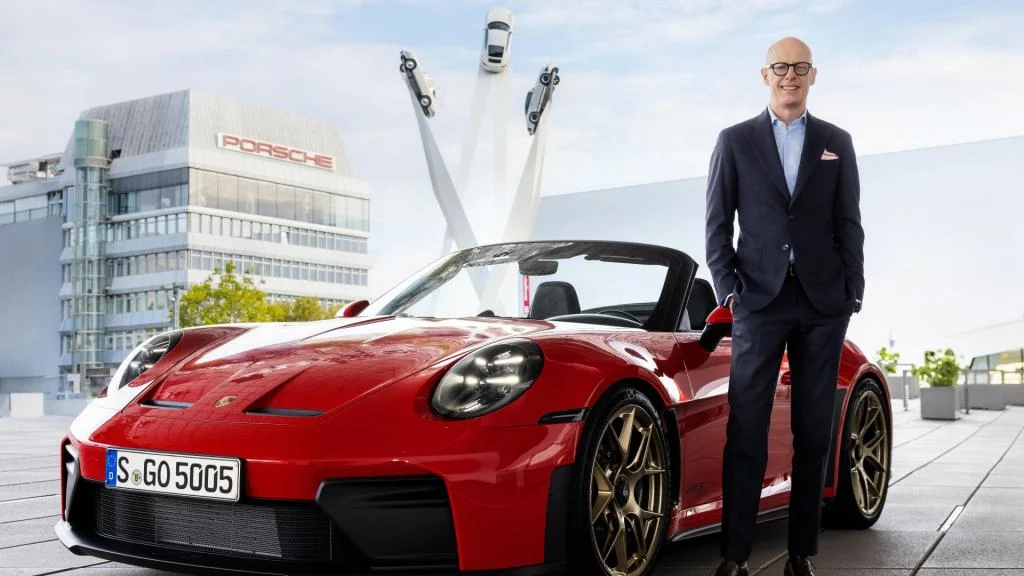
Stuttgart, Germany – For more than two decades, the prevailing narrative across the global automotive industry was an unyielding pursuit of scale. Automakers large and small chased record-shattering delivery milestones, expanded platform sharing, and flooded every emerging market niche with metal to satisfy Wall Street and Frankfurt alike. Porsche, under the broader umbrella of the Volkswagen Group, participated enthusiastically in this volume game, successfully transforming from a boutique sports car manufacturer into a high-yielding, volume-producing luxury powerhouse anchored by the runaway success of the Cayenne and Macan SUVs.
Yet, on October 7, 2026, during a highly anticipated Capital Markets Day in Stuttgart, Porsche’s leadership drew a hard line under that chapter of its history. Unveiling a comprehensive and daring long-term roadmap stretching to 2035—aptly christened "Sportwagenschmiede ’35" (Sports Car Forge ’35)—the German marque announced a seismic shift in philosophy.
Porsche is officially pivoting away from volume growth. Moving forward, the brand’s executive board has made it unequivocally clear: value will supersede volume, exclusivity will trump ubiquity, and Porsche will consciously engineer its own contraction to secure long-term financial resilience and desirability. In a move echoing the playbook of high-end Italian exotics like Ferrari, Stuttgart is choosing to build fewer cars, sell them for significantly more, and restructure its entire manufacturing, development, and administrative apparatus to thrive in a volatile automotive landscape.
1. Main Facts: The Pillars of "Sportwagenschmiede ’35"
At its core, the Sportwagenschmiede ’35 strategy is designed to insulate Porsche from market fluctuations, regulatory whiplash, and the margin pressures currently plaguing the electric vehicle transition. The blueprint rests on three interconnected pillars: radical product reinvention, a strict multi-energy powertrain stance, and a profound internal corporate restructuring.
Value Over Volume
The guiding principle of the new era is simple yet radical for a modern mass-luxury brand: stop chasing unit sales. Porsche is deliberately lowering its sights on total volume, targeting a break-even point—or financial threshold of resilience—below 200,000 units annually. By reducing its structural dependence on high-volume production, the company aims to protect its operating margins against economic downturns.
To offset lower volumes while safeguarding revenue, Porsche is enacting aggressive pricing strategies. The brand plans to elevate the average transaction price of its top-tier models by approximately 20%. This will be driven heavily by expanding its bespoke personalization divisions, Exclusive Manufaktur and Sonderwunsch (Special Wishes), which cater to ultra-high-net-worth enthusiasts willing to pay staggering sums for individualized craftsmanship. Porsche has set a public target to multiply Sonderwunsch revenues by sixfold over the course of the strategy.
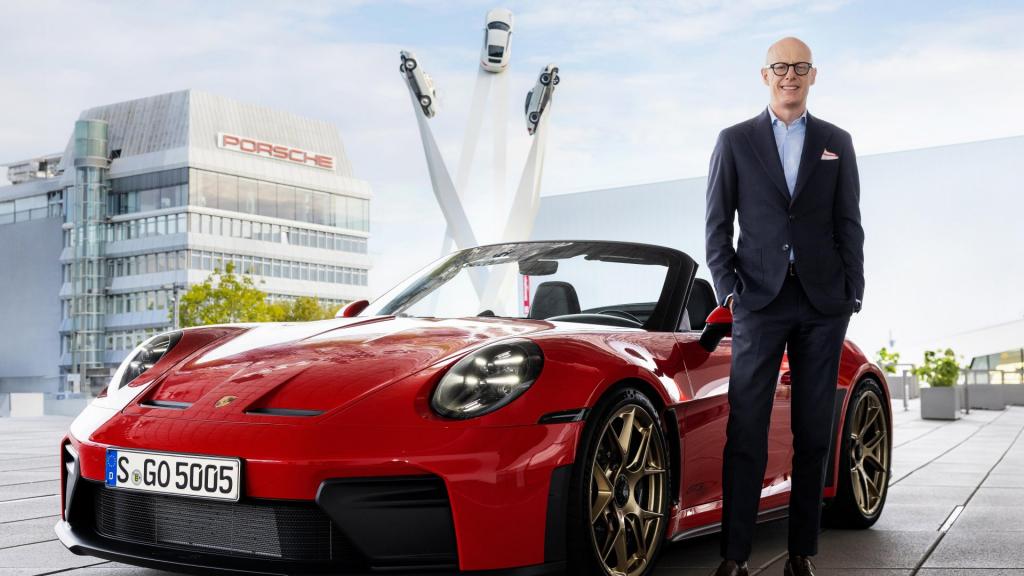
To cement this repositioning, all activities related to high performance, brand heritage, and ultra-exclusivity are being unified under a new internal banner: "Home of Sports Cars."
A Multi-Energy Portfolio: Refusing to Choose One Path
While many legacy luxury automakers committed fully to an all-electric future—only to stumble as global EV adoption curves flattened—Porsche is adopting a pragmatic, flexible multi-energy approach.
Similar to its compatriot BMW, Porsche will simultaneously invest in and develop:
- Advanced internal combustion engines (ICE)
- High-performance plug-in hybrids (PHEVs)
- Next-generation battery-electric vehicles (BEVs)
- Cutting-edge proprietary battery chemistries
This technology-agnostic stance ensures that Porsche can instantly pivot production to meet regional consumer demand, regulatory requirements, and infrastructure readiness across North America, Europe, China, and emerging markets.
2. Chronology of the Transformation: From Volume Chasing to Elite Exclusivity
To understand how Porsche arrived at Sportwagenschmiede ’35, one must look at the timeline of its strategic evolution over the last quarter-century, culminating in the roadmap unveiled for the decade ahead.
- Early 2000s – 2010s (The Volume Era): Buoyed by the immense commercial success of the Cayenne SUV (launched in 2002) and later the Macan (2014), Porsche scales up production drastically. Deliveries soar past 100,000, then 200,000, and eventually peak near 300,000 vehicles annually. While wildly profitable, the brand faces growing concerns internally about diluting its sports car heritage.
- 2019 – 2024 (The Electric Leap): Porsche launches its first all-electric sports sedan, the Taycan, signaling an aggressive push toward electrification. The company publicly floats aggressive targets for EV sales mix by 2030, mirroring broader European regulatory pushes.
- 2025 (Market Realities Set In): Slower-than-anticipated global EV adoption, supply chain normalization, rising structural overhead, and softening demand in key markets force Porsche’s board to re-evaluate its long-term financial modeling. The realization hits that chasing volume in a transitioning market degrades pricing power.
- October 7, 2026 (The Capital Markets Day Reveal): Porsche officially debuts Sportwagenschmiede ’35. The company halts its historic volume-chasing trajectory, announces major restructuring, details a high-end product onslaught leading to 2030, and consolidates its performance arm under the "Home of Sports Cars" umbrella.
- 2028 (The Product Inflection Point): A wave of critical product launches hits the market, including the electric 718 Boxster/Cayman and a brand-new thermal/hybrid compact SUV designed to complement the Macan EV.
- 2030 – 2035 (Consolidation and Exclusivity Peak): The full fruition of the Sportwagenschmiede ’35 era, characterized by low-volume, high-margin supercar production, highly exclusive 911 variants, and a lean, highly resilient corporate structure operating well below the 200,000-unit threshold.
3. Supporting Data: The Anatomy of Porsche’s "Weight Loss" Plan
A qualitative shift toward ultra-luxury cannot succeed without a hard quantitative correction on the balance sheet. Porsche’s leadership has designed a sweeping, multi-layered cost-reduction program aimed at stripping out bureaucratic bloat and maximizing manufacturing efficiency.
The financial and operational metrics underpinning Sportwagenschmiede ’35 are stark:
| Restructuring Metric / Target | Projected Reduction / Scope | Strategic Objective |
|---|---|---|
| Annual Volume Break-Even | Below 200,000 units | Insulate company earnings from economic downturns and volume dependency |
| Total Workforce Reduction | ~25% reduction medium-term | Streamline operations and eliminate organizational redundancies |
| Management Positions | -40% reduction | Flatten corporate hierarchy for faster decision-making |
| Job Cuts (Previously Announced) | 9,000 positions | Re-align headcount with lower, highly profitable volume targets |
| Development Costs | Up to 20% savings | Optimize R&D through shared architectures and digital engineering |
| Production Costs | Up to 30% savings | Enhance factory floor efficiency, automation, and lean manufacturing |
| Commercial & Sales Costs | ~20% reduction | Streamline marketing and distribution channels via digital optimization |
These internal cost-cutting measures are paired with aggressive top-line revenue goals, specifically targeting a 20% increase in average selling prices for flagship models and a sixfold explosion in revenue from ultra-bespoke Sonderwunsch commissions.
4. Official Responses and Product Roadmap Up to 2030
Porsche’s executive board framed the Sportwagenschmiede ’35 initiative not as a retreat, but as a bold reclamation of the brand’s soul. Speaking to analysts and media in Stuttgart, leadership emphasized that true luxury cannot be mass-produced without losing its magnetic pull.
"For two decades, our industry has worshiped the altar of volume," a senior Porsche board member noted during the presentation. "We proved we could scale successfully. But true sports car greatness—true desirability—requires scarcity, emotion, and uncompromised craftsmanship. With Sportwagenschmiede ’35, we are choosing to be more desirable, not merely bigger."
To anchor this philosophy, Porsche outlined an unprecedented product offensive featuring at least one major vehicle launch every single year leading up to 2030:
- The Electric 718 Twins (Boxster and Cayman): Set to hit the market and contribute meaningfully to sales starting in 2028, these battery-powered entry sports cars represent Porsche’s commitment to proving that electric powertrains can deliver traditional driving dynamics.
- The Thermal/Hybrid Compact SUV: Launching in 2028 alongside the existing Macan EV, this new internal combustion and plug-in hybrid SUV ensures that customers reluctant to jump into pure EVs have a modern, high-performance alternative in Porsche’s most popular volume segment.
- The "Super Cayenne": Porsche is actively studying a luxury SUV positioned directly above the current Cayenne, targeting ultra-luxurious global segments where buyers demand supreme comfort, performance, and presence.
- The 911 ‘Type 994’: The eternal icon of Stuttgart remains the emotional heartbeat of the company. The 911 will receive continued updates and ultra-exclusive, low-volume special editions designed to send collector values soaring.
- The All-New Mid-Engine Supercar: Perhaps the most thrilling announcement for automotive purists is the confirmed development of an all-new mid-engine supercar platform. Slated to sit comfortably above the 911 in the lineup, this halo car aims to step into the legendary footsteps of the Carrera GT and the 918 Spyder. It will serve as the ultimate technological and emotional flagbearer for the new era.
5. Implications: What Sportwagenschmiede ’35 Means for the Industry
The repercussions of Porsche’s pivot will be felt far beyond the gates of Zuffenhausen.
First, it signals a broader macroeconomic reality check for the European automotive sector. For years, legacy brands attempted to out-Tesla Tesla by committing blindly to aggressive EV volume timelines. Porsche’s admission that it must reduce its production footprint to maintain pricing power and financial health provides a blueprint that other premium and luxury manufacturers may soon follow.
Second, the multi-energy strategy validates the concerns long voiced by sports car purists: consumer demand cannot be legislated overnight. By keeping ICE and hybrid options alive well into the 2030s while simultaneously engineering world-class EVs, Porsche is effectively hedging its bets against infrastructure lags and consumer pushback.
Finally, the cultural shift inside Stuttgart—marked by a 40% slash in management and a 25% reduction in total headcount—illustrates the ruthless efficiency required to survive the green transition without sacrificing profitability. By shedding corporate fat, Porsche is transforming itself into an agile, high-margin machine designed to weather any storm.

As Porsche closes the book on its volume-chasing era, "Sportwagenschmiede ’35" stands as a testament to industrial courage. In a world increasingly obsessed with mass automation and homogenized transit, Porsche is doubling down on what made it legendary in the first place: rarity, emotion, uncompromised engineering, and the unapologetic pursuit of desire.
Related Porsche News
Manthey Racing Celebrates 30 Years with Two Exclusive Track Racers
To mark three decades of motorsport dominance and technical wizardry, Porsche’s close partner Manthey Racing has unveiled two ultra-exclusive, limited-run track cars: the Porsche 911 GT3 Cup MR 30 and the 718 Cayman GT4 RS Clubsport MR 30. Production of each model will be strictly capped at just 15 units globally, making them instant collector items for track-day enthusiasts. [Read full story…]
[Restomod] Carpoint Transforms the Porsche 944 into a Luxury Shooting Brake
German Porsche specialist Carpoint has pulled the covers off the GT-K44, a breathtaking restomod that reimagines the classic transaxle Porsche 944 as an ultra-luxurious shooting brake. Blending 1980s retro-futuristic charm with modern bespoke interior craftsmanship and upgraded performance, the GT-K44 bridges the gap between classic heritage and modern bespoke luxury. [Read full story…]
Porsche Takes Full Operational and Financial Control of Manthey Racing
Deepening an already legendary motorsport partnership, Porsche has officially increased its stake to take complete control of Meuspath-based Manthey Racing. The move integrates the endurance racing specialist even closer into the factory motorsport mothership, ensuring that Manthey’s legendary setup expertise and engineering prowess remain exclusively tied to Stuttgart’s racing and high-performance road car future. [Read full story…]
For ongoing discussions, community reactions, and deep-dives into Porsche’s future product pipeline, visit the official Automobile Sportive Forum.