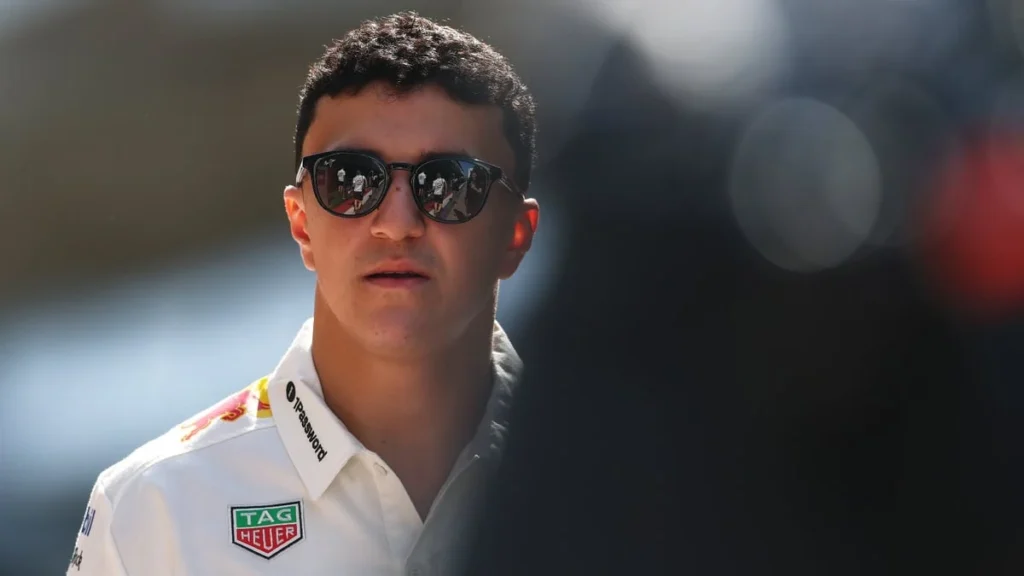
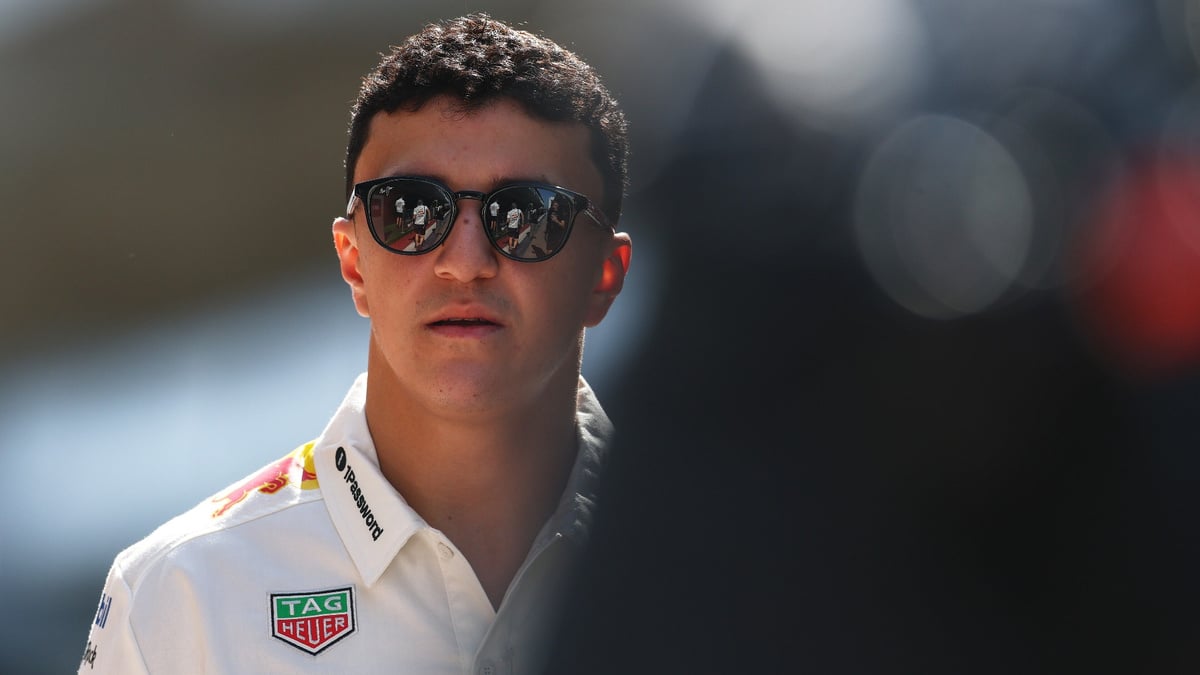
AUSTIN, Texas — The Circuit of the Americas is supposed to be a theater of dreams, where high-speed sweeps and heavy braking zones separate the extraordinary from the elite. For Red Bull’s rising French star Isack Hadjar, however, Sunday’s United States Grand Prix dissolved into a masterclass in frustration.
Starting from a promising third on the grid following a stellar performance in Saturday’s qualifying sessions, Hadjar looked every bit the podium contender during the early stages of the race. Yet, a cascade of technical glitches—ranging from clutch failures to radio silence and errant pedal mapping—undermined his race pace, forcing him to slide down the order to a disappointing sixth-place finish.
While the race was ultimately won at the front, Hadjar’s afternoon became a window into the operational frailties that continue to plague Red Bull in the high-stakes theater of the 2026 Formula 1 World Championship.
Main Facts: A Promising Weekend Undone by Technical Failure
The raw data from the weekend initially painted an optimistic picture for the young Frenchman. Hadjar extracted maximum performance from his RBPT power unit during qualifying, securing a second-row lockout start alongside the championship protagonists.
Starting Position: 3rd
Final Classification: 6th
Championship Impact: Red Bull leaves Austin with 23 points, pulling even with McLaren (355 points each) in the fierce battle for third in the Constructors’ Championship, while trailing Ferrari by over 100 points.
Despite these competitive flashes, Hadjar’s race pace evaporated following his mandatory pit stop. A combination of a compromised start, a faulty radio system preventing clear communication with the pit wall, and a critical error in throttle mapping turned his afternoon into a damage-limitation exercise.
Chronology of a Collapse: Lap-by-Lap Breakdown of Hadjar’s Race
To understand how a potential podium finish transformed into a sixth-place salvage job, one must look at the sequence of events that unfolded under the Texas sun.
Phase 1: The Lights Out and Clutch Drama
Problems arose immediately when the red lights went out. Despite executing his routine correctly, Hadjar suffered an instantaneous clutch failure off the line.
"The start was bad. I did everything on my side, the procedure was good, and then I had a clutch issue. We really need to redesign those parts," Hadjar remarked candidly to Canal+.
The poor getaway cost him critical track position on the run down to Turn 1, dropping him into the clutches of the chasing pack.
Phase 2: Radio Silence and the Single-Stop Strategy
As Hadjar fought to recover his rhythm, secondary systems began to fail. A localized radio malfunction left him isolated from his engineers, unable to receive vital updates regarding tire degradation, gaps, or strategy adjustments.
Compounding the issue, the team opted for a one-stop strategy—a move that ultimately proved to be correct in hindsight. However, because the team miscalculated the race dynamic ahead of Sunday, Hadjar and his crew had spent precious practice sessions preserving tires for a two-stop strategy that wasn’t necessary.
Phase 3: The Pit Stop and Throttle Map Nightmare
The fatal blow to Hadjar’s race occurred during his sole trip to the pit lane. Upon exiting the garage, his car was locked into an incorrect pedal mapping configuration.
"After my stop, I was stuck on a bad pedal map," Hadjar explained. "It was either 100% acceleration at a certain point, or 0%, even if I pressed the pedal halfway down."
Driving a modern Formula 1 car with an on-off switch for a throttle is an exercise in survival rather than racing. The unpredictable power delivery destroyed his rear tires, compromised his cornering stability, and rendered the car virtually inconduisible. The podium was officially out of reach.
Official Responses and Driver Reactions
Hadjar made no effort to mask his fury when speaking to international media outlets after climbing out of the cockpit. Addressing Sky Sports UK, the Red Bull driver expressed a level of raw annoyance that highlights the mounting pressure within the team’s garage.
"I had a clutch issue at the start, then radio problems where I couldn’t hear properly what was going on in the pits, and then I left the pits with the wrong mapping… These problems, which are completely out of my control, are starting to piss me off!"
The sentiment was echoed by the team’s leadership. Red Bull Team Principal Laurent Mekies addressed the media, acknowledging that while the team managed to collect valuable points, operational execution fell short of championship standards.
"We lost some of our advantage today, but I don’t think we had enough pace in all conditions to fight for the win," Mekies admitted to Sky Sports UK. "We encountered several problems that somewhat affected the balance of the car and tire degradation. Certain issues disrupted our performance, and our pace dropped. We still leave with a podium [elsewhere in the team] and many lessons that we hope to put to good use in Mexico."
Supporting Data: The 2026 Constructors’ Battle
The mathematical reality for Red Bull is stark. While the Milton Keynes-based outfit can no longer mathematically secure the 2026 Constructors’ World Championship—a title all but slipping away to a dominant Ferrari charge—the internal hierarchy of the midfield and upper-echelon teams remains razor-thin.
Team
Constructor Points (Post-Austin)
Gap to Leader
Ferrari
~455+ (Est.)
Leader
Red Bull Racing
355
-100+
McLaren
355
Tied with Red Bull
The dead-heat tie between Red Bull and McLaren at 355 points elevates the significance of every single race point. Hadjar’s loss of three or four positions due to mechanical and software gremlins directly impacts millions of dollars in prize money and corporate prestige. For an organization accustomed to unrivaled dominance, the current margin for error is effectively zero.
Implications: What This Means for Hadjar and Red Bull’s Future
The events at the Circuit of the Americas carry profound implications as the Formula 1 circus packs its crates and heads south for the Mexican Grand Prix.
1. Reliability as the Silent Killer
Red Bull’s design philosophy has traditionally prioritized aerodynamic aggression and maximum performance envelope expansion. However, the recurring nature of Hadjar’s mechanical issues—echoing similar frustrations earlier in the season at Singapore—suggests that quality control and software integration require an urgent internal audit. Designing parts that fail under race-start loads or deploying incorrect engine maps during pit sequences are errors rooted in factory preparation, not driver execution.
2. Driver Psychology and Team Dynamics
Isack Hadjar has proven beyond a shadow of a doubt that he possesses the raw speed required to compete at the very front of the Formula 1 grid. Qualifying third in a fiercely competitive 2026 field is no small feat. However, repeating narratives of "parts out of my control" risks breeding psychological fatigue within the driver. Ensuring that Hadjar feels supported by his engineering crew will be paramount for Mekies and the Red Bull management team as the season enters its final grueling triple-header.
3. The Development Race to Mexico
With the championship battle against McLaren dead level and Ferrari out of immediate reach, every session from here on out is a development test for the subsequent year. The data harvested from Hadjar’s crippled car—despite its painful execution—must be weaponized immediately in the simulator ahead of the Autódromo Hermanos Rodríguez.
As the dust settles over the Texas plains, the overriding narrative of Red Bull’s weekend is one of squandered potential. Isack Hadjar arrived in Austin as a hunter seeking his maiden Grand Prix podium, and he leaves as a frustrated victim of circumstance. If Red Bull can iron out the software bugs and mechanical fragility that continue to plague his side of the garage, the young Frenchman will not have to wait long to taste champagne at the pinnacle of motorsport.