

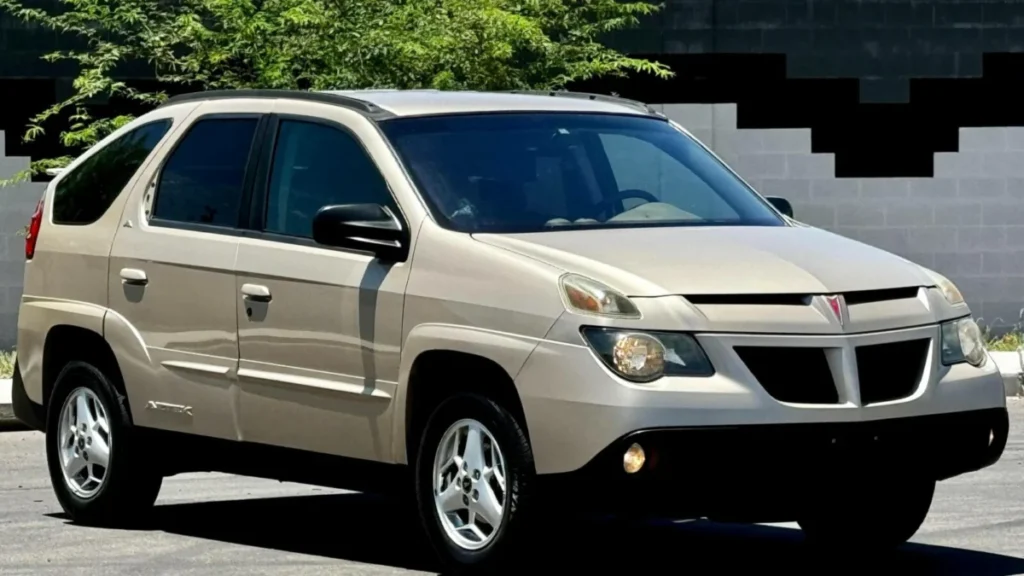
At the turn of the millennium, General Motors (GM) set out to redefine the American landscape with a vehicle designed for the "Generation X" ethos: a multi-purpose machine engineered for extreme sports, wilderness camping, and the nomadic lifestyle. On paper, the concept was revolutionary—the blueprint for what would eventually become the most profitable segment in the global automotive market: the recreational crossover.
In reality, the Pontiac Aztek, which hit showrooms in the summer of 2000, stands as one of the most spectacular aesthetic and industrial failures in modern history. It is a cautionary tale of how corporate bureaucracy, cost-cutting, and a disconnect from consumer desires can dismantle a visionary idea.
The Genesis: From Radical Concept to Compromised Reality
The Detroit 1999 Reveal
When the Aztek concept debuted at the 1999 Detroit Auto Show, it was met with genuine excitement. Directed by Tom Peters, the design team envisioned a bold, angular, and rugged "active lifestyle" vehicle. It looked like a rally car for the suburbs, promising a radical break from the stodgy sedans and bloated SUVs of the era. The public reception was overwhelmingly positive, and marketing focus groups signaled that buyers were hungry for exactly this type of utility.
The Bureaucratic Trap
The tragedy began when the concept moved from the show floor to the assembly line. In a move to slash development costs, GM executives mandated that the production version be built upon the existing "U-body" platform—the same architecture that underpinned the Pontiac Montana and Chevrolet Venture minivans.
The engineering constraints were catastrophic. The Aztek lost the low, wide, and aggressive stance of the concept car, resulting in a vehicle that was narrow, unnaturally tall, and burdened by a wheelbase that was entirely unsuited for its bodywork. To disguise these awkward proportions, designers were forced to shroud the lower half of the vehicle in vast, unpainted gray plastic cladding. The front fascia, with its fragmented, "split-personality" lighting and pinched grille, became an instant target for ridicule, signaling the death of the car’s visual appeal before it even left the lot.
A Visionary Utility Under the Sheet Metal
While the exterior design became a punchline, the actual engineering of the Aztek’s interior and utility features was years ahead of its time. If one were to ignore the polarizing aesthetic, the Aztek was a masterclass in modularity.
The "Camping Package" Pioneer
Long before the modern "van-life" movement took hold, the Aztek offered an integrated camping ecosystem. GM marketed an optional camping package that included a custom-fitted tent that clipped directly onto the open liftgate, a self-inflating mattress, and an onboard air compressor housed in the cargo area. It was an invitation to adventure that was far more practical than the SUVs of the day.
Interior Ingenuity
The innovations continued inside the cabin:
- The Mobile Cooler: The center console was a removable, insulated cooler that could be carried like a briefcase.
- The Tailgate Party: The split-folding tailgate featured a lower gate that acted as a bench, complete with cup holders, audio controls, and rear-facing speakers, essentially creating a sound system for outdoor gatherings.
- Cargo Flexibility: The rear featured a sliding cargo tray mounted on heavy-duty rails, capable of supporting up to 180 kg (400 lbs), allowing users to load and unload gear with minimal effort.
Mechanically, the vehicle was solid, if unremarkable, powered by a 3.4-liter V6 producing 185 horsepower, paired with the "Versatrak" all-wheel-drive system. It offered a spacious, comfortable ride, yet none of these functional wins could overcome the visual stigma.
Chronology of a Failed Launch
- 1999: The Aztek concept is unveiled at the North American International Auto Show to high acclaim.
- 2000: Production begins under immense pressure from GM management to rush the vehicle to market.
- Summer 2001: The Aztek hits dealerships. Initial reviews are scathing, focusing on the exterior design.
- 2001–2003: Sales stagnate. GM realizes the 75,000 annual unit target is unattainable; sales barely break 27,000 in peak years.
- 2005: GM quietly discontinues the Aztek, ending its four-year production run.
- 2008–2013: The vehicle gains unexpected fame as the primary car of Walter White in the hit television series Breaking Bad.
Data and Performance: The Market’s Verdict
The failure of the Aztek was not merely subjective; it was an empirical disaster for GM’s bottom line. The company had bet heavily on the crossover segment, banking on the Aztek to revitalize the Pontiac brand.
| Metric | Projection | Reality (Peak) |
|---|---|---|
| Annual Sales | 75,000 units | ~27,000 units |
| Market Position | "Halo" vehicle | Niche failure |
| Development Budget | High | Compromised by platform sharing |
The lack of sales forced GM to implement aggressive incentives and fleet sales, further damaging the brand’s residual value. By the time the vehicle was retired in 2005, it was viewed as a textbook example of "design by committee"—a process where every executive, engineer, and accountant had a say, eventually stripping the project of its soul and coherence.
Official Responses and Corporate Retrospection
In the years following the discontinuation, former GM executives and designers have spoken candidly about the "Aztek experience." Don Hackworth, then-head of the midsize car group, once famously suggested that the market simply wasn’t ready for such a radical design, though this was largely viewed as an excuse.
Internally, the failure served as a wake-up call for GM’s design department. It prompted a shift toward more unified design languages and gave designers more power to push back against engineers and cost-accountants. The "Aztek lesson" eventually informed the development of later, successful crossovers like the GMC Terrain and the Chevrolet Equinox, which successfully implemented the utility features the Aztek pioneered—just with a more palatable aesthetic.
Implications: From Pariah to Pop-Culture Icon
The most fascinating chapter of the Aztek story is its second life. In the 2010s, the vehicle underwent a radical transformation in public perception.
The Breaking Bad Effect
When showrunner Vince Gilligan selected the Aztek for Walter White in Breaking Bad, he didn’t pick it for its style. He picked it because it perfectly captured the essence of a man in the middle of a midlife crisis—a vehicle that was "beige," uncool, and slightly battered. The car became a character in its own right, a visual representation of White’s suburban mediocrity and subsequent moral decay.
A Legacy of Foresight
Today, the automotive world views the Aztek with a strange sense of nostalgia. Critics now point out that the industry spent the next decade rushing to build vehicles that did exactly what the Aztek promised: offer the utility of a minivan with the look and feel of an adventure vehicle. Every modern crossover, from the Subaru Outback to the Ford Explorer, carries the DNA of the features that the Aztek introduced.
The Pontiac Aztek remains a fascinating study in the automotive industry. It was a victim of its own ambition—a vehicle that was technologically and conceptually ahead of its time, but physically imprisoned by the conservative and cost-obsessed corporate culture of the late 1990s. While it is remembered as an ugly duckling, it has earned its place in history as a misunderstood pioneer that paid the ultimate price for being just a little too different, too early.
