
TOKYO — While the Japanese automotive landscape trails behind the aggressive electric vehicle (EV) adoption rates witnessed in Europe and China, its domestic manufacturers continue to pioneer next-generation mobility technologies. Rather than merely chasing larger battery capacities and faster stationary charging stations, Japanese multinational conglomerate Honda is attacking the foundational constraints of electric mobility from a different angle.
Beginning in 2027, Honda, in a high-stakes partnership with civil engineering titan Taisei Corporation and its specialized road-surfacing subsidiary Taisei Rotec, will launch real-world, large-scale public highway demonstrations of dynamic wireless power transfer. This groundbreaking technology promises to allow electric vehicles to recharge seamlessly via induction while cruising at highway speeds—a development that could fundamentally redefine the future of transportation.
Main Facts: The 2027 Highway Induction Trial
The core of the upcoming 2027 pilot project lies in a comprehensive synergy between automotive engineering and civil infrastructure. While various automotive groups globally have dabbled in static or limited dynamic wireless charging, the Honda-Taisei partnership represents a major leap into practical, real-world deployment.

- The Partners: Honda is spearheading the development of the onboard vehicle systems, including energy transmission and reception hardware. Taisei Corporation is managing the electrical supply infrastructure, while Taisei Rotec is engineering the specialized, durable road surfaces required to house the embedded power transmission coils.
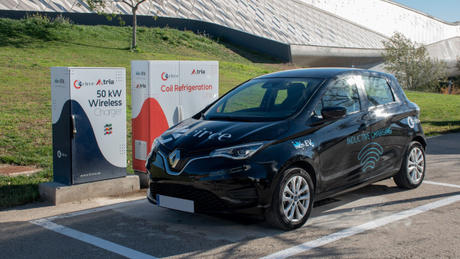
- The Mechanism: The system utilizes magnetic induction to transfer electricity wirelessly from embedded infrastructure within the asphalt directly to a receiver mounted underneath the moving vehicle.
- Performance Metrics: Honda’s system has been engineered to function reliably at speeds up to 120 km/h (75 mph)—the legal speed limit on Japanese expressways. Crucially, tests indicate that the energy recuperated by the vehicle at this velocity surpasses the energy consumed to maintain forward motion. Consequently, an EV traveling on an equipped lane achieves theoretical infinite range.
- Target Demographics: Initially, the technology targets commercial fleets, heavy-duty trucks, and professional utility vehicles characterized by intensive usage cycles and high energy demands, before eventually filtering down to passenger cars.
Chronology of Wireless Charging and the Path to 2027
The concept of inductive power transfer is not entirely new, but its transition from laboratory test tracks to public highways has been agonizingly slow. Understanding the timeline of this technological evolution underscores the significance of the 2027 Japanese trial.
The Genesis of Wireless Power (Pre-2020)
For over a decade, academic institutions and tier-one automotive suppliers experimented with static wireless charging (charging a stationary vehicle parked over a pad). While convenient for residential use, static charging failed to solve the primary anxiety of long-distance driving: the mandatory, time-consuming stops required for battery replenishment. Researchers quickly pivoted toward dynamic induction—the ability to transmit power to vehicles while in motion—recognizing it as the ultimate holy grail of electric mobility.
The European Experimental Phase (2020–2023)
European heavyweights led the early charge into dynamic induction. Most notably, Stellantis invested heavily in dynamic wireless power transfer, establishing specialized test tracks (such as the Arena del Futuro circuit in Italy) starting around 2022. These closed-course tests proved the technical feasibility of transferring high-voltage energy through asphalt to moving cars. However, despite initial fanfare, concrete plans for widespread public implementation on European highways stalled amid economic hurdles, regulatory fragmentation, and shifting corporate priorities.

The Japanese Pivot and Announcement (2024–Present)
Recognizing that domestic EV adoption lagged significantly behind Western and Chinese markets, Japanese industry leaders sought a technological leapfrog. Honda and Taisei formalized their alliance to bridge the gap between automotive design and civil engineering. By shifting the focus from closed test loops to actual public expressways, the partners set a firm target: a public infrastructure demonstration by 2027. This timeline represents a critical transition phase from experimental R&D to integrated civic infrastructure.
Supporting Data: The Global EV Landscape and Economic Realities
To contextualize Honda’s aggressive bet on dynamic charging, one must examine the stark contrast in global EV adoption rates and the financial barriers currently holding back the mass market.
A Tale of Two Markets: Japan vs. Europe and China
The urgency of infrastructure innovation is particularly acute in Japan due to unique market dynamics:

- China: EV adoption rates have surged past 40%, supported by a massive, state-backed charging infrastructure.
- Europe: The continental market has achieved a robust 29% adoption rate, with electric powertrains frequently ranking as top-selling configurations in nations like France.
- Japan: The island nation lags considerably, with pure electric vehicles capturing a meager 4% of the domestic market. The local charging network remains sparse compared to its density in Europe or urban China.
The Battery Cost Dilemma
At the heart of the EV affordability crisis is the high-voltage battery pack. Batteries constitute a staggering percentage of an electric vehicle’s total production cost and weight.
By eliminating the necessity for massive, heavy battery packs designed to yield 500+ kilometers of range, dynamic induction charging offers a radical economic solution. If vehicles can continuously sip electricity from the highway infrastructure, automakers can equip them with significantly smaller, lighter, and vastly cheaper batteries. This reduction in raw material consumption—specifically lithium, cobalt, and nickel—directly translates to lower retail prices for consumers, potentially democratizing electric vehicle ownership.
Official Responses and Stakeholder Perspectives
The announcement of the 2027 highway trials has drawn significant commentary from industry leaders, underlining the collaborative spirit required to overhaul national infrastructure.

Representatives from Taisei Corporation and Taisei Rotec addressed the initiative during a joint press conference, framing the project as a generational duty. Executives formally committed their firms to tackling “the challenge of building the social infrastructures of tomorrow.” They emphasized that the roads being developed are not intended as temporary, short-term scientific exhibits, but rather as permanent civic assets designed to integrate seamlessly into daily commercial and civilian life.
Honda’s engineering division highlighted the dual-pronged utility of the system. In official statements, company spokespersons noted that while passenger vehicles will eventually benefit, the immediate beneficiaries will be commercial transport operators. Logistics companies operating heavy freight and utility vans face severe economic penalties during mandatory charging downtime. By integrating dynamic induction, these fleets can operate continuously, maximizing productivity.
Furthermore, independent automotive analysts have praised Honda for tackling the infrastructure problem collaboratively. Rather than placing the entire burden on municipalities or utility companies, Honda is actively co-developing the vehicle-side architecture alongside civil engineering experts, ensuring hardware-software-infrastructure interoperability from the ground up.

Implications: Reshaping the Future of Mobility
The implications of the Honda-Taisei 2027 trial extend far beyond the borders of Japan, threatening to disrupt traditional paradigms of urban planning, automotive design, and energy distribution.
1. Urban Planning and Highway Engineering
The integration of electrical transmission systems into asphalt requires a complete reimagining of road construction standards. Highways can no longer be viewed merely as passive layers of concrete and bitumen; they must be treated as active, high-voltage electrical grids. This demands unprecedented coordination between municipal governments, energy grids, and private contractors to manage load balancing, power distribution, and structural maintenance.
2. The Automobile Manufacturing Paradigm
If dynamic induction proves commercially viable on public scales, the automotive industry could witness a seismic shift in vehicle design philosophy. The current "range anxiety" arms race—where manufacturers compete to build heavier cars with 100+ kWh battery packs—could become obsolete. Lighter vehicles mean less wear and tear on public roads, reduced tire particulate emissions, and improved overall energy efficiency.
3. Economic and Geopolitical Impact
By lowering reliance on massive lithium-ion battery packs, nations can alleviate geopolitical pressures surrounding critical mineral supply chains. Japan, a country historically vulnerable to energy imports, could leverage indigenous infrastructure technologies to secure a more resilient, localized transportation ecosystem.
4. Remaining Hurdles
Despite the optimistic 2027 timeline, significant hurdles remain. The capital expenditure required to retrofit thousands of kilometers of highway with inductive coils is astronomical. Questions regarding power loss over distance, electromagnetic field (EMF) safety standards for human health, standardized international protocols, and the allocation of electricity costs among road users (via tolls or subscription models) have yet to be fully resolved.
Conclusion
As the 2027 demonstration date approaches, all eyes will be on the Japanese expressways. If Honda and Taisei succeed in proving that vehicles can travel indefinitely at 120 km/h while actively charging their depleted batteries, they will have solved the single greatest bottleneck in modern electric mobility. What begins as a localized highway trial in Japan could ultimately lay the blueprint for the electrified roadways of the global future.