

By Marco Visani | Photography by IsolaPress
Introduction: Breaking the Mold in Rüsselsheim
For decades, the name Opel—General Motors’ stalwart German subsidiary based in Rüsselsheim—was synonymous with sensible, reliable, and occasionally austere family transportation. Their engineering ethos prioritized robust mechanicals, spacious cabins, and understated lines that appealed to the European bourgeoisie and fleet buyers alike. Yet, in the late 1960s, the brand shattered its own mold.
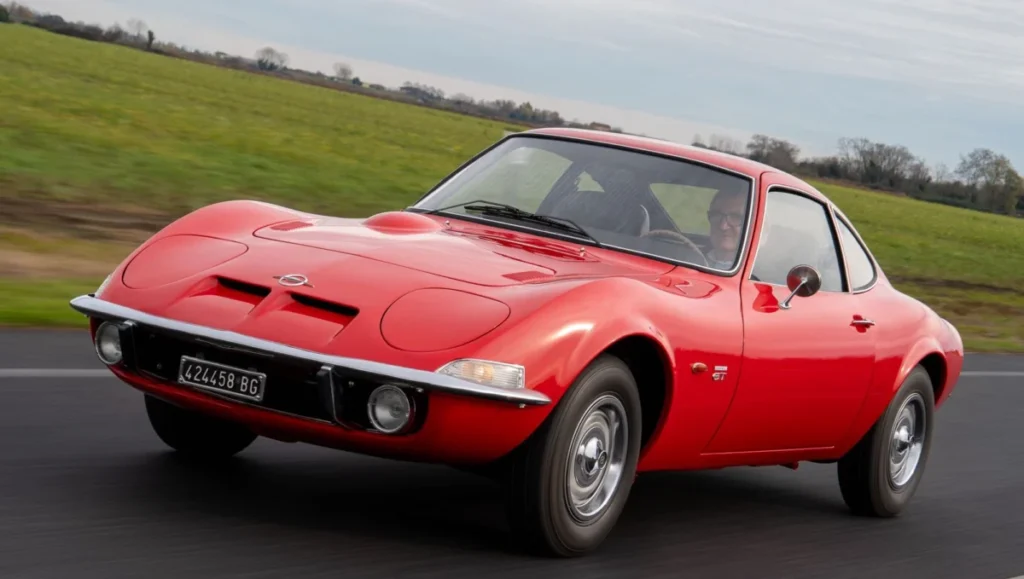
Enter the Opel GT: a sleek, two-seat sports coupe that looked less like a German commuter car and more like a shrunken American muscle car. Clearly inspired by the iconic Chevrolet Corvette, the GT discarded corporate conservatism in favor of dramatic curves, a long hood, a short rear deck, and an unmistakable road presence. Despite a production run that lasted a mere five years, this atypical machine fundamentally altered public perception of what an Opel could be.
Main Facts: Anatomy of an Unconventional Icon
At first glance, only the "Blitz" emblem on the hood revealed the car’s true heritage. Everything else about the Opel GT suggested a boutique Italian design exercise or an American exotic, rather than the stablemate of the ubiquitous Kadett and Rekord.
A Radical Departure in Philosophy
During the development of the GT, Opel’s lineup was built on intensive platform sharing—a cornerstone of the volume-manufacturing playbook perfected by American-backed automakers in Europe. The core range spanned the economical Kadett B, the mid-tier Rekord C, and the large luxury trio of Kapitän, Admiral, and Diplomat. By combining diverse body styles (two- and three-door sedans, fastbacks, station wagons, and coupes) with various engines and trim levels, Opel offered a sprawling catalog of nearly 40 distinct variations derived from just three fundamental platforms.

The GT shattered this philosophy. Aside from its modified floorpan and mechanical underpinnings borrowed from the Kadett and Rekord, the GT was a bespoke project with unique sheet metal and packaging. It targeted an entirely new demographic: European driving enthusiasts seeking Italian flair with German reliability, and perhaps American buyers looking for a stylish, downsized personal coupe.
Packaging and Quirks
The car’s architecture defined its character. With the engine pushed far back behind the front axle—a layout technically qualifying it as a front-mid-engine car—weight distribution was remarkably balanced, leading to neutral and predictable handling.
However, packaging compromises were severe in the pursuit of styling perfection. In order to maximize structural rigidity and streamline the production process, engineers omitted a conventional trunk lid. There was no exterior access to the rear luggage compartment. Instead, drivers and passengers had to load bags and access the spare tire from inside the cabin, reaching over the seats—an arrangement reminiscent of pre-war sedans. While undeniably impractical, buyers of a dedicated leisure car were more than willing to forgive this ergonomic quirk.
Chronology: From Drawing Board to Showroom Floor
The genesis of the Opel GT is a fascinating transatlantic collaboration that moved at a remarkably swift pace for the automotive industry of the era.
1961–1964: The Seeds of Transformation
The transformation of Opel’s visual identity began years before the GT materialized. Bill Mitchell, Vice President of Styling at Chevrolet, dispatched Clare MacKichan to Europe to inject a fresh, modern aesthetic into GM’s German division. Under MacKichan’s oversight, designer Erhard Schell took charge of a special styling project initiated in early 1964. The objective: adapt a modified Kadett floorpan into an alluring, low-slung two-seater.

September 1965: The Frankfurt Motor Show Debut
Opel took the wraps off the "Experimental GT" at the Frankfurt Motor Show. Officially presented merely as a design study not intended for commercial production, the car featured futuristic pop-up headlights and captured the imagination of both the motoring press and the general public. The overwhelmingly positive reception proved that the market was hungry for something bolder from Rüsselsheim.
1966–1968: Refining the Image
Opel capitalized on the concept’s momentum by progressively revamping its mainstream lineup. In August 1966, the Rekord C introduced a modern generation of overhead-camshaft engines. Three months later, the sporty Kadett Rallye joined the catalog. The brand was aggressively courting a younger, performance-oriented audience.
September 1968: The Production Opel GT Arrives
Four years after the initial sketches were drawn, the Experimental GT evolved into the production-ready Opel GT, unveiled once again at Frankfurt. Retaining the essence of the concept, the production model featured a more muscular front end, pronounced wheel arches, and a truncated tail directly evoking the Chevrolet Corvette C3. The original pop-up headlights were replaced by manually operated, longitudinal-axis rotating headlights activated by a lever in the cabin—a signature detail that endures as a hallmark of the car.
Supporting Data: Specifications and Production
To fully understand the Opel GT, one must examine its mechanical offerings and manufacturing footprint. During its production run from 1968 to 1973, the car was offered with two primary engine options, tailored to different performance expectations.
Engine and Performance Metrics
- Opel GT 1100: Powered by a 1.1-liter inline-four engine producing approximately 60 horsepower (borrowed from the Kadett). This entry-level variant accounted for a minority of sales and was discontinued relatively early due to underwhelming performance.
- Opel GT 1900: Equipped with a sturdier 1.9-liter iron-block engine yielding around 90 horsepower (derived from the Rekord). This became the definitive powerplant of the model, delivering respectable acceleration, a top speed of roughly 185 km/h (115 mph), and mechanics that were vastly more robust than they were razor-sharp.
Manufacturing and French Connection
A lesser-known aspect of the Opel GT’s production is its heavy reliance on French industrial expertise. While the mechanical components and platforms were rooted in German engineering, the actual body shells were manufactured and partially assembled by French subcontractors—most notably Chausson and Brissoneau & Lotz—before being shipped back to Germany for final paint, trim, and mechanical mating.

Total production over the five-year lifespan reached nearly 103,463 units, with the vast majority finding homes across the Atlantic through the Buick-Opel dealership network in the United States, where the car enjoyed a surprisingly passionate cult following.
Official Responses and Contemporary Reception
Upon its debut, the automotive establishment reacted with a mixture of astonishment and admiration. Competitors across Europe recognized that General Motors had deployed its immense financial and industrial muscle to create a halo car that punched well above its weight class.
In official press releases of the era, Opel management emphasized that the GT was designed to showcase the styling prowess of its German design studios working in synergy with American design philosophies. Executives noted that the car was never intended to be a hardcore, track-day racer; rather, it was conceived as an accessible Gran Turismo—a stylish, comfortable tourer that made everyday driving feel like an occasion.
Automotive journalists praised the car’s balanced handling, attributing its poise to the clever positioning of the engine well behind the front axle centerline. While reviewers frequently lamented the lack of an exterior trunk lid and the cramped interior space for taller drivers, these complaints were invariably overshadowed by universal praise for the exterior aesthetics. To drive an Opel GT was to attract admiring glances usually reserved for vehicles costing three times as much.
Implications: The Legacy of a Five-Year Wonder
The Opel GT’s production lifecycle came to an end in 1973, brought to a close by tightening safety and emissions regulations in the United States (particularly the introduction of mandatory 5 mph crash bumpers that would have ruined the car’s delicate nose) and changing corporate priorities within General Motors.

A Defining Milestone in Automotive History
Despite its short five-year run, the impact of the GT on Opel’s corporate identity was profound. It proved that a mass-market volume manufacturer could successfully pivot into emotional, design-led niches without alienating its core customer base. The GT paved the way for subsequent sporting models, cementing the brand’s reputation during the golden era of European motoring.
Today, the Opel GT occupies a revered status in the classic car community. Highly sought after by collectors for its striking lines, ease of maintenance (thanks to its shared mechanical parts with mundane Opel sedans), and undeniable charm, the "Baby Corvette" remains a testament to an era when corporate risk-taking yielded rolling works of art.
This article is adapted and expanded from the original feature published in Gazoline magazine, issue #352. For enthusiasts looking to explore the full photographic archive and technical deep-dive, back issues can be ordered directly via the official Gazoline online store.
