

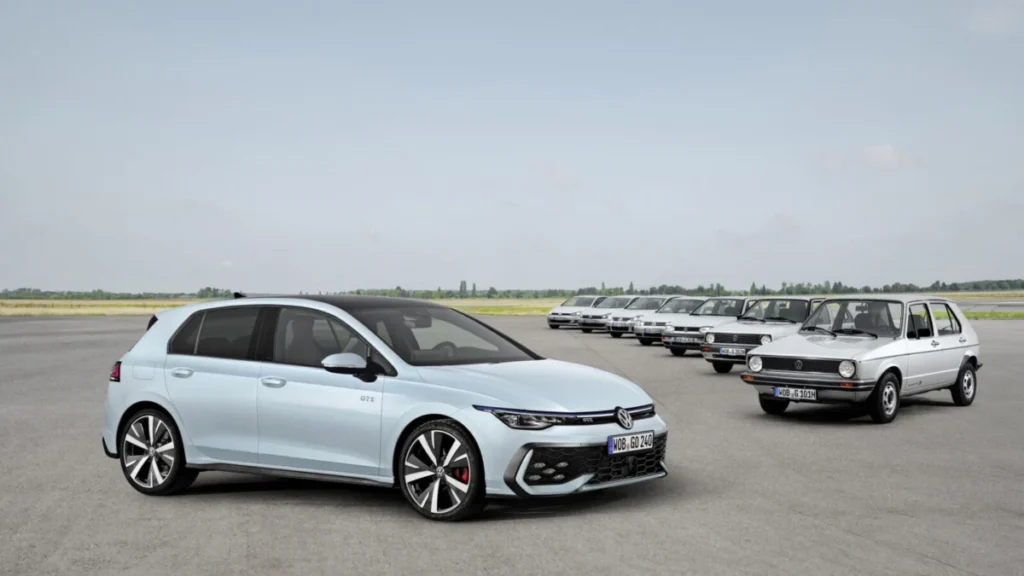
After five years of commercial turbulence marked by the disjointed rollout of the ID electric family, widespread consumer frustration regarding the ergonomic failures of the Golf 8’s touch-sensitive interfaces, and the subsequent high-stakes strategic pivots under CEO Oliver Blume, Wolfsburg finds itself at a crossroads. The leadership has been forced to confront an uncomfortable reality: digital gimmicks and capacitive sliders cannot replace fifty years of industrial heritage and intuitive user experience.
As the German automotive giant attempts to reconcile its past with its electric future—reportedly considering the re-introduction of legendary monikers like "Golf" and "Tiguan" for its next-generation EVs—a titan of the industry has emerged from the shadows. Walter de Silva, the legendary design chief who helmed Volkswagen Group’s aesthetic trajectory from 2007 to 2015, has broken his silence. In a provocative manifesto published in the Italian monthly Quattroruote, De Silva does not merely offer a nostalgic critique; he presents a concrete, millimetric design study that stands in direct opposition to the current experimental trajectory of German engineering.
A Return to Fundamentals: The Ghost of the Fiat Multipla
For De Silva, the man responsible for the crisp lines of the Golf VI and VII, as well as the timeless silhouette of the Audi A5 and the Alfa Romeo 156, the identity of a "people’s car" is rooted in geometric utility, not in the decorative application of LED light bars or complex digital interfaces.
De Silva’s philosophy serves as a direct rebuke to the current design language of his successors. He points back to 1974, the year Giorgetto Giugiaro and engineer Aldo Mantovani transformed the first-generation Golf into a global benchmark. Their success was not achieved through excess, but through the mastery of physical constraints: creating a functional, shoebox-shaped vessel that perfectly addressed the needs of the modern family.
To escape the impasse of the ID.3—a vehicle widely criticized for its lackluster interior materials and an awkward, neither-here-nor-there monospace silhouette—De Silva proposes a radical departure. He refuses to trap the future of the compact segment within the conventional two-box design or the bloated, inefficient aesthetic of the modern crossover. Instead, he draws inspiration from the Italian school of functional design, specifically the spirit of Dante Giacosa’s 1956 Fiat 600 Multipla and Roberto Giolito’s 1998 icon. His vision? Six genuine seats within a footprint smaller than that of a standard compact car.
Geometric Precision: The 4.20-Meter Anti-SUV
The blueprint detailed by De Silva challenges every prevailing canon of the current C-segment. His proposed vehicle measures exactly 4.20 meters in length—eight centimeters shorter than the current Golf 8—yet it achieves a cavernous internal volume by pushing the limits of width and wheelbase.
Technical Specifications and Architecture
- Length: 4.20 meters (compact and urban-friendly).
- Width: 2.00 meters (providing a stable, muscular stance).
- Height: 1.50 meters (aerodynamically efficient, yet commanding).
- Wheelbase: 2.80 meters (pushing wheels to the corners to maximize cabin space).
This monocoque design abandons the traditional B-pillar, utilizing four "suicide" (antagonistic) doors that swing open to reveal a flat, lounge-like interior. Each passenger is treated to an individual seat, ensuring comfort usually reserved for much larger MPVs, while a respectable 360-liter trunk remains available under the vertical rear window.
The exterior aesthetic is one of "rigorous aerodynamic stripping." De Silva explicitly rejects the "plastic armor"—the black plastic wheel-arch cladding and fake skid plates—that the industry currently uses to mask the weight and bulk of bloated, high-riding SUVs. His design is clean, taut, and purposefully honest, prioritizing efficiency and visibility over the aggressive, militarized styling currently favored by the market.
The Hybrid Argument: Efficiency Over Excess
Perhaps the most stinging critique De Silva directs at the Wolfsburg board concerns the powertrain. In an era where the industry is obsessed with the "all-battery" dogma, which De Silva argues is currently stifling profit margins and inflating vehicle mass, he advocates for a pragmatic middle ground: a compact hybrid powertrain coupled with semi-autonomous supervision.
His engineering logic is cold and calculated. By avoiding the integration of a massive, heavy 80 kWh battery pack, the vehicle avoids carrying "six hundred kilograms of dead weight" on its chassis. This preserves the vehicle’s agility, lowers the center of gravity, and, crucially, keeps the final retail price accessible without the need for government subsidies or tax incentives.
For De Silva, the badge on the trunk is secondary. His mission is to reclaim the role of the "universal family transport"—a mantle currently being surrendered by expensive, inaccessible electric SUVs that are turning into "rolling fortresses" for the wealthy rather than tools for the masses.
Chronology: From the Golf V Crisis to the Modern Era
To understand why De Silva’s words carry such weight in Wolfsburg, one must look back at his historical intervention in the mid-2000s. When De Silva arrived at Volkswagen under the leadership of Martin Winterkorn in 2007, the Golf V was an industrial disaster.
- 2007: The Golf V is deemed a financial drain. Its complex structure, requiring excessive laser welding and convoluted metal cutting, pushed assembly times to nearly 50 hours per unit, crushing the brand’s operational margins.
- 2008: De Silva is tasked with a "save the Golf" mission. He realizes he cannot redesign the structural guts of the car (the PQ35 platform), but he can revolutionize the outer shell.
- 2009: The Golf VI debuts. By simplifying the stamping process, streamlining the doors, and tightening the horizontal lines of the grille, De Silva reduced assembly time by over 20%.
- 2012: The Golf VII is launched, building on De Silva’s simplified "matrix" design. It becomes one of the most profitable vehicles in the history of the modern automotive era.
This track record explains why De Silva’s current proposal is being taken seriously. He is not a dreamer; he is a veteran who understands that "design" at Volkswagen is an industrial discipline, not merely an artistic one.
Implications for the Future of Volkswagen
The implications of De Silva’s manifesto are profound. If Volkswagen is to survive its current transition, it must choose between two paths: the "techno-optimist" route of the ID series, which has thus far failed to capture the hearts of the European middle class, or the "De Silva route," which prioritizes architectural intelligence and economic accessibility.
Current official responses from the board remain guarded. While Oliver Blume has signaled a desire to return to "Volkswagen virtues"—specifically referring to better quality materials and more intuitive controls—a full pivot toward a 4.20-meter hybrid six-seater would require a total restructuring of the modular electric platforms (MEB/SSP) that the company has invested billions into.
However, the market reality is tightening. With the rise of affordable, high-tech Chinese imports and the stalling of European EV adoption rates, the "Golf" as an idea—the ultimate, versatile, affordable family car—is currently in danger of extinction.
Conclusion: A Blueprint for Survival
Walter de Silva’s intervention serves as a necessary wake-up call. By proposing a car that is shorter, wider, and more intelligent in its space utilization, he is challenging the industry to stop "masking" inefficiency with technology and start solving it with engineering.
Whether or not the board at Wolfsburg adopts his specific 4.20-meter plan, the message is clear: the era of the bloated, overpriced, screen-dependent electric crossover is hitting a wall. If the Volkswagen Golf is to survive another fifty years, it must return to being what it was always intended to be: a triumph of the common-sense, a piece of industrial art that serves the user, rather than forcing the user to adapt to the machine. De Silva has laid the stone; it is now up to Wolfsburg to decide if they are brave enough to build upon it.
