

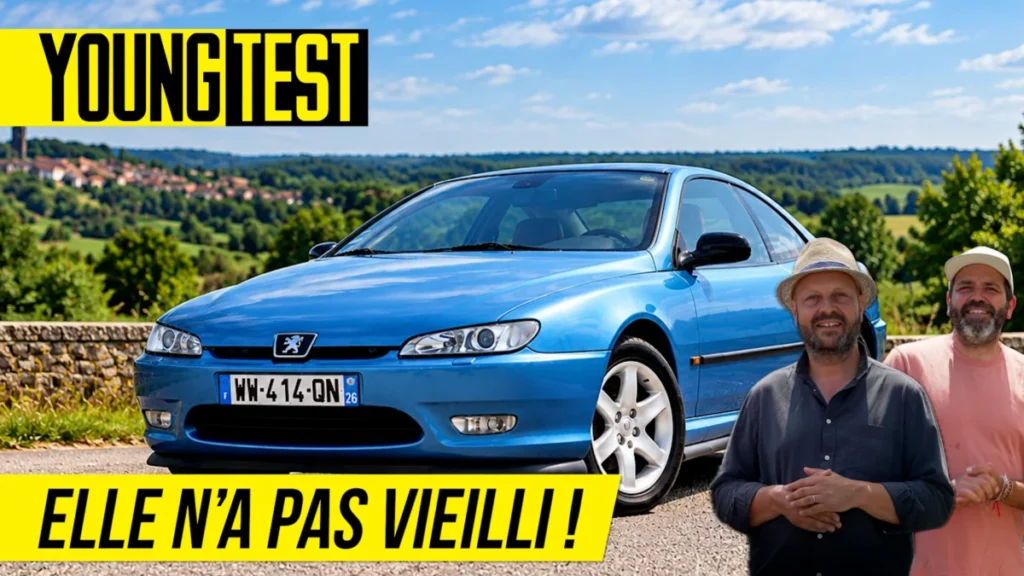
When the Peugeot 406 Coupé debuted at the 1996 Paris Motor Show, it did more than just expand the brand’s lineup—it redefined the expectations for a mass-market manufacturer. In an era where family saloons were functional and utilitarian, Peugeot, in collaboration with the legendary Italian design house Pininfarina, unveiled a sculpture on wheels. Nearly 30 years later, the 406 Coupé remains a benchmark for automotive aesthetics, often whispered in the same breath as the Ferrari 456.
In the latest episode of Youngtimers La Chaîne, hosts Nicolas and François-Xavier peel back the layers of this iconic grand tourer, exploring its gestation, its unique production process, and its enduring status as the "French Ferrari."
Main Facts: The Intersection of High Fashion and Practicality
The 406 Coupé was a bold statement of intent. It offered the "haute couture" of Italian design at the price point of French ready-to-wear. While the base 406 sedan was a ubiquitous sight on European roads, the Coupé shared only a few structural elements, transforming the platform into a sleek, low-slung GT car.
Design Pedigree
The project was a masterclass in collaboration. While the internal team at Peugeot provided the technical foundation, the aesthetic vision was the work of Davide Arcangeli at Pininfarina. The design language was clean, fluid, and devoid of the "boy-racer" clutter that plagued many performance coupes of the 90s. The elongated headlights, the graceful silhouette, and the bespoke interior created an atmosphere of luxury that arguably exceeded the car’s market segment.
Engineering Excellence
The flagship model, equipped with the PSA ES9 V6 engine, was the crown jewel. With a displacement of 3.0 liters and an output that reached 210 horsepower in later iterations, it provided the smooth, effortless power required of a true grand tourer. To handle this performance, the car was fitted with high-performance Brembo brakes and a unique chassis tuning that set it apart from its sedan counterparts, offering a driving experience that was both engaging and refined.
Chronology: From Concept to Cult Classic
The journey of the 406 Coupé is one of unexpected success and longevity.
- 1996: World Premiere at the Paris Motor Show. The car is an instant hit, with critics praising the audacity of its design.
- 1997: Official launch to the public. Production begins at the Pininfarina factory in Grugliasco, Italy—a rare honor for a non-Italian marque.
- 1999–2000: The V6 engine receives a series of refinements, boosting power and improving reliability, further cementing the car’s reputation as a long-distance cruiser.
- 2003: A mild facelift is introduced, featuring a redesigned front bumper and a larger air intake, though many purists argue the original 1996 lines remain the most cohesive.
- 2004: Production concludes. While the initial forecast suggested a limited run of 70,000 units, the car’s popularity forced the assembly lines to keep running. By the end, a total of 107,631 units had been produced, a testament to its enduring appeal.
Supporting Data: By the Numbers
To understand the 406 Coupé’s place in the market today, one must look at the data provided by Youngtimers La Chaîne. The car was not merely a niche experiment; it was a commercial success that proved there was a market for accessible elegance.
Production and Technical Highlights
- Total Production: 107,631 units.
- The V6 Heart: The 3.0-liter V6, producing between 194 and 210 horsepower, remains the most sought-after configuration.
- Manufacturing: Unlike the mass-produced sedan, the Coupé was hand-finished at the Pininfarina facility, ensuring a level of build quality that often surpassed standard Peugeot offerings.
- Handling: The specific chassis setup, coupled with Brembo braking systems, allowed the 406 Coupé to compete with more expensive German and Italian rivals on winding B-roads.
Current Market Valuations
For collectors and enthusiasts looking to enter the market, the price remains relatively accessible, though rising:
- 2.0L Model: Approx. €5,500
- 2.2L Model: Approx. €7,500
- V6 (194 hp): Approx. €9,500
- V6 (210 hp): Approx. €10,500
- Settant’anni Edition: Up to €18,000 (A rare celebratory edition, making it a high-value target for serious collectors).
Official Responses and Industry Perception
At the time of its release, the automotive press was uniform in its praise. Journalists noted that the 406 Coupé was a "design exercise that made it to production." Peugeot’s decision to outsource the design and assembly to Pininfarina was a calculated risk that paid off. By moving production to Italy, Peugeot signaled that this was not just another trim level, but a distinct vehicle with its own identity.
Former design directors at Peugeot have often cited the 406 Coupé as a turning point for the brand, proving that a mass-market manufacturer could successfully compete in the premium segment. It established a design language—the "feline" look—that would influence Peugeot models for the next decade.
Implications: The Future of the 406 Coupé
Is the 406 Coupé still as seductive nearly 30 years later? The answer from the Youngtimers team is a resounding yes. In a modern era dominated by heavy SUVs and screen-heavy interiors, the 406 Coupé offers a purity of design that is increasingly rare.
The Investment Perspective
As the "Youngtimer" movement gains momentum, the 406 Coupé is shifting from a used car to a bona fide collector’s item. Because it was produced in relatively high numbers, parts availability remains better than many of its contemporaries, making it an ideal entry point for those new to classic car ownership. However, the best-maintained examples, especially the V6 models, are beginning to see a steady climb in value.
What to Look For
Prospective buyers should prioritize cars with documented service histories, particularly regarding the timing belt on the V6 models. Interior trim, while elegant, can show wear; finding an example with a well-preserved dashboard and seat bolsters is paramount. The specific chassis components—if neglected—can be expensive to restore, so a pre-purchase inspection by a specialist is highly recommended.
Final Verdict
The Peugeot 406 Coupé is a triumph of form over function, yet it remains surprisingly functional. It represents a golden age of design where wind tunnels and safety regulations hadn’t yet homogenized the silhouette of the automobile. Whether you are looking for a weekend cruiser or a long-term investment, the 406 Coupé stands as a reminder of what happens when a manufacturer dares to be beautiful.
As Nicolas and François-Xavier suggest, the 406 Coupé is more than just a car; it is a piece of art that you can drive. If you are in the market for a piece of automotive history, there are few vehicles that offer as much character, performance, and sheer visual delight for the price of a budget city car.
Are you ready to join the club? Whether you lean towards the raw simplicity of the 2.0-liter or the refined power of the V6, the 406 Coupé remains a testament to the fact that true style never goes out of fashion.
For more in-depth reviews and expert insights, don’t forget to subscribe to Youngtimers La Chaîne, and let us know in the comments: what is the most beautiful Peugeot of all time?
