

By David Lefevre
Automotive Technology & Industry Correspondent
Main Facts: A Seamless, Smartphone-Free Streaming Experience
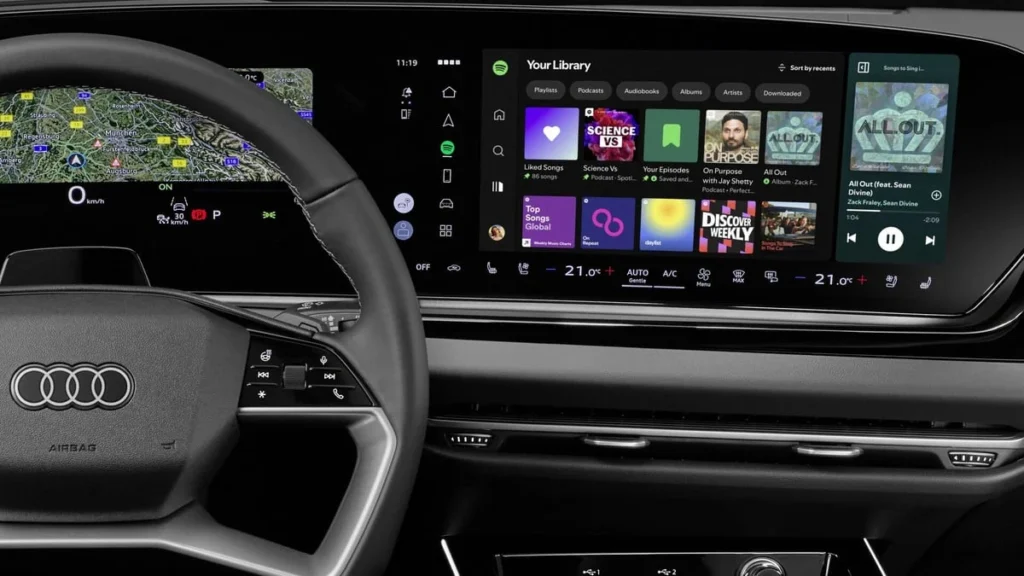
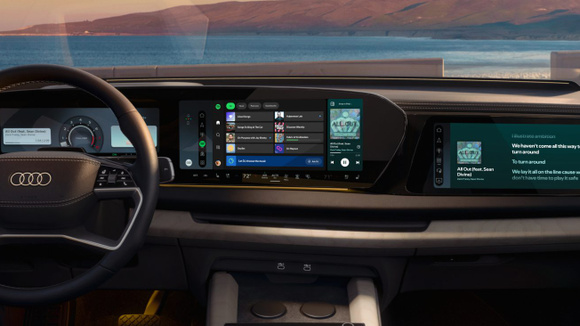
The modern automobile has evolved far beyond a mechanical conveyance, increasingly functioning as a rolling digital ecosystem. In a significant stride toward complete digital autonomy, luxury German automaker Audi has officially announced the rollout of a native Spotify application built directly into its vehicle multimedia systems. Launched globally across 47 markets, this new application bypasses the traditional requirement of screen-mirroring software like Apple CarPlay or Android Auto.
Developed in collaboration with streaming giant Spotify and Cariad—the troubled software subsidiary of the broader Volkswagen Group—the new application operates natively on Android Automotive OS. Audi owners no longer need to tether their smartphones via USB cables or rely on unstable wireless projection protocols just to access their personalized playlists, favorite tracks, or curated podcasts.
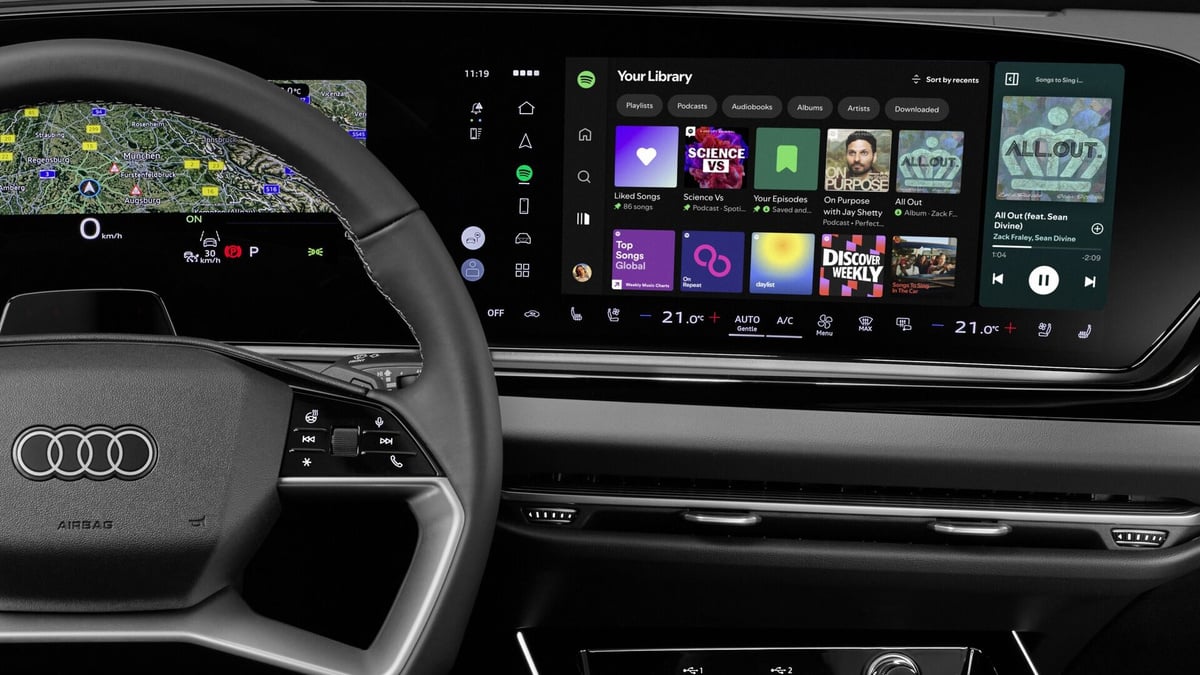
Instead, users simply download the application directly from the Audi Application Store embedded within the car’s central touchscreen. Connecting to a personal account is as effortless as scanning an on-screen QR code. While the vehicle still requires an active internet connection—typically facilitated via the car’s built-in data subscription or a mobile hotspot—the physical smartphone can safely remain in a pocket or bag.
Despite mirroring the convenience of smartphone-based systems, this native integration unlocks a richer suite of advanced Spotify features. Passengers and drivers can now access synchronized lyrics, music video playback (when safely parked), Spotify DJ, and Spotify Jam—a collaborative listening feature that allows passengers to scan a QR code and instantly add tracks to the queue from their own devices without needing to touch the main console.
To mitigate safety risks, Audi and Spotify have engineered a strict safety protocol. Complex visual elements like lyrics and music videos are automatically disabled on the primary central display while the vehicle is in motion, ensuring that the driver’s attention remains firmly on the road ahead.
Chronology: The Road to Native Infotainment
The evolution of in-car entertainment has undergone a dramatic transformation over the past decade, shifting from proprietary, clunky dashboard software to smartphone integration, and now, toward fully integrated cloud-native operating systems.
- Pre-2015: In-car audio was predominantly limited to AM/FM radio, compact discs, auxiliary cables, and early, often frustrating Bluetooth audio pairing protocols.
- 2014–2016: The introduction of Apple CarPlay and Android Auto revolutionized the industry. By mirroring the user’s smartphone interface onto the central console, drivers gained familiar, real-time access to apps like Spotify, Waze, and Google Maps. However, this created a heavy dependency on the smartphone’s battery, processing power, and stable device connection.
- Late 2020s (The Android Automotive Era): Recognizing the limitations of smartphone mirroring—such as restricted graphics, limited vehicle sensor integration, and connection drops—manufacturers began adopting Google’s Android Automotive OS (AAOS) as an underlying software architecture. This allowed brands to build bespoke applications that run directly on vehicle hardware.
- October 21, 2026: Following extensive cooperative development between Audi, Spotify, and Volkswagen’s software division Cariad, the native Spotify application officially goes live across compatible Audi models spanning 47 global markets.
- Future Roadmap (2026 and Beyond): Audi confirms that the rollout will expand to upcoming vehicle releases, including future iterations of the Audi Q7 and Q9, solidifying native app ecosystems as the new benchmark for luxury automotive interiors.
Supporting Data: Platforms, Compatibility, and Market Reach
The integration of native Spotify is not a blanket update across Audi’s entire legacy lineup; rather, it is anchored to the automaker’s newest vehicle architectures. The application specifically targets vehicles built upon Audi’s latest technical foundations:
- PPE (Premium Platform Electric): Dedicated exclusively to the brand’s next-generation battery-electric vehicles (BEVs).
- PPC (Premium Platform Combustion): Tailored for modern internal combustion engine (ICE) vehicles and plug-in hybrids (PHEVs).
Key Compatible Models and Metrics
- Launch Date: October 21, 2026.
- Geographic Footprint: Deployed simultaneously across 47 markets spanning six continents.
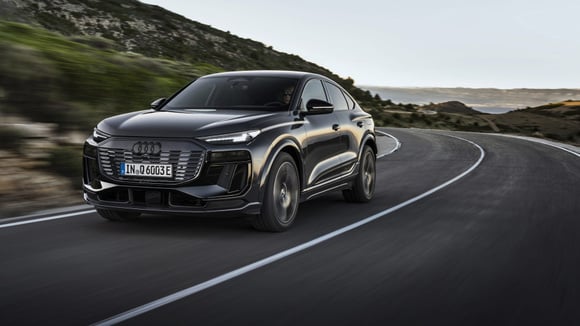
- Featured Models: Includes technologically advanced models such as the all-electric Audi Q6 e-tron, alongside subsequent 2026 model-year vehicles utilizing PPE and PPC platforms.
- Upcoming Additions: Confirmed integration for upcoming models including the next-generation Audi Q7 and flagship Q9 SUVs.
- Hardware Requirements: Requires an active vehicle data connection and an in-car infotainment system running compatible versions of Audi’s latest software framework via the built-in app store.
Official Responses and Industry Context
The partnership represents a major milestone not only for Audi’s software strategy but also for Cariad, the Volkswagen Group’s software division. Cariad has faced a turbulent history marked by high-profile delays, massive financial losses, and corporate restructuring. The successful deployment of a high-performance, native third-party media application on Android Automotive OS serves as a vital proof-of-concept, signaling that the software subsidiary is successfully rebuilding its reputation and technical capabilities.
"Integrating Spotify natively into our latest generation of vehicles allows us to offer our customers a seamless, high-end digital experience," notes a representative closely tied to Audi’s digital product development. "By removing the mandatory intermediary of a smartphone, we are giving our drivers deeper access to advanced audio features while maintaining our uncompromising standards for vehicle safety and intuitive human-machine interfaces."
Industry analysts view this move as part of a broader industry trend. Premium automotive brands are increasingly eager to reclaim control over the dashboard digital real estate. For years, tech giants like Apple and Google dominated the primary screen space via CarPlay and Android Auto, limiting automakers to hardware assembly. By offering robust native apps through proprietary app stores, brands like Audi can curate unique user experiences, gather valuable telemetry data, and potentially monetize connected-car services over the lifetime of the vehicle.
Spotify, on the other hand, secures a vital touchpoint in the automotive sector. As in-car listening remains one of the primary use cases for music and podcast streaming, ensuring a friction-free, deeply integrated experience directly on vehicle hardware helps cement user loyalty against aggressive competitors like Apple Music and Amazon Music.
Implications: Safety, Convenience, and the Future of the Connected Cockpit
While the introduction of native Spotify brings undeniable convenience, it also invites important discussions regarding driver distraction, data privacy, and the financial models of connected mobility.
Balancing Rich Features with Road Safety
Modern streaming apps are no longer limited to playing passive audio streams. Features like Spotify Jam, Spotify DJ, and synchronized lyrics transform the car’s central display into an interactive media hub. However, piloting a multi-tonne vehicle requires absolute cognitive and visual focus.
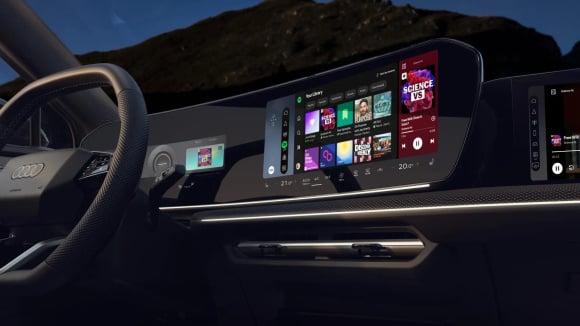
Audi and Spotify’s implementation of dynamic safety restrictions is a critical step forward. By disabling visual distractions—such as music videos, scrolling lyrics, and account settings menus—while the vehicle is in motion, the system successfully complies with international automotive safety guidelines. Crucially, the preservation of voice-control capabilities ensures that drivers can alter their listening preferences without ever taking their hands off the steering wheel or their eyes off the tarmac. Furthermore, allowing front-seat passengers to access certain media features via dedicated passenger displays (where equipped) showcases how modern cockpit design can cater to multiple occupants simultaneously without compromising the driver.
The Cost of Connectivity
While downloading the Spotify application from the Audi App Store is entirely free, the service operates under existing subscription rules. Users can log in using either a free, ad-supported tier or a premium paid subscription.
However, an unspoken variable remains the cost of mobile data. Because the application streams content directly through the vehicle’s internal internet connection rather than utilizing a smartphone’s data plan, users must consider how continuous high-bitrate streaming will affect their vehicle’s data allowances. Audi has not yet clarified whether long-term data connectivity for native apps will require ongoing paid subscriptions directly through the manufacturer after initial promotional periods expire, a factor that consumers will watch closely as connected-car services mature.
Conclusion
Audi’s native Spotify integration marks a definitive evolution in automotive infotainment. By shedding the limitations of smartphone mirroring, luxury vehicles are becoming fully independent digital nodes. As platforms like the PPE and PPC architectures roll out to a broader global audience, the boundary between consumer electronics and automotive engineering continues to blur, promising a future where the car is quite literally an extension of one’s digital living room—provided safety remains firmly in the driver’s seat.
