

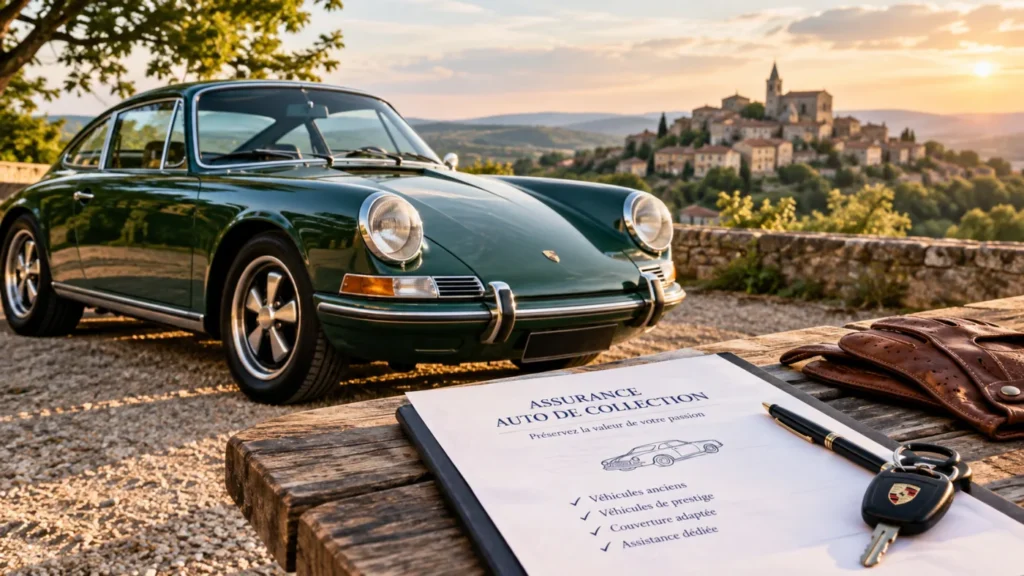
Owning a vintage or classic automobile transcends the simple act of driving; it represents the stewardship of rolling history, a mechanical legacy passed down through generations. However, safeguarding this automotive heritage requires a specialized approach that goes far beyond standard motor insurance. Because classic and collection vehicles possess unique valuations, rare replacement parts, and specific usage patterns, traditional insurance policies are rarely sufficient. Navigating the nuances of classic car coverage is essential for any enthusiast looking to protect their investment on the open road.
Main Facts: What Defines a Classic Vehicle and Its Insurance Needs?
To understand why specialized insurance is mandatory for older cars, one must first examine the legal and practical definitions that govern them.
According to Article R311-1 of the French Highway Code, a collection vehicle (véhicule de collection) is officially defined as any motor vehicle that was constructed or registered for the first time at least 30 years ago, is no longer in production, and has been preserved in its original state without undergoing substantial structural modifications.
Upon official recognition, vehicles receive a specific registration document carrying the notation "véhicule de collection" in field Z.1 of the carte grise. This administrative status immediately separates classic automobiles from daily drivers. While standard vehicles are built for routine commuting, shopping trips, and heavy mileage, classic cars are predominantly utilized for leisure driving, weekend excursions, rallies, club meetings, and static displays.
Despite this restricted use, the law still mandates a baseline level of protection. Just like any other land-based motor vehicle capable of operating, a classic car must at the very least carry third-party liability insurance (responsabilité civile) to legally access public roads. Yet, relying solely on minimum liability coverage leaves an invaluable asset dangerously exposed to financial ruin in the event of theft, fire, or accidental damage.
Chronology: The Evolution of Classic Car Regulations and Insurance
The landscape of classic car ownership, registration, and insurance has undergone a significant transformation over recent decades, adapting to modern legislative demands while striving to preserve automotive heritage.
- Pre-2000s: Classic car insurance was largely treated as a niche product offered by specialized mutuals, with little standardization across major insurance providers. Most owners relied on standard policies with high premiums that failed to account for restricted mileages.
- The 30-Year Rule Standardization: European and French authorities aligned classifications, cementing the 30-year threshold as the standard benchmark for historical vehicle status, coupled with the introduction of the specific collection carte grise.
- April 2024 (Modernization of Enforcement): France officially abolished the physical insurance certificate (the green sticker) from vehicle windshields. Insurance verification transitioned entirely to the digital age via the Fichier des Véhicules Assurés (FVA), streamlining controls for law enforcement.
- Late 2025 (Introduction of the FFVE Collection Vignette): The French Federation of Vintage Vehicles (Fédération Française des Véhicules d’Époque) rolled out a new official windscreen sticker. Designed to remain valid for five years, this macro-identifier helps authorities quickly recognize historical vehicles benefiting from circulation exemptions, particularly within Low-Emission Zones (ZFE).
Supporting Data: Understanding Formulas, Valuations, and Eligibility
Choosing the right insurance formula requires evaluating how financial protection maps onto the realities of vintage vehicle ownership. Insurance companies structure their collection portfolios around three primary tiers, mirroring standard auto contracts but factoring in unique risk calculations.

The Three Tiers of Coverage
- Third-Party Insurance (Au Tiers): The legal minimum. It covers bodily injury and property damage caused to third parties, supplemented by a defense-recourse guarantee and basic roadside assistance.
- Intermediate Formula: Combines third-party liability with targeted mid-tier protections, typically integrating fire, theft, and glass breakage, while omitting comprehensive "all-risks" damage coverage.
- Comprehensive All-Risks Coverage (Tous Risques): The ultimate level of protection, shielding the vehicle against virtually all accidental damages, regardless of fault.
The Power of Agreed Value (Valeur Agrédiée)
The fundamental differentiator between standard and collection insurance lies in valuation. Standard policies typically apply a depreciating market value (Argus rating) that fails to capture the true worth of a meticulously maintained classic. Conversely, specialized collection policies offer agreed value coverage. This amount is mutually established between the owner and the insurer at the time of underwriting, determined via an official professional appraisal that considers vehicle authenticity, historical significance, restoration quality, and current market trends.
Eligibility Criteria Imposed by Insurers
To secure these advantageous rates and specialized coverages, insurance providers generally enforce strict underwriting guidelines to minimize statistical risks:
- Primary Vehicle Ownership: The insured must almost always prove they own a modern, daily-driver vehicle registered in their name for routine commuting and professional travel.
- Secure Parking: Proof of a locked garage, private box, or secure indoor storage facility is frequently mandatory to mitigate risks of theft and weather damage.
- Mileage Caps: Annual mileage is strictly limited (often capped between 5,000 and 10,000 kilometers per year), reflecting the recreational nature of the vehicle.
- Driver Profile: Insurers closely examine the driver’s history, favoring mature, experienced motorists with clean driving records and no recent at-fault claims.
Official Responses: What Insurers and Authorities Demand
Securing a tailored policy requires meticulous administrative preparation. Insurers demand precise documentation to verify that both the driver and the machine meet the strict criteria of historical preservation.
Essential Dossier Requirements
- The Registration Document (Certificat d’Immatriculation): Whether or not it bears the explicit "collection" designation, the vehicle document allows the insurance provider to verify the car’s exact age, fiscal horsepower, and history.
- The Information Statement (Relevé d’Informations): A formal record detailing the driver’s claims history over recent years, proving their experience and low-risk profile.
- Proof of Principal Transportation: Documentation establishing that the household operates a secondary, modern vehicle for daily transit.
- Professional Appraisal Report: For high-value or exceptionally rare models, an evaluation conducted by a certified automotive expert is typically required to lock in the agreed-upon insured value.
Official Stances on Urban Mobility and Compliance
French authorities, working alongside heritage groups like the FFVE, have increasingly recognized the cultural value of preserving rolling history. While the physical green insurance sticker is gone—replaced by instantaneous digital queries via the FVA database—the introduction of the voluntary FFVE Collection Vignette acts as a visual shorthand for law enforcement. It signals that a vehicle is a registered historical asset, facilitating smooth passage and parking exemptions during urban events or when navigating increasingly restrictive Low-Emission Zones (ZFE) implemented across major French metropolitan areas.
Implications: Securing Your Investment and Preserving Automotive Heritage
The financial and emotional implications of selecting the correct insurance policy for a classic car cannot be overstated. A poorly structured policy can lead to catastrophic financial loss if a vehicle is written off and valued merely at its archaic scrap or baseline book value.
By opting for a dedicated collection policy featuring agreed-value indemnification, specialized zero-kilometer roadside assistance (which ensures transport directly to a specialized vintage mechanic rather than the nearest generic garage), and coverage for rare period accessories, owners protect their financial investments.
Furthermore, adhering to the regulatory frameworks—such as maintaining secure storage, respecting mileage limits, and leveraging modern digital verification systems—ensures that these rolling museums can continue to grace public roads safely. Ultimately, pairing passion with precise, professional insurance coverage guarantees that automotive history remains vibrant, protected, and fully capable of inspiring future generations of enthusiasts across France and beyond.
