

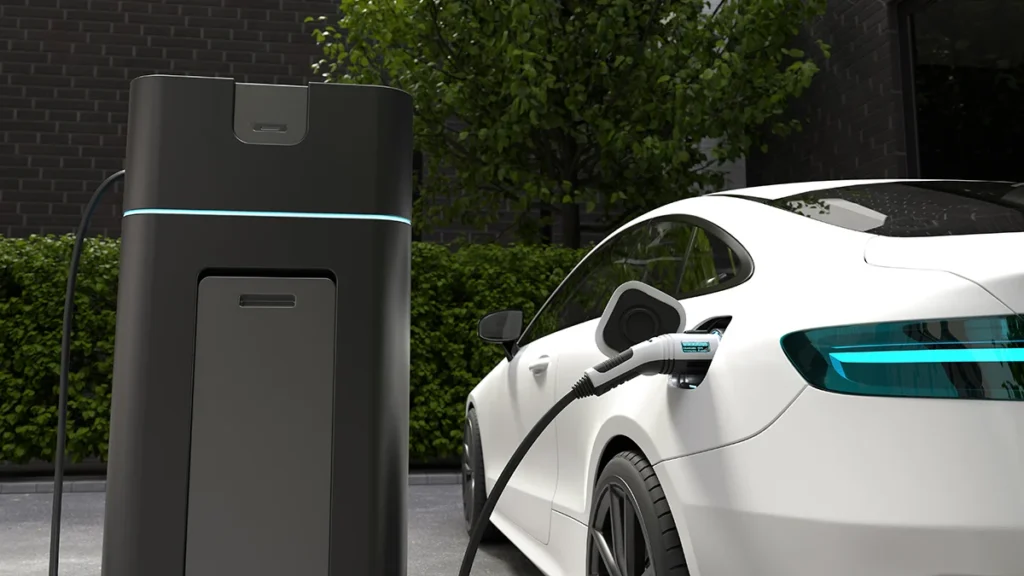
LONDON — As the transition toward green mobility accelerates across the globe, the automotive lexicon has rapidly expanded, introducing terms that were once restricted to electrical engineers and industry insiders. Among the most commonly interchanged terms in the vernacular of electric vehicle (EV) adoption are "wallbox" and "charging station." To the uninitiated, these phrases are synonyms for any apparatus that replenishes a battery. However, industry professionals, electrical contractors, and seasoned EV owners recognize distinct technical, structural, and operational differences between the two.
Understanding these nuances is more than a mere exercise in semantics; it is a critical step for consumers, property managers, and commercial entities aiming to invest in safe, efficient, and appropriate charging infrastructure. As governments tighten carbon emission standards and phase out internal combustion engines, the demand for reliable domestic and public charging solutions has surged, making precise terminology and technical literacy essential for the market’s sustainable growth.
1. Main Facts: Defining the Landscape of EV Supply Equipment
To comprehend the debate, one must first establish a baseline definition of Electric Vehicle Supply Equipment (EVSE). At its core, any device designed to transfer electrical energy from a power source to an electric vehicle’s battery falls under the broad umbrella of a "charging station." Yet, the physical manifestation of this equipment varies dramatically depending on where it is installed, the electrical capacity required, and its intended user base.
The Wallbox: The Domestic and Semi-Public Powerhouse
Derived from the English term denoting a wall-mounted box, a wallbox is specifically engineered to be fixed to a vertical surface—most commonly the interior or exterior wall of a garage, a carport, or the parking structure of a residential or commercial building.
- Etymological and Industrial Origins: While the name originates from its physical placement, the term has also been heavily popularized by industry-leading manufacturing firms whose primary product line focuses on these compact, intelligent residential units.
- Power Output and Specifications: Wallboxes typically deliver an AC (alternating current) power output ranging from 3.7 kW to 22 kW. This specific capacity makes them exquisitely tailored for residential buildings, individual houses, and corporate parking lots where electrical infrastructure is scaled to domestic or semi-industrial limits.
- Safety and Efficiency: Unlike plugging an EV into a standard domestic socket—a practice fraught with hazards such as thermal overload, melted wiring, and potential fire risks due to prolonged high-amperage draws—a wallbox communicates intelligently with the vehicle. It modulates the electrical current to match the vehicle’s onboard charger capacity, ensuring a secure, regulated, and optimized charging cycle.
The Charging Station: A Macro-Category
Conversely, the term charging station is an overarching hypernym. It encompasses every conceivable apparatus capable of charging an electric vehicle.
- Broad Scope: Under this definition, a charging station can be a wallbox affixed to a residential wall, a robust "totem" style pedestal bolted into the pavement of a public street, or even a reinforced heavy-duty socket used for hybrid vehicles.
- Public vs. Private Realities: While wallboxes are predominantly private or semi-public (restricted to residents or employees), public charging stations are engineered to withstand vandalism, weather extremes, and heavy traffic usage. They serve as the primary lifeline for drivers undertaking long-distance journeys outside their daily commuting range.
2. Chronology of EV Charging Evolution: From Standard Sockets to Ultra-Fast Hubs
The evolution of EV charging infrastructure mirrors the rapid technological maturation of the electric vehicle itself. Understanding how we arrived at the current distinction between wallboxes and charging stations requires tracing the timeline of EV power delivery over the past two decades.
- The Early Days (Late 2000s – Early 2010s): The Compromise Era
When modern mass-market electric vehicles first emerged, dedicated residential charging hardware was rare. Early adopters frequently relied on standard domestic electrical outlets (Level 1 charging) using portable cordsets supplied with the vehicle. This method proved excruciatingly slow, often requiring upwards of 24 hours to fully charge a modest battery, while pushing domestic electrical grids to their thermal limits. - The Rise of the Residential Wallbox (2012 – 2018): Mainstreaming Home Power
Recognizing the bottlenecks of standard wall sockets, electrical manufacturers and early EV pioneers developed the modern wallbox. Standardizing at 3.7 kW to 7.4 kW (single-phase) and later moving toward 11 kW to 22 kW (three-phase), the wallbox revolutionized home charging. It cut charging times by up to 10fold, transforming the garage into a private fueling station that operated overnight. - The Public Infrastructure Boom (2015 – Present): Corridors and Totems
Simultaneously, municipal authorities and private charge point operators (CPOs) began deploying public charging stations. Initially limited to slow AC public posts, the market quickly pivoted toward DC (direct current) fast chargers. - The Ultra-Fast Revolution (2020 – Present): High-Kilowatt Corridors
Today, the frontier of charging station technology is defined by ultra-fast DC hubs capable of delivering outputs from 50 kW to a staggering 360 kW. These highway-side behemoths have redefined long-distance travel, shrinking charging stops to the duration of a standard coffee break.
3. Supporting Data: Power, Performance, and Comparative Metrics
A rigorous evaluation of charging solutions requires an examination of the technical parameters that dictate performance, charging speeds, and infrastructure compatibility.
| Charging Solution | Power Output Range | Primary Use Case | Average Charge Time (0-100% for 60 kWh Battery) | Infrastructure Requirement |
|---|---|---|---|---|
| Standard Socket (Mode 1/2) | 2.3 kW (10A) | Emergency / Hybrid backup | ~24 to 26 hours | Standard household circuit (High fire risk if prolonged) |
| Reinforced Socket (Green’up) | 3.2 kW to 3.7 kW | Plug-in Hybrids (PHEVs) | ~16 to 18 hours | Dedicated reinforced domestic circuit with thermal protection |
| Single-Phase Wallbox | 7.4 kW (32A) | Residential / Single-family homes | ~8 hours | Dedicated 32A line, professional installation |
| Three-Phase Wallbox | 11 kW to 22 kW | Multi-family dwellings / Workplaces | ~3 to 6 hours | Three-phase electrical grid connection |
| Public DC Fast Station | 50 kW to 150 kW | Urban hubs / Commercial corridors | ~30 to 45 minutes (to 80%) | Industrial medium-voltage grid connection |
| Ultra-Fast DC Station | 220 kW to 360 kW | Highway corridors / Fleet depots | ~15 to 25 minutes (to 80%) | Heavy industrial high-voltage grid infrastructure |
The Thermal Realities of Ultra-Fast Charging
While ultra-fast stations exceeding 22 kW—and frequently reaching 360 kW—offer undeniable convenience, technical data underscores the importance of moderation. Pushing hundreds of kilowatts into a lithium-ion battery pack generates significant thermal stress. Consequently, industry experts advise that ultra-fast DC charging should be reserved for long-distance travel. Over-reliance on ultra-fast public stations can accelerate battery degradation over time, whereas a standard 7.4 kW or 11 kW residential wallbox provides a gentle, chemically stable charging profile ideal for daily overnight replenishment.
4. Official Responses and Industry Perspectives
As the electrification of transport shifts from an environmental niche to a geopolitical and economic priority, regulatory bodies, utility companies, and industry coalitions have issued guidance regarding charging infrastructure deployment.
Regulatory Standards and Safety Mandates
Electrical safety authorities across Europe and North America have increasingly cracked down on the informal use of standard domestic sockets for EV charging. National electrical codes now mandate professional installation for any dedicated EVSE exceeding standard continuous loads.
In France, for instance, government-backed incentives such as the Advenir premium have been established to subsidize the purchase and installation of certified wallboxes. These subsidies are strictly conditional: installations must be performed by qualified professionals holding specialized credentials (such as IRVE – Infrastructures de Recharge de Véhicules Électriques certifications).
Utility and Grid Operator Insights
Grid operators (Gestionnaires de Réseau) have voiced cautious optimism tempered by infrastructural warnings. The mass adoption of wallboxes and public charging stations represents a massive shift in domestic power consumption.
- "The grid is fully capable of handling the EV transition, provided it is managed intelligently," notes a senior European energy grid consultant. "If millions of motorists plug in their 22 kW wallboxes simultaneously at 7:00 PM without load management, local transformers will fail. The future belongs to smart wallboxes capable of vehicle-to-home (V2H) integration and off-peak charging schedules."
5. Economic, Ecological, and Practical Implications
Distinguishing between a wallbox and a wider charging station has profound financial, practical, and environmental repercussions for stakeholders across the mobility ecosystem.
Financial Considerations and Budgeting
Equipping a home or business with the correct charging apparatus requires careful financial planning.
- The Cost of Hardware and Installation: Purchasing a wallbox is only the first variable. Homeowners must account for electrical panel upgrades, cabling over distance, and certified labor costs. Because of these variables, obtaining a preliminary digital estimate or localized quotation (devis de wallbox) is indispensable. Numerous online platforms now offer instant, customized cost assessments to help consumers benchmark installation expenses before committing to a contractor.
- Operational Savings: Despite the initial capital expenditure, shifting from public fast-charging stations to a private residential wallbox yields massive long-term savings. Domestic electricity tariffs are routinely lower than the commercial markups applied by public CPOs, making home wallboxes the most cost-effective method of daily fueling.
Urban Planning and Multi-Family Challenges
For urban dwellers residing in multi-apartment residential complexes, the choice between a wallbox and a public charging station dictates urban mobility patterns. Installing wallboxes in shared underground parking lots requires navigating complex homeowners’ association (syndic) regulations, collective metering, and load-balancing systems. Where private wallboxes are impossible to install, municipalities must step in to deploy accessible, reliable public charging infrastructure on street corners and in municipal lots.
Environmental Impact
Ultimately, both wallboxes and public charging stations serve the singular ecological goal of displacing fossil fuels with decarbonized electricity. However, the efficiency with which this energy is delivered matters. By encouraging overnight charging via residential wallboxes, users can leverage off-peak hours when power grids are frequently saturated with surplus renewable energy (such as wind and solar generation), thereby optimizing the carbon footprint of every kilowatt-hour consumed.
Conclusion
While the terms wallbox and charging station are frequently used interchangeably by everyday consumers, they represent distinct tiers within the broader architecture of electric vehicle mobility. The wallbox remains the specialized, secure, and optimal gold standard for residential and semi-public spaces, balancing power output with battery preservation. The charging station, meanwhile, stands as the grand umbrella term—encompassing everything from reinforced domestic plugs to towering 360 kW highway monoliths. Recognizing the technical distinctions between these devices empowers consumers to make informed investments, ensuring that the electric vehicle revolution is built upon a foundation of safety, efficiency, and sustainable engineering.
