

WOKING, United Kingdom — In the high-stakes world of automotive engineering, few names evoke the raw passion and uncompromising performance of McLaren. For decades, the British marque has stood as a titan of the mid-engine supercar domain, a temple of speed born from a rich racing heritage.
Yet, the tides of the automotive landscape are shifting rapidly. McLaren has officially announced that the twilight of the current generation has begun, with the final order books for the celebrated McLaren 750S now open ahead of a scheduled production halt in 2027.
This decision marks far more than the simple retirement of a beloved model; it signals the end of a pure, unadulterated chapter in Woking’s history. As the curtain prepares to fall on its signature twin-turbo V8 layout, McLaren is steering boldly into uncharted waters. Backed by massive financial firepower and a radical diversification strategy that includes the development of a high-performance luxury SUV, the British manufacturer is preparing to redefine its very identity.
Main Facts: The Sunset of the 750S and the Dawn of a New McLaren
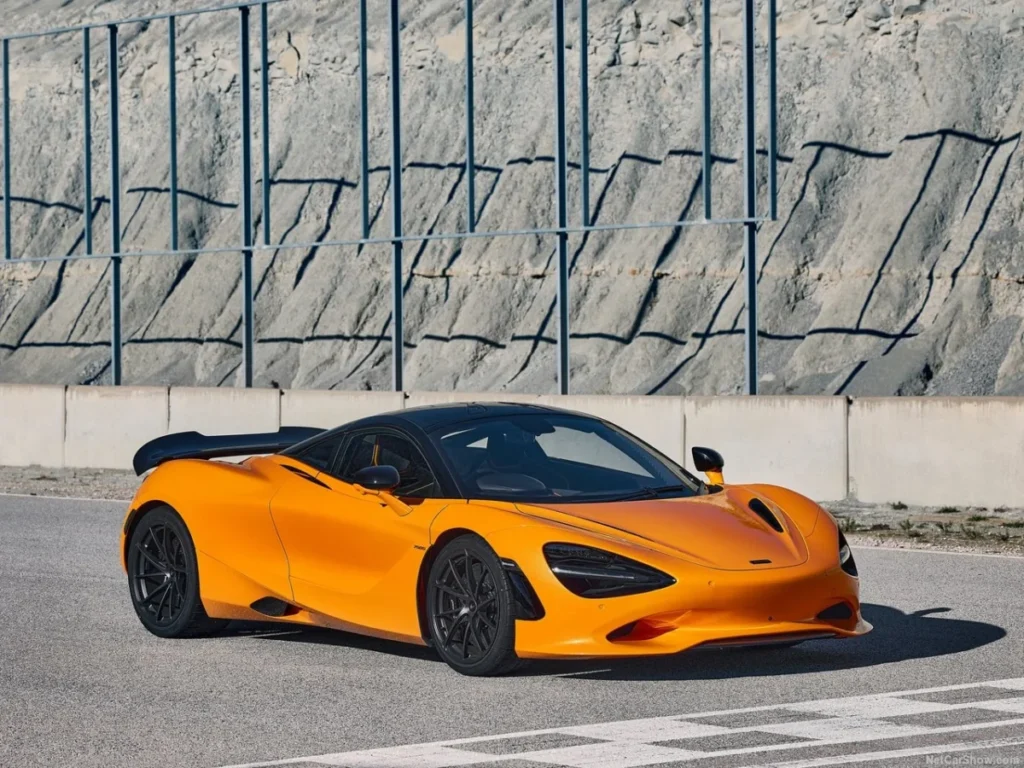
The announcement that the McLaren 750S is living out its final months has sent ripples through the enthusiast community. Introduced in 2023 as the spiritual and mechanical evolution of the groundbreaking 720S, the 750S represents the absolute pinnacle of traditional, non-hybridized supercar engineering.
Underneath its carbon-fiber chassis beats a ferocious 4.0-liter twin-turbocharged V8 engine, churning out an astounding 740 horsepower. Combined with a dry weight of just 1,277 kilograms, the 750S delivers an agility and dynamic response that few competitors can match. It is a machine engineered for the purist—lightweight, rear-wheel-drive, and aggressively focused on the driver.
However, the automotive world is changing, and McLaren is evolving with it. The retirement of the 750S by 2027 clears the industrial and strategic runway for a broader transformation. The most seismic shift in this new strategy is the confirmation of a McLaren SUV, designed to propel the brand out of its traditional two-seater, mid-engine comfort zone and into one of the most lucrative and fiercely contested segments of the global luxury market.
To fund this monumental pivot, McLaren’s majority stakeholder, Abu Dhabi’s CYVN Holdings, has unleashed a staggering £500 million investment package. This capital injection is not merely for a single new vehicle; it represents a complete overhaul of McLaren’s industrial footprint, including the construction of a second UK manufacturing plant, internal engine development capabilities, and the creation of thousands of new jobs.
Chronology of a Legacy: From the 720S to the Ultimate 788HS
To understand the magnitude of the 750S’s departure, one must look back at the lineage that defined modern McLaren road cars.
2017: The Game-Changer Arrives
When the McLaren 720S broke cover at the Geneva Motor Show in 2017, it did not merely enter the supercar market—it disrupted it. Featuring the Monocage II carbon-fiber tub and a revolutionary hydraulic suspension system (Proactive Chassis Control II), the 720S outperformed cars twice its price while remaining remarkably docile on public roads. It set a new benchmark for everyday usability paired with track-shredding performance.
2023: The Evolution to the 750S
Refining near-perfection, McLaren introduced the 750S in 2023. Though sharing architectural DNA with its predecessor, roughly 30% of its components were new or updated. It featured a quicker steering rack, a lighter exhaust system borrowed from the P1, shorter final-drive gearing, and even sharper aerodynamics. It became the fastest and most dynamically accomplished series-production McLaren to date.
The Track-Focused Offshoots: 765LT and 788HS
The platform’s versatility also birthed the Longtail (LT) philosophy in this generation, highlighted by the ferocious 765LT. Pushing the boundaries further still, McLaren Special Operations (MSO) recently pulled the covers off the ultimate swan song for the generation: the McLaren 788HS. Limited to just 200 units globally, this track-focused beast elevates power to 788 horsepower, serving as the final, unfiltered roar of a non-hybridized V8 dynasty before stringent emissions and future platform shifts take hold.
2023–2027: The Final Window
With order books for the 750S entering their final phase, collectors and driving enthusiasts have a strictly limited window to secure a brand-new, factory-tailored example through MSO. By 2027, the assembly lines in Woking will forge their final mid-engine V8 supercars of this bloodline, closing an unforgettable chapter in automotive history.
Supporting Data and Industrial Expansion
The financial and operational metrics behind McLaren’s upcoming transformation reveal an aggressive, forward-thinking strategy designed to secure the brand’s long-term financial health.
- The £500 Million Injection: Spearheaded by Abu Dhabi’s investment fund, this half-billion-pound commitment provides the liquidity required to develop new vehicle architectures without compromising the brand’s engineering standards.
- Job Creation: The expansion plan is projected to generate approximately 1,000 direct jobs within McLaren and up to 3,000 indirect jobs throughout the UK supply chain.
- Manufacturing Footprint: Alongside the iconic McLaren Production Centre (MPC) in Woking, the company is laying the groundwork for a second UK manufacturing facility, dedicated to supporting higher-volume vehicle segments.
- Performance Metrics of the Outgoing Icon:
- Engine: 4.0-liter twin-turbocharged V8
- Power Output: 740 hp (750S) / 788 hp (788HS)
- Dry Weight: 1,277 kg (750S)
- Production Timeline: 2023–2027
These figures underline a fundamental truth: McLaren is scaling up. While supercar production will remain a core pillar of the brand, the company is shedding its boutique limitations to compete on a broader global scale.
Official Responses and Industry Context
Transitioning a legendary performance brand into new segments is never an easy sell to purists. However, leadership at McLaren has framed the move as an essential evolution rather than a compromise of values.
Industry analysts have widely noted that McLaren is simply following a proven playbook written by its fiercest Italian and British rivals. Automakers once exclusively devoted to low-slung, lightweight sports cars have discovered that high-riding luxury vehicles are not only financial lifesavers but also customer-acquisition powerhouses:
- Automobili Lamborghini proved the viability of the concept with the Urus, which single-handedly doubled the brand’s sales volume and funded the development of next-generation hypercars like the Revuelto.
- Aston Martin found similar success and financial stabilization with the introduction of the DBX.
- Ferrari, long resistant to the idea of a family-oriented utility vehicle, shattered expectations with the launch of the high-performance V12 Purosangue.
For McLaren, entering this arena is no longer optional if the brand wishes to remain competitive in a consolidated global market.
"Our focus has always been on delivering benchmark-setting drivers’ cars," a company spokesperson noted regarding the brand’s future trajectory. "However, to secure a vibrant, independent, and technologically advanced future for McLaren, we must meet the evolving demands of our global clientele who seek breadth of capability without ever sacrificing the emotional connection to the Woking badge."
Implications: What the Future Holds for Woking
The phasing out of the McLaren 750S by 2027 and the impending arrival of the brand’s first SUV represent a monumental crossroads for the company.
On one hand, enthusiasts mourn the gradual retreat from pure, lightweight, internal-combustion supercars. The roar of the twin-turbo V8, housed directly behind the cabin, has been the heartbeat of McLaren’s identity since the relaunch of the road car division with the 12C, through the iconic 720S, and up to the 750S.
On the other hand, the infusion of £500 million and the development of a second UK manufacturing plant promise a secure, well-funded future. The challenge for McLaren’s engineers will be immense: they must engineer a heavier, multi-passenger vehicle—the upcoming SUV—that retains the razor-sharp handling, steering feedback, and visceral driving dynamics that define the McLaren DNA, all while managing weight, thermal efficiency, and packaging.
As the final 750S models roll off the production line in Woking over the next few years, they will do so as rolling monuments to an analogue golden age. Meanwhile, behind closed doors in the design studios and wind tunnels, the engineers are already sketching the next iteration of McLaren—one that honors its glorious racing pedigree while bravely conquering new frontiers.
