

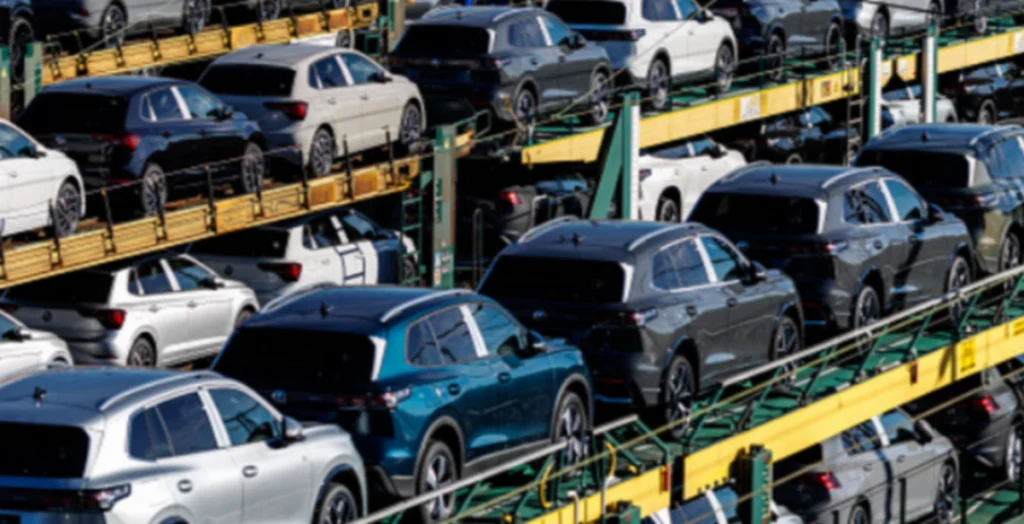
BRUSSELS — In a significant escalation of its economic diplomacy, the European Union is moving aggressively to reshape its trade architecture with Beijing. Following a hard-fought diplomatic breakthrough that slashes the import of Chinese hybrid vehicles into the single market by half, top European officials have signalled that the automotive sector is merely the opening salvo.
The European Commission is now demanding broad, systemic market access across multiple industrial domains. Citing a commercial deficit with Beijing that has ballooned to what officials term an "unsustainable" €1 billion per day, Brussels is pivoting from passive negotiation to results-driven, assertive trade management.
Main Facts
The foundational shift in EU-China economic relations centers on a newly minted accord brokered by European Commissioner for Trade Maroš Šefčovič in China, which halves the influx of Chinese hybrid automobiles into the European Union. However, speaking on October 14, 2026, European Commissioner for the Economy Valdis Dombrovskis made it clear that Brussels views this automotive agreement as a baseline rather than an endpoint.
The core elements of the European Union’s updated posture include:
- Automotive Restrictions: A direct reduction by 50% of Chinese hybrid vehicle imports entering the EU bloc.
- Sector Expansion: Broadening the trade renegotiation framework to encompass critical European industrial sectors, including chemicals, industrial machinery, steel manufacturing, furniture production, and components for wind turbines.
- Market Access Demands: Forcing Beijing to lower structural barriers, granting European corporations equitable and unhindered access to the domestic Chinese market.
- Defend-and-Protect Mechanisms: Exploring aggressive new trade defense instruments—modelled partly on the United States’ Section 301—to enable lightning-fast retaliation against what Brussels deems unfair, non-market practices.
- Astronomical Deficits: Confronting a daily trade deficit with China that hovered around €1 billion throughout 2025, creating an economic imbalance that European leadership deems structurally untenable.
Chronology of Events
The momentum leading to this watershed moment in EU trade policy developed through a rapid sequence of diplomatic and institutional maneuvers in late 2025 and 2026:
- Late 2025: Economic data finalizes, revealing that the EU’s trade deficit with China has reached an unprecedented scale, averaging roughly €1 billion daily, prompting severe alarm bells within the European Commission.
- Early October 2026: EU Commissioner for Trade Maroš Šefčovič travels to Beijing, successfully negotiating and concluding a surprise pact to cut Chinese hybrid vehicle imports into Europe by 50%.
- October 14, 2026: Valdis Dombrovskis publicly frames the hybrid vehicle agreement as the catalyst for a broader, multisectoral economic rebalancing. He explicitly warns that endless talks without tangible trade opening will no longer be tolerated by Brussels.
- Mid-October 2026 (Following Dombrovskis’ address): Heads of state and government from EU member states convene in Brussels for a crucial summit. The agenda focuses heavily on European industrial competitiveness and a high-profile Franco-German proposal for a rapid-response trade defense mechanism.
- Parallel Timeline: In Beijing, Chinese Vice-Premier He Lifeng meets with French diplomat Emmanuel Bonne, reassuring European intermediaries that Beijing remains eager to foster stability and positive momentum in bilateral commercial relations, as reported by the official Xinhua news agency.
Supporting Data & Economic Metrics
The urgency driving Brussels stems from stark macroeconomic realities. For years, European industrial heavyweights have watched their market share erode under the pressure of heavily subsidized foreign competitors.
- The €1 Billion Daily Deficit: According to data highlighted by Valdis Dombrovskis, the EU’s trade deficit with China hit an astronomical €1 billion per day over the course of 2025. Commission economists argue this structural hemorrhage drains liquidity from the European economy, transferring manufacturing power eastward.
- The Hybrid Reduction Target: The newly secured agreement slices Chinese hybrid vehicle imports precisely in half. Given the meteoric rise of Chinese electrified vehicles in European showrooms, this cap is designed to give domestic European automakers crucial breathing room to restructure and scale their own EV and hybrid pipelines.
- Targeted Industries: While the automotive sector serves as the vanguard, trade dossiers are expanding to shield industries that form the backbone of European manufacturing:
- Advanced Chemicals: High-value specialty products facing steep competition.
- Industrial Machinery: Precision manufacturing tools central to the bloc’s industrial output.
- Steel & Metallurgy: Foundational materials currently overproduced globally, with excess capacities frequently dumped onto European shores.
- Clean Energy Components: Wind turbine parts and green tech hardware, where Europe is anxious to avoid repeating the strategic dependencies it experienced in fossil fuels and solar manufacturing.
Official Responses and Diplomatic Posturing
The diplomatic chessboard features a delicate dance between hard-nosed protectionism and the desire to avoid a full-scale, mutually destructive trade war.
The European Perspective
Valdis Dombrovskis articulated the frustration of the European executive branch, noting that the EU can no longer engage in protracted, open-ended dialogues that yield zero concrete improvements for European firms operating in China. The Commission is signaling that patience has worn thin.
Simultaneously, Paris and Berlin have taken the lead by pushing for internal regulatory upgrades. By proposing an instrument mirroring the U.S. Section 301 mechanism, France and Germany want to hand the European Commission the legal firepower to investigate and retaliate against unfair commercial practices within months rather than years.
The Chinese Perspective
Beijing has responded with a mix of diplomatic reassurance and implicit caution. Following talks with French diplomatic envoy Emmanuel Bonne, Chinese Vice-Premier He Lifeng emphasized China’s willingness to cooperate with the EU. Through state media outlet Xinhua, Beijing stressed its commitment to maintaining stable supply chains and fostering a constructive dialogue.
However, Chinese officials have consistently pushed back against what they characterize as protectionist measures, warning that unilateral barriers on green technology and automobiles could stifle global climate goals and harm European consumers.
Strategic Implications
The pivot executed by Brussels carries profound implications for global commerce, industrial supply chains, and international geopolitics.
1. A Turning Point for European Industrial Policy
For decades, the European Union operated under a deeply ingrained ethos of free trade and open markets. The crisis of the mid-2020s has shattered this consensus. By actively restricting vehicle imports and threatening broad-scale industry protections, the EU is moving toward a more sovereign, defensive economic posture. This "de-risking" strategy means European industries will increasingly be shielded from external market distortions.
2. The Risk of Retaliation
Any aggressive trade stance runs the risk of a tit-for-tat escalation. If Brussels moves forward with restrictions across chemicals, steel, machinery, and wind turbine components, Beijing possesses ample leverage to retaliate against European luxury goods, aerospace products (such as Airbus sales), and agricultural exports operating within the Chinese market.
3. The Quest for Level Playing Fields
Ultimately, the success of this new EU strategy will not be measured solely by the restrictions placed on Chinese imports, but by the tangible concessions extracted from Beijing. If European firms secure genuine, friction-free access to Chinese consumer and industrial markets, the strategy will be viewed as a historic success. If it fails, Europe risks entrenching a protracted trade stalemate that could decouple two of the world’s most interdependent economic superpowers.
As European leaders continue their high-stakes deliberations in Brussels, one reality remains indisputable: the era of frictionless trade between the EU and China is officially over, replaced by a tense, highly regulated era of managed competition.
