By the Editorial Staff – April 30, 2026
The 2026 Formula 1 season has already proven to be a whirlwind of technical evolution, but as the circus descends upon the Hard Rock Stadium circuit in Miami, the atmosphere is heavy with more than just the subtropical humidity of Florida. This weekend’s Grand Prix is shaping up to be a logistical and regulatory crucible, where the intersection of volatile weather patterns and the FIA’s new technical directives could fundamentally alter the spectacle of modern racing.
As teams prepare for the fifth round of the championship, they are not only battling each other but also an environment where the margin for error has been reduced to near zero. With the threat of lightning-induced shutdowns and the debut of restrictive power-delivery protocols for the 2026-spec cars, Miami has become an unintended, high-stakes laboratory for the future of the sport.
The Meteorological Threat: A Race Against the Clock
The forecast for the weekend presents a tale of two realities. While Friday and Saturday are projected to remain largely dry—providing a crucial baseline for chassis setup—the outlook for Sunday is ominous. Meteorologists are tracking a significant weather system moving in from the Gulf, with a 90% probability of precipitation. More concerning, however, is the "greater than 50%" chance of severe thunderstorms.
In Formula 1, rain is often seen as a catalyst for excitement, a great equalizer that rewards driver skill over raw car performance. Yet, the specific geography of Miami brings a unique regulatory hurdle. Local Floridian statutes regarding public safety are uncompromising. Unlike in European venues, where race control often retains a degree of autonomy regarding track conditions, the proximity of lightning in Miami triggers mandatory safety protocols that are non-negotiable.
The Regulatory Hammer: When Safety Mandates Disruption
The FIA’s race director is effectively stripped of discretion when a lightning strike is detected within a specific radius of the circuit. In the United States, the legal liability regarding outdoor mass-gathering events is stringent. "If lightning is in the vicinity, the event must be suspended. No discussion, no debate," an FIA source confirmed.
This mandate operates independently of the track’s drainage capacity or the tires’ ability to clear water. Even if the track is technically drivable, the presence of atmospheric electricity forces an immediate red flag. This creates a binary scenario for Sunday: the race is either proceeding under standard conditions, or it is halted entirely.
The Helicopter Dilemma
A key factor often overlooked by casual viewers is the role of the medical helicopter. F1 safety protocols require a functioning air-medevac system to be available at all times. Should an accident occur, the ability to transport a driver to a Level 1 trauma center within the "Golden Hour" is paramount. Under severe storm conditions, the FAA-regulated flight ceiling for these helicopters is breached. Without the medical air cover, the race cannot continue. This is the primary reason why, in the modern era, storm-related delays have become so frequent and prolonged.
Technical Evolution: Taming the 2026 Beast
While the weather creates uncertainty, the FIA is simultaneously wrestling with the internal mechanics of the 2026 regulation set. This year’s cars represent a radical shift in philosophy, characterized by an aggressive increase in electrical power—up to 350 kW delivered almost instantaneously via a new-generation hybrid system.
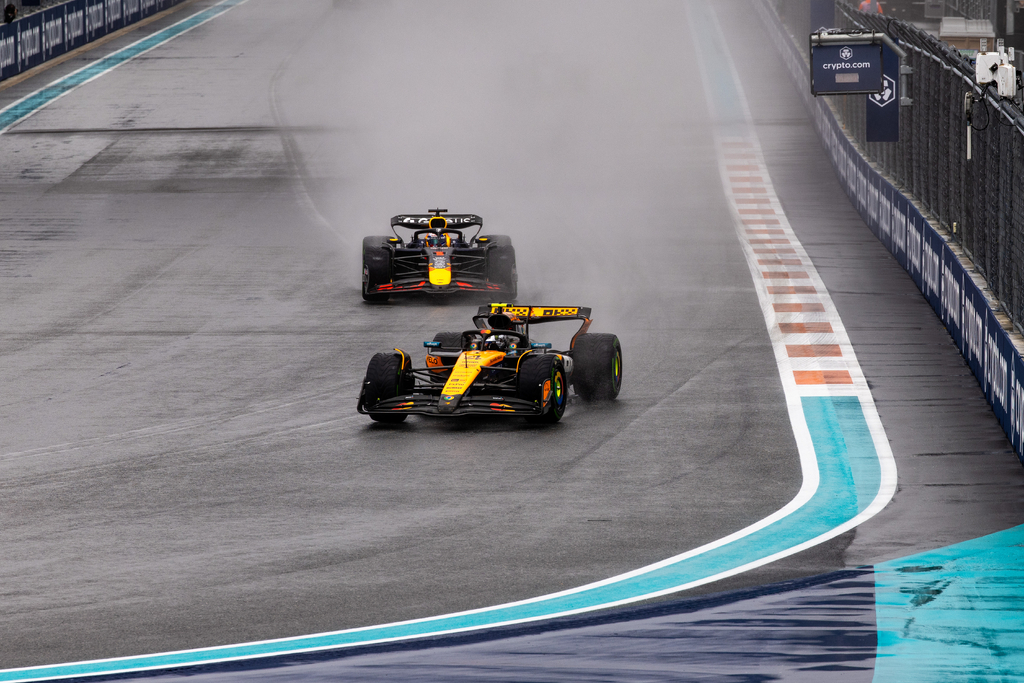
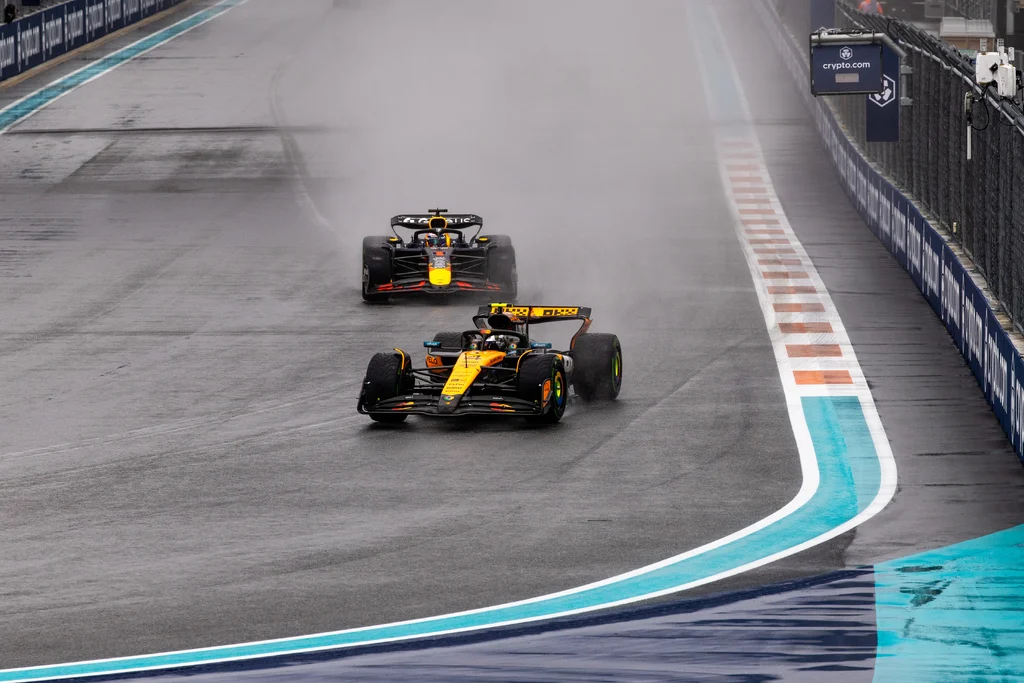
Early season data has highlighted a fundamental stability issue. The combination of high-torque electric deployment, narrower tires, and reduced aerodynamic downforce has resulted in a "twitchy" rear end, particularly under acceleration. Drivers have reported an inherent tendency toward oversteer, a characteristic that becomes exponentially more dangerous on a wet, slick surface.
The "Boost" Ban
In response to these handling concerns, the FIA has taken the proactive step of modifying power delivery maps specifically for wet conditions. Starting this weekend, the "Boost" mode—a feature designed to provide a burst of electrical energy for overtaking—will be strictly prohibited in low-grip scenarios.
"The goal is predictability," explains FIA Technical Director Nikolas Tombazis. "We have seen that with the current torque curves, if a driver accidentally engages the boost while exiting a corner in the wet, the car becomes virtually unrecoverable. By limiting the sudden influx of torque, we reduce the likelihood of high-speed spins that could jeopardize the safety of the entire field."
Chronology of Control: How the Race Will Be Managed
Should the skies open and the red flag be deployed, a specific, specialized protocol will swing into action—one that is unique to North American F1 rounds.
- Immediate Suspension: The field will be neutralized behind the Safety Car, followed by a mandatory entry into the pit lane.
- Garage Intervention: In a departure from standard FIA sporting regulations used in Europe, teams will be permitted to work on their cars inside the garages during the suspension. This allows for the adjustment of mechanical setups, tire pressures, and cooling configurations to suit the changing weather, acknowledging that Florida storms can be as prolonged as they are intense.
- The "Pre-Start" Sequence: Once the weather clears and the track is deemed safe by the Clerk of the Course, the FIA will initiate a restart sequence. This involves a pre-announced release window, giving teams enough time to fire up their systems and return to the grid.
The Implications: A New Era of "Managed" Racing?
The broader implication of the Miami weekend is a shift in the sport’s philosophy toward "controlled performance." Critics argue that by restricting power modes and introducing more frequent interruptions, the FIA is sanitizing the sport. However, the governing body maintains that in the era of 350 kW electric motors, the risk-to-reward ratio has fundamentally changed.
There is also the matter of the "field spread." In the first three races of 2026, the discrepancy in how different cars deployed their electrical energy led to erratic speed differentials, particularly in braking zones. At Suzuka, this resulted in several near-misses that prompted the current crackdown. By forcing a more linear power delivery, the FIA hopes to harmonize the field, ensuring that the skill of the driver—not the efficiency of their energy-recovery software—determines the outcome of a duel.
Conclusion: The Grand Prix as a Proving Ground
The 2026 Miami Grand Prix is, in every sense, a test in real-time. The organizers, the FIA, and the teams are operating under the weight of immense public scrutiny and rigorous local safety standards. Whether the race finishes under the bright Florida sun or concludes behind a series of red flags, one thing is certain: the events of this weekend will dictate how the remainder of the 2026 season is managed.
As the grid lines up, the focus will not just be on the championship standings or the rivalry between the top teams. It will be on the human element—the drivers tasked with piloting these highly volatile, powerful machines through the narrow, concrete-lined streets of Miami, while a storm gathers on the horizon. For the FIA, this is not just a race; it is a critical assessment of whether their new regulatory framework is robust enough to handle the unpredictable forces of both nature and engineering.