

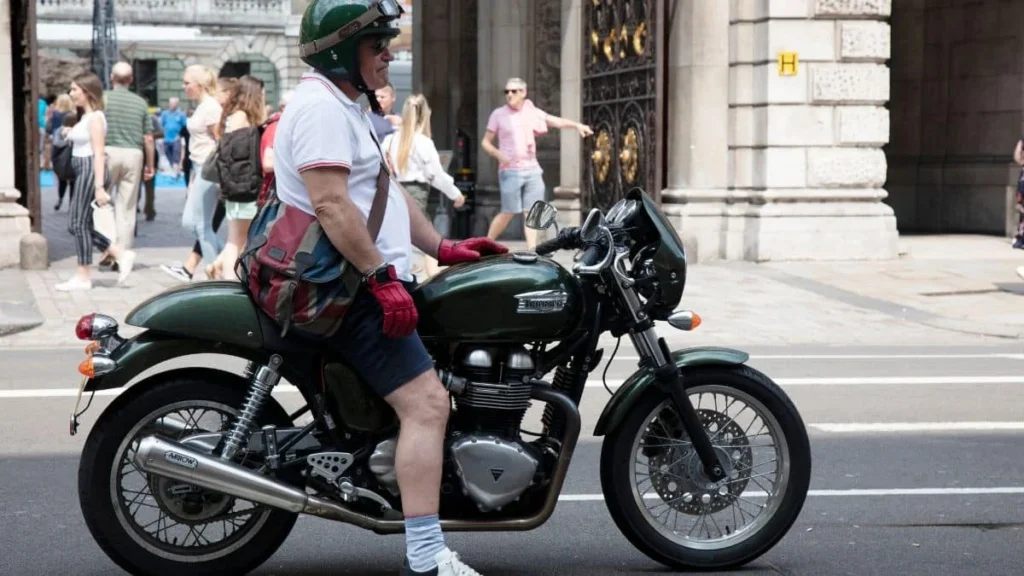
Main Facts: The Quintessence of British Engineering
Founded in 1902, Triumph Motorcycles stands today as one of the most storied and enduring marques in the global history of two-wheeled transportation. Long before the rumble of its signature multi-cylinder engines echoed through modern city streets, the company humble-began its journey manufacturing bicycles in Coventry, England. It did not take long, however, for the enterprise to pivot toward motorized mobility, introducing its first production motorcycle equipped with a modest Minerva engine.
Over the decades, Triumph evolved into the undisputed ambassador of British motorcycle culture. The brand’s aesthetic and mechanical identity quickly forged a unique archetype: a machine that is simultaneously understated, reliable, rugged, and irresistibly charming. It represents a delicate paradox—equal parts refined gentleman and raw mechanical brawler—capturing a distinctively British equilibrium that few competitors have ever successfully replicated.
Today, Triumph is a global enterprise blending heritage with bleeding-edge technology, producing hundreds of thousands of motorcycles from its state-of-the-art facilities in Hinckley, Leicestershire, and manufacturing hubs across Thailand and Brazil. Yet, despite its modern multinational footprint, the heart of the brand remains inextricably linked to its British roots.
Chronology: From Bicycle Workshops to Global Renaissance
1. The Dawn of an Icon (1902–1940s)
German immigrant Siegfried Bettmann and his partner Mauritz Schulte established the Triumph Cycle Co. in 1885, shifting to motorcycle production at the turn of the century in 1902. By the outbreak of the First World War, Triumph was supplying tens of thousands of its reliable Model H motorcycles to the Allied forces, cementing its reputation for durability under extreme conditions. The interwar period saw continuous engineering advancements, culminating in the acquisition of the company by Jack Sangster in 1936, which paved the way for legendary designer Val Page to introduce high-performance parallel-twin engines.
2. The Golden Age of Rebels and Rockers (1950s–1960s)
The post-war era transformed Triumph from a reliable utility vehicle into an emblem of youth rebellion and counterculture. During the 1950s and 1960s, models like the Thunderbird and the Bonneville became the quintessential mounts for Hollywood icons, music legends, and thrill-seekers.
- Marlon Brando immortalized the 1950 Triumph Thunderbird in the classic film The Wild One.
- Steve McQueen famously attempted to jump a modified Triumph TR6 Trophy over a barbed-wire fence in The Great Escape.
- Cafe racers and "rockers" adopted the brand across post-war Britain, modifying their Triumphs for blistering speed between roadside coffee stops.
3. The Japanese Storm and Collapse (1970s–1983)
Like much of the European automotive and motorcycle industry, Triumph was entirely unprepared for the tectonic shift brought on by the invasion of Japanese manufacturers in the 1970s. Brands like Honda, Yamaha, Suzuki, and Kawasaki introduced motorcycles that vastly outclassed British equivalents in terms of manufacturing quality, pricing, reliability, and modern engineering. Crippled by labor strikes, outdated production facilities, and severe financial distress, the historic Meriden cooperative collapsed, leading to bankruptcy and the cessation of production in 1983.
4. The Bloor Resurrection (1991–Present)
The salvation of Triumph arrived in the form of John Bloor, a British millionaire industrialist who acquired the rights to the name in the early 1980s. Rather than cashing in on the brand name for memorabilia, Bloor played a long and patient game. He invested heavily in a brand-new, cutting-edge factory in Hinckley and unleashed a completely redesigned lineup in 1991. This resurrection successfully modernized Triumph’s mechanical offerings without erasing its ancestral soul, laying the groundwork for the modern powerhouse we see today.
Supporting Data: Engineering the Modern Triple
While the parallel-twin remains the spiritual heartbeat of Triumph’s classic heritage line, the modern era of the brand is heavily defined by its iconic three-cylinder engine architecture.
| Engine Configuration | Displacement Range | Core Models | Key Characteristics |
|---|---|---|---|
| A2 / Entry Twins | 660cc | Trident 660, Tiger Sport 660 | Accessible, agile, commuter-friendly, premium build quality at an entry-level price point. |
| Modern Classics (Twins) | 900cc – 1200cc | Bonneville T100/T120, Speed Twin, Scrambler | High-torque parallel-twins, rich heritage styling, deep exhaust notes, modern safety tech integrated invisibly. |
| The Triple Family | 675cc – 765cc | Street Triple, Daytona | Mid-range punch, razor-sharp handling, aggressive race-derived performance. |
| Heavyweight Performance | 1200cc – 2500cc | Speed Triple 1200, Rocket 3 | Massive torque (Rocket 3 boasts a world-record 2,458cc engine yielding 221 Nm), blistering top-end power. |
| Adventure & Touring | 900cc – 1200cc | Tiger 900, Tiger 1200 | Long-distance comfort, off-road capability, sophisticated electronic suspension and rider aids. |
This proprietary engine layout bridges the gap between the low-end tractability of a twin-cylinder motor and the high-revving top-end rush of a four-cylinder inline engine. It is an engineering masterpiece capable of delivering effortless docility in city traffic as well as unbridled rage on open tracks.
Official Responses and Strategic Vision
Leadership at Triumph Motorcycles has consistently emphasized that modernization does not mean abandoning heritage. In recent executive briefings, company officials have outlined a clear roadmap focusing on premium craftsmanship, global expansion, and technological integration.
"Our mission has never been to build the cheapest motorcycle on the market, nor to chase fleeting trends," stated Chief Commercial Officer Paul Stroud during a recent global dealer convention. "Triumph represents an authentic emotional connection. When a rider straddles a modern Classic or pushes a Street Triple through a canyon, they are experiencing a century of engineering passion carefully translated into today’s digital and mechanical standards."
Furthermore, Triumph’s recent strategic partnerships—such as its collaboration with India’s Bajaj Auto to produce smaller-displacement motorcycles (the Speed 400 and Scrambler 400 X)—signal an aggressive, calculated move to capture emerging markets. By making the brand accessible to a younger, global demographic without diluting the prestige of the Hinckley-built flagship models, Triumph has successfully future-proofed its business model.
Implications: Racing Pedigree and the Future of the Marque
Triumph’s influence extends far beyond showroom floors and lifestyle branding; it has quietly established a formidable presence at the highest echelons of motorsport.
Since 2019, Triumph has served as the exclusive engine supplier for the FIM Moto2 World Championship, providing a race-tuned 765cc triple engine derived directly from the Street Triple platform. Over the past half-decade, this power plant has smashed numerous lap records across global circuits, proving not only its blistering performance capabilities but also its bulletproof reliability under extreme racing conditions. This motorsport commitment represents a serious, understated technical validation that aligns perfectly with the brand’s quiet confidence.
The Road Ahead
Looking toward the horizon, Triumph is actively navigating the shifting tides of personal transportation. Through intensive research and development in electric vehicle technology—highlighted by the successful completion of the TE-1 electric prototype project—the brand is proactively preparing for stricter global emissions regulations and changing consumer demands.
Ultimately, Triumph remains a masterclass in brand preservation. It proves that a manufacturer can embrace the digital age, dominate modern racing paddocks, and expand into emerging international markets while still wearing its heritage like a well-tailored bespoke suit. Triumph is, and always will be, the definitive embodiment of British mechanical elegance on two wheels.
