
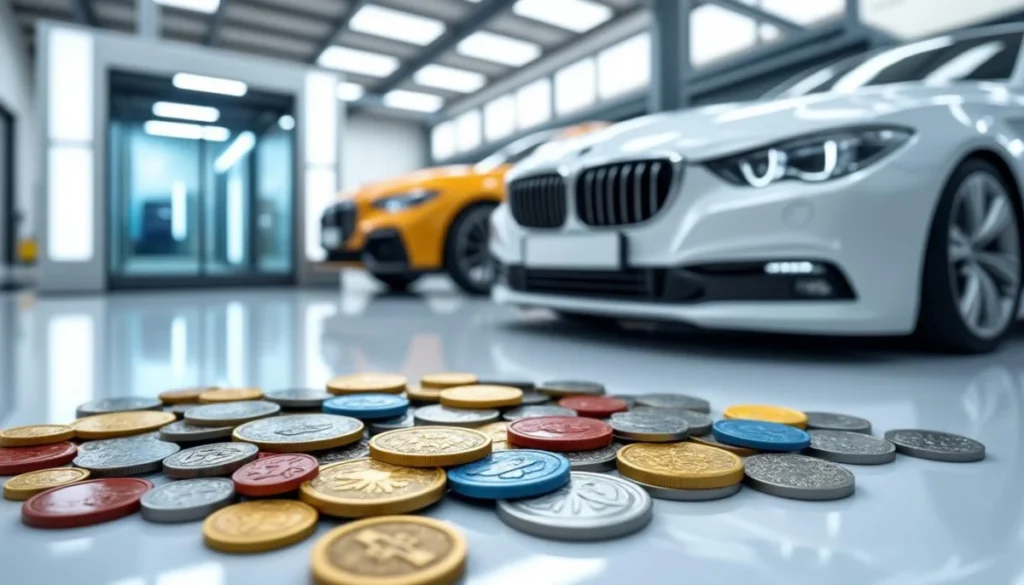
We have all experienced that moment of quiet frustration: you pull into a car wash station, eager to rid your vehicle of road grime, only to find that the token you’ve kept in your glove compartment for months is rejected by the machine. That sinking feeling—the realization that your token is incompatible—is more than just a minor inconvenience; it is a symptom of a highly fragmented industry built on proprietary technology, security protocols, and strategic customer loyalty programs.
Understanding the world of car wash tokens is not merely about avoiding the loss of a few euros; it is about navigating the complex operational landscape of the modern automotive care sector. This guide serves as your definitive resource for identifying, utilizing, and managing car wash tokens effectively.
The Core Problem: Why Universal Tokens Don’t Exist
The primary misconception among motorists is the assumption that a "car wash token" is a universal currency. In reality, the physical token is a highly engineered component of a sophisticated payment ecosystem.
Security Protocols and Fraud Prevention
The most critical reason for the lack of interchangeability is the mitigation of fraud. In an era where 3D printing and precision casting are increasingly accessible, the threat of counterfeit tokens is a significant concern for station operators.
Industry leaders like Éléphant Bleu have invested heavily in proprietary token technology. These tokens are designed with specific weight tolerances, metallurgical compositions, and, in some cases, embedded RFID (Radio Frequency Identification) chips. By ensuring that every token is unique to their specific machines, operators can drastically reduce the financial impact of unauthorized or forged tokens, which can otherwise result in hundreds of euros of losses per station, per month.
Technical Configuration: The "Puzzle Piece" Logic
Car wash monnayeurs (coin mechanisms) are not simple gravity-based chutes. They are high-precision sensors calibrated to detect specific physical parameters: diameter, thickness, magnetic permeability, and electrical conductivity.
When you insert a token into a machine, it is being scanned by an electronic eye or a physical sensor array. A 25mm blue plastic token from an Éléphant Bleu station is fundamentally incompatible with the metallic, logo-stamped tokens used by TotalEnergies. If you attempt to force a mismatch, the machine may experience a mechanical jam. In the best-case scenario, the machine simply rejects the token; in the worst, you risk a mechanical failure that requires a technician to resolve, effectively rendering your token lost to the internal bin.
Strategic Loyalty and Branding
Beyond the technical requirements, the token serves as a powerful marketing tool. Large networks utilize custom-branded tokens to encourage repeat business. When a driver possesses a metallic gold "Wash" token from TotalEnergies, they are psychologically and practically incentivized to return to a TotalEnergies location to "spend" that currency. This creates a closed-loop economy that rewards customer loyalty while providing operators with reliable, predictable revenue streams.
Chronology of Innovation: From Simple Coins to Digital Integration
The evolution of the car wash payment system reflects the broader trends of the retail industry.
- The Early Era (Pre-1990s): Most car washes relied on standard coinage (national currency). This was administratively difficult for station owners due to high cash-handling costs and security risks.
- The Rise of the Token (1990s–2010s): The shift to proprietary tokens allowed operators to move toward "pre-payment" models. By selling tokens in bulk, companies secured capital upfront and locked customers into their specific networks.
- The Digital Transition (2015–Present): We are currently witnessing a move away from physical tokens altogether. Modern stations are increasingly implementing RFID-enabled loyalty cards, mobile applications, and NFC (Near Field Communication) contactless payments. This transition is driven by the demand for hygiene, speed, and the desire to reduce the overhead costs associated with manufacturing and collecting physical tokens.
Supporting Data: Comparative Analysis of Major Networks
To minimize the risk of financial loss, motorists must familiarize themselves with the characteristics of the networks they frequent. The following table provides a breakdown of current market standards.
| Network | Token Material/Visuals | Primary Purchase Method | Compatibility |
|---|---|---|---|
| Éléphant Bleu | Blue plastic, embossed logo, sometimes RFID | On-site kiosks | Exclusive to their network |
| TotalEnergies | Metallic gold, "Wash" branding | Kiosks or station cashiers | TotalEnergies stations only |
| Shell | Metallic silver, shell insignia | Station counters | Exclusive to Shell |
| Retail Giants | Store-branded plastic/metal | Supermarket service desks | Limited to the specific retail location |
| Independent | Variable (plain metal/plastic) | On-site staff | No interchangeability |
Official Industry Responses and Implications
According to spokespersons from major car wash franchise networks, the decision to maintain proprietary systems is non-negotiable.
"Our clients expect a seamless experience," says a representative from a leading European car wash network. "If we allowed universal tokens, the variance in quality and sensor requirements across different machines would lead to a catastrophic increase in ‘out-of-order’ reports. Proprietary tokens guarantee that the equipment is used exactly as it was designed."
The Implications for Consumers
For the consumer, the implications are twofold. On one hand, the lack of standardization forces the driver to be more organized, keeping track of different types of tokens for different stations. On the other hand, the shift toward mobile apps and NFC cards is effectively solving this problem.
The industry is currently moving toward a "frictionless" model. Companies are investing in backend software that allows users to register a credit card to an app, effectively turning their smartphone into the "universal token." This shift has profound implications for user experience, as it eliminates the need to visit a kiosk or carry physical tokens, but it also raises concerns regarding data privacy and the digital divide for older demographics who prefer physical payment methods.
Practical Strategies for Success
To ensure you never find yourself staring at a jammed machine with a wasted token, consider these field-tested best practices:
- Visual Verification: Always check the sticker or label on the car wash bay entrance. It will almost always display the specific type of token required. If you see a "RFID" symbol, do not attempt to use a standard mechanical token.
- The "Golden Rule" of Storage: Store your tokens in clearly labeled envelopes or separate compartments in your vehicle. Mixing them together is a common cause of "token-mismatch" errors at the wash bay.
- Embrace Digital Alternatives: If your preferred station offers an app-based payment system, migrate to it. It is safer, more hygienic, and provides a clear audit trail of your spending, which is particularly useful for business owners who expense their car maintenance.
- Seek Assistance: If a machine malfunctions, do not attempt to pry it open or insert other objects to retrieve your token. Notify the station attendant immediately. Most reputable networks will replace a lost token if the malfunction occurred due to an equipment failure, provided you can prove the token was intended for their specific machine.
- Quality Control: If you buy tokens at a discount (e.g., "5 for the price of 4"), inspect them before leaving the kiosk. Damaged or bent tokens are the primary cause of mechanical jams.
Conclusion: The Future of the "Wash Experience"
The humble car wash token is a relic of a transitional period in automotive care. As we move toward a future defined by contactless technology and real-time digital authentication, the frustrations of the past—jammed coin slots, incompatible tokens, and the lost value of a misspent coin—will eventually fade.
However, until every station is fully upgraded, the responsibility remains with the driver to stay informed. By understanding the technological, security, and branding reasons behind the diversity of tokens, you are not just cleaning your car; you are participating in a modern, optimized service ecosystem designed for efficiency. Keep your tokens organized, embrace the digital shift, and your next trip to the car wash will be the quick, satisfying experience it was meant to be.
