

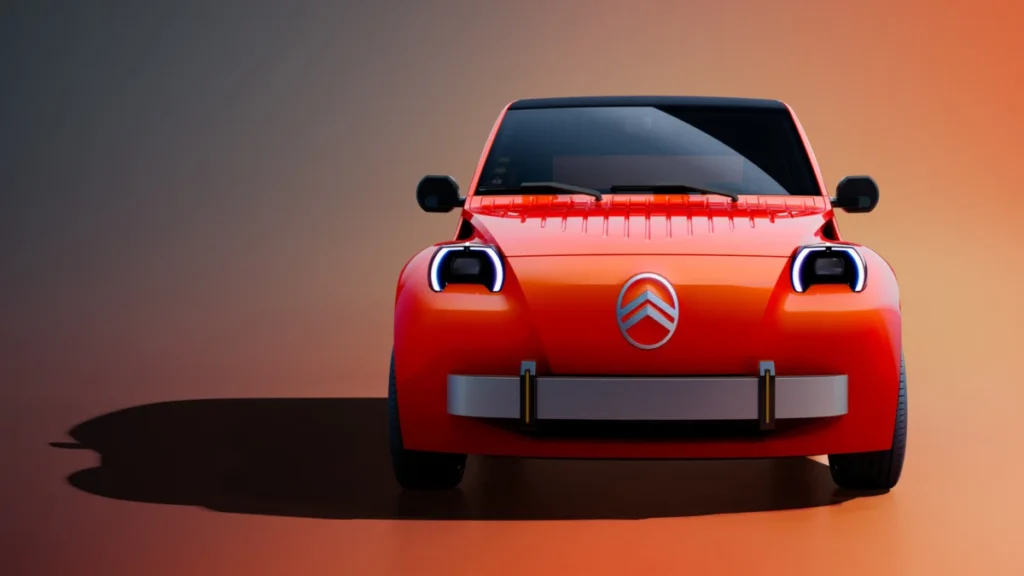
In a move that blends deep-seated French nostalgia with the pragmatic realities of globalized industrial manufacturing, Citroën has officially unveiled its "2CV Concept." With a target price of €15,000 and a compact length of 3.76 meters, the vehicle aims to capture the spirit of the legendary "Deuche" while utilizing a sophisticated Chinese-derived electric platform. Yet, behind the tartan-lined roof and the vintage-inspired aesthetic, the 2028 production model represents a calculated shift in Stellantis’ global strategy, moving away from high-cost local engineering toward a collaborative model involving Leapmotor and Italian production facilities.
The Nostalgic Facade: A Modern Tribute to 1948
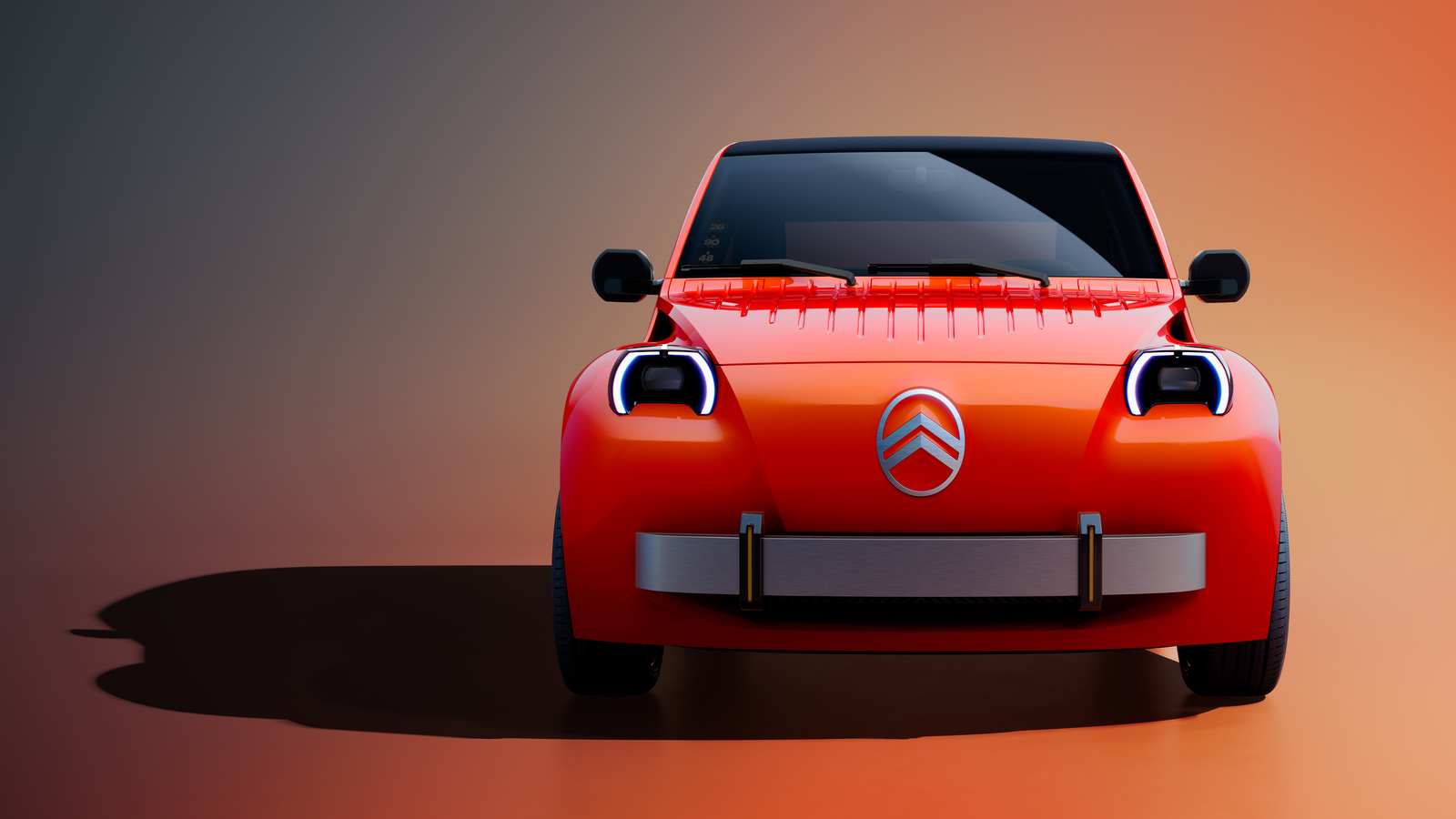
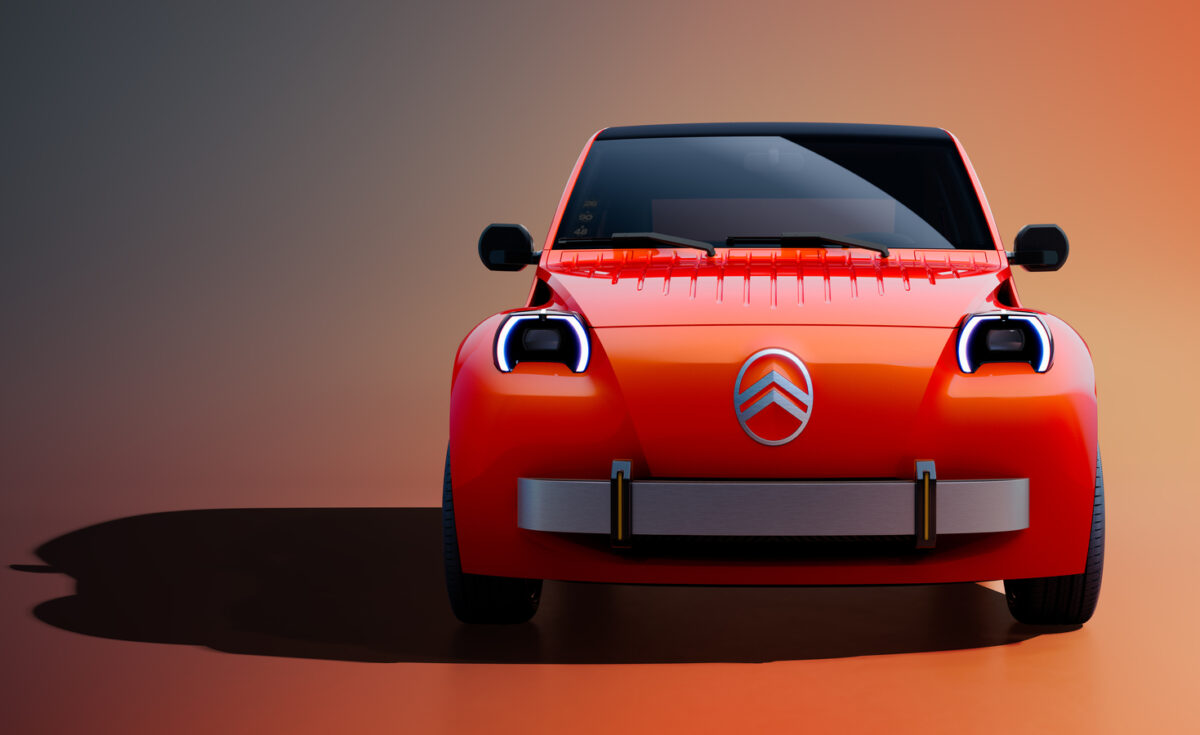
The debut, which took place under the grand rafters of the Hangar Y in Meudon before moving to the Paris Motor Show at Porte de Versailles, was a masterclass in brand heritage. Finished in a striking "Infra Red," the concept car features the signature round headlamps mounted on the fenders, a hand-rolled canvas roof, and interior storage pockets specifically calibrated to carry eggs—a nod to the original 1948 design requirement that the car should be able to transport a basket of eggs across a ploughed field without breaking them.
However, beneath this retro exterior lies a highly disciplined industrial machine. Representing 90% of the final production vehicle scheduled for late 2028—timed to coincide with the 80th anniversary of the original 2CV—the "E-Car" project is far more than a design exercise. To meet the aggressive €15,000 price point, Stellantis has stripped away traditional European development costs, relying instead on a technological partnership with Chinese automaker Leapmotor and outsourcing assembly to the historic Pomigliano d’Arco plant near Vesuvius.
The Statistical Hemorrhage: Why the 2CV Had to Return
The offensive, spearheaded by Xavier Chardon, who has led the "double chevron" brand since July 2025, is a direct response to a massive contraction in the European market. Since 2020, European manufacturers have seen an evaporation of approximately three million annual sales. This decline is not due to a waning interest in personal mobility, but rather a catastrophic "price creep." Statistics reveal that 60% of these lost registrations were vehicles previously sold for under €15,000.
By pushing the modern C3 well beyond the €20,000 threshold and abandoning the "A-segment" (micro-cars), Stellantis inadvertently forced lower-income buyers into the used car market. The 2CV project aims to reclaim this lost territory. It exploits a gap in the upcoming European "M1E" (E-Car) regulatory category, which is currently being negotiated in Brussels to standardize requirements for electric city cars under 4.20 meters. At 3.76 meters, the new 2CV is actually nine centimeters shorter than its 1948 ancestor. This "minimalist" footprint keeps the vehicle weight around one metric ton, allowing for a smaller, less expensive battery pack while still providing sufficient range for daily urban commutes.
The Technological Skeleton: The Leapmotor Connection
The most significant departure from tradition is invisible to the casual observer. Internal engineering teams at Citroën lacked the time and the budget to develop an entirely new, cost-effective platform from scratch. The solution, validated by Stellantis CEO Antonio Filosa in the spring of 2026, relies entirely on technology transfer.
To maintain a aggressive two-year development cycle—a pace set by rising Asian competitors—the 2CV will utilize the technical platform of the Leapmotor T03. By sharing this base with the future Fiat Pandina, Stellantis can amortize the massive costs associated with tooling, stamping, and inverter procurement.
This decision, however, creates a friction point with the brand’s "French national" identity. The vehicle will not roll off the lines at Poissy or Rennes. Instead, its European manufacturing hub will be in Pomigliano d’Arco, Italy. There, Italian workers will assemble the 2CV, the Fiat Pandina, and the Leapmotor T03 on the same production line, maximizing efficiency and regional industrial output.
Workshop Design: Minimalism and Digital Efficiency
The design bureau, led by Pierre Leclercq, had to adopt a "workshop-style" approach to manufacturing. The bodywork features simple, taut surfaces to reduce stamping costs. The windshield bay is entirely flat, the front air vents are lifted directly from the 1937 TPV (Toute Petite Voiture) prototype, and the black bumpers are modular, meaning they can be replaced individually after minor collisions without disturbing the headlamps.
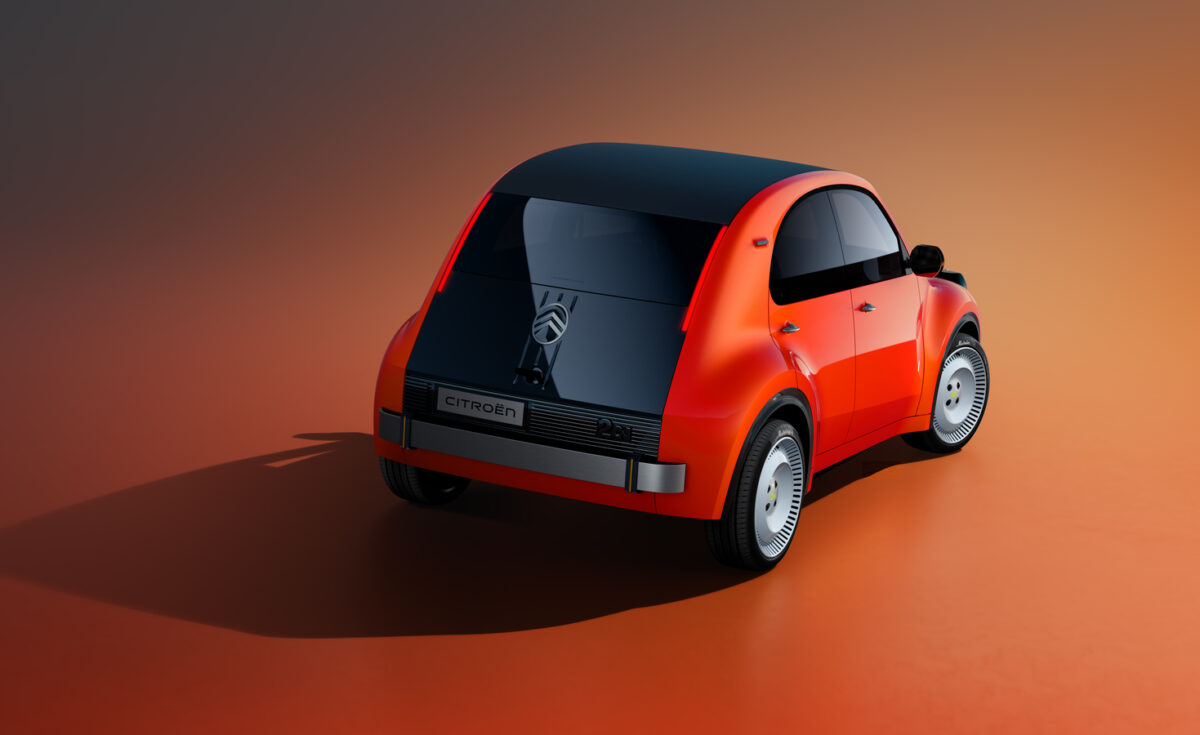
The tires are equally innovative: 18-inch Michelin rubber that integrates "digital twin" technology. This software-based system calculates wear, pressure, and grip levels through onboard algorithms, eliminating the need for expensive physical sensors embedded in the tire compound.
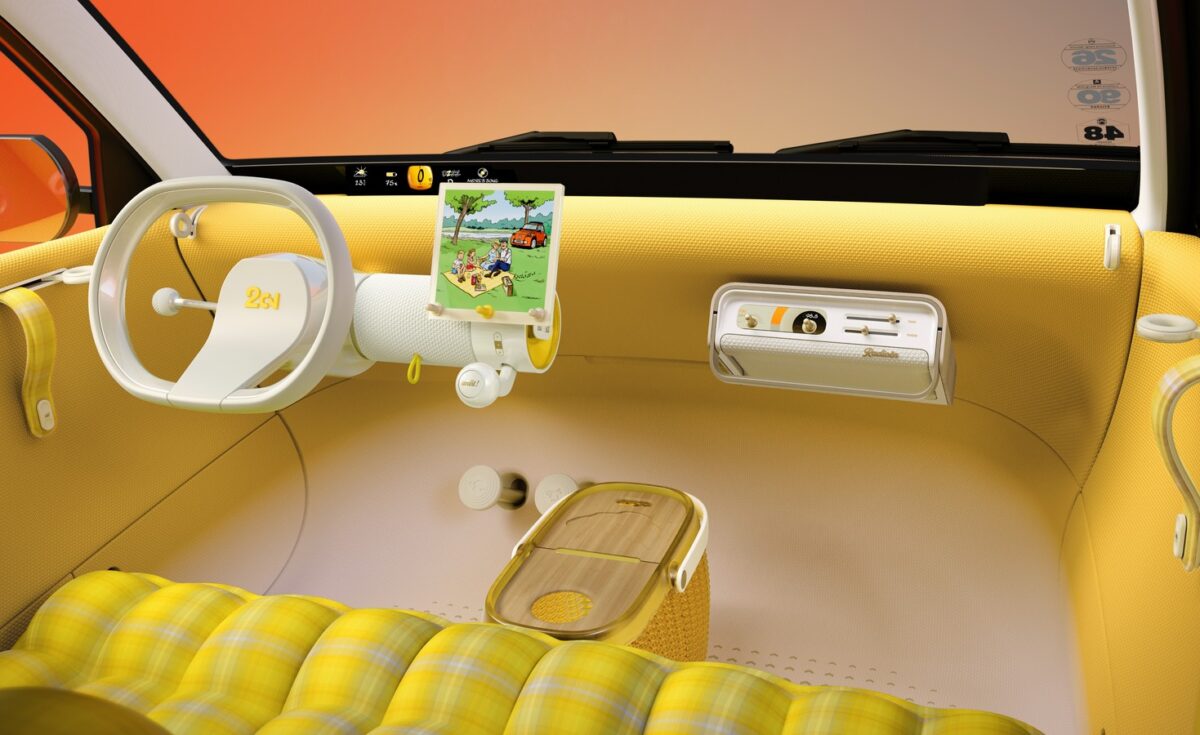
Inside, the simplification is absolute. There is no traditional dashboard. A single transverse cylinder supports a monospoke steering wheel, a simple rocker switch for forward/reverse, and a "Smart Vision" heads-up display with digital rollers—a functional homage to the classic Citroën GS. The central eight-inch screen is compact, square, and features three physical ventilation knobs. To shed weight and cost, the seats utilize tubular structures without integrated headrests, and the center console is replaced by a removable 3D-printed basket made of bio-sourced plastic. Even the audio system is portable; the "Radioën" is an extractible Bluetooth speaker that can be used outside the vehicle.
Chronology: The Road to 2028
- 1937: Initial development of the TPV (Toute Petite Voiture) prototype.
- 1948: The iconic 2CV is launched at the Paris Motor Show.
- 2020-2025: European manufacturers lose 3 million annual sales, primarily in the sub-€15k segment.
- Spring 2026: Antonio Filosa validates the "E-Car" strategy using the Leapmotor platform.
- July 2025: Xavier Chardon takes leadership of Citroën with a mandate to recover lost market volume.
- October 2026: The 2CV Concept is unveiled to the public in Paris.
- End of 2028: Planned market launch for the production-ready 2CV to celebrate the model’s 80th anniversary.
Supporting Data: Comparative Technical Evolution
| Parameters | Citroën 2CV (1948) | Citroën ë-C3 (2024) | 2CV Concept (2028) |
|---|---|---|---|
| Length | 3.85 m | 4.01 m | 3.76 m |
| Weight | ~500 kg | 1,416 kg | ~1,000 kg |
| Platform | Original Steel Frame | Smart Car | Leapmotor T03 Shared |
| Production | Levallois-Perret | Trnava (Slovakia) | Pomigliano (Italy) |
| Base Price | ~3-4 months salary | ~€20,000 | ~€15,000 |
Official Response and Industrial Implications
The choice of Pomigliano d’Arco is highly political. The plant was previously dedicated to the aging Fiat Panda, and its closure would have triggered significant labor disputes and political friction with the government of Giorgia Meloni. By assigning the 2CV and the Leapmotor T03 to this site, Stellantis has secured the facility’s future while mitigating the risk of deindustrialization in Southern Italy.
In a press briefing, a spokesperson for Stellantis noted: "We are not just building a car; we are building a model for the future of European mobility. To keep mobility accessible, we must be honest about our costs. The 2CV is a product of global synergy, not just national pride."
Implications for the Future
The 2CV’s resurrection suggests a paradigm shift for legacy European automakers. By acknowledging that they can no longer compete on price using exclusively domestic supply chains, Stellantis is setting a precedent. The success of the 2CV will depend on whether consumers accept a "Chinese-engineered, Italian-built, French-designed" vehicle as a spiritual successor to one of the most beloved French cars in history.
If the 2CV hits its €15,000 target and maintains the required build quality, it could stabilize the segment of the market that has been ignored for nearly a decade. However, it also signals a transition toward a more integrated, globalized automotive industry where brand identity is a marketing layer applied to a shared, highly efficient, and cost-optimized core. The 2CV of 2028 will not be the car that mobilized the French countryside in the 1950s, but it may very well be the car that saves the urban commuter in the 2030s.
