

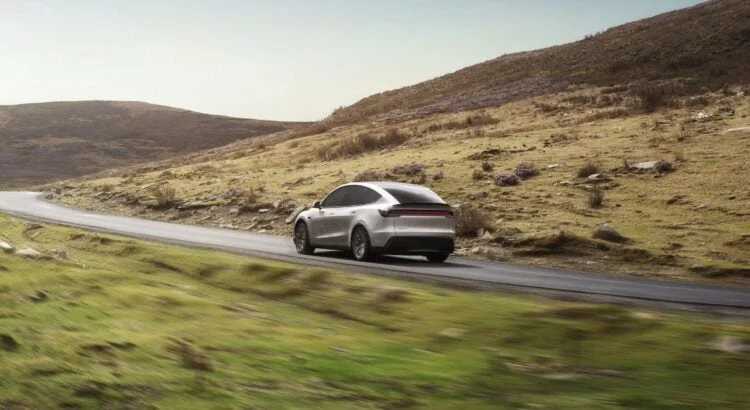
In the heart of Grünheide, a quiet industrial commune near Berlin, Tesla is orchestrating a structural transformation that could redefine the European automotive landscape. The American electric vehicle (EV) pioneer, led by the mercurial Elon Musk, is executing a bold, multi-faceted strategy to pivot away from global supply chain reliance. By injecting an additional $250 million into its Giga Berlin facility, Tesla is not merely expanding; it is attempting to achieve a level of industrial self-sufficiency that most of its competitors can only dream of.
The Strategic Shift: Mastering the Value Chain
The primary objective of this new investment is to establish an end-to-end production ecosystem. Tesla aims to transform Giga Berlin into a closed-loop powerhouse where raw materials enter at one end and finished, high-performance electric vehicles roll off the assembly line at the other. This is the "Holy Grail" of modern manufacturing: total vertical integration.
Until now, the Model Y units produced in Germany were heavily dependent on battery cells imported from overseas—a vulnerability that became glaringly obvious during the supply chain crises of the post-pandemic era. With the new capital injection, Tesla plans to scale its local battery production capacity to 18 gigawatt-hours (GWh) per year. This figure is staggering, particularly when compared to the 8 GWh target floated just a few months ago. By more than doubling its projected output, Tesla is effectively signaling that it intends to insulate its European operations from the volatile whims of international logistics and geopolitical instability.
Chronology of an Industrial Expansion
The journey of Giga Berlin has been anything but smooth. Since its inception, the facility has been a lightning rod for controversy, environmental protests, and regulatory hurdles.
- The Inception (2019–2021): Tesla announced its intent to build in Brandenburg, triggering years of bureaucratic friction, water usage debates, and local opposition.
- The Production Launch (2022): Despite the "speed bumps," the factory began churning out Model Y vehicles, marking Tesla’s first major manufacturing hub on European soil.
- The Scaling Phase (2023): Tesla experienced internal turbulence, including layoffs and fluctuating production volumes, as it sought to optimize its manufacturing processes.
- The Pivot to Autonomy (Early 2024): Recognizing the fragility of external battery supplies, Tesla accelerated its plans for in-house cell manufacturing.
- The Current Expansion (Mid-2024): With the $250 million investment confirmed, the company has initiated a dual-track growth plan: increasing battery cell production capacity and boosting vehicle assembly by 20% to meet a resurgence in European demand.
Supporting Data: By the Numbers
The scale of this expansion is quantifiable through the company’s aggressive hiring and production targets.
- 18 GWh: The new annual capacity for battery cells, sufficient to power more than 200,000 vehicles annually.
- 2,500 New Hires: Tesla is currently recruiting 1,500 specialists exclusively for the battery department, while simultaneously hiring an additional 1,000 workers for the general assembly lines to support the 20% production increase.
- 500 Permanent Conversions: As a gesture toward workforce stability, Tesla is transitioning 500 temporary contract workers into permanent positions.
- 11,000+ Employees: This is the current workforce size, a number that will surge as the new recruitment drive concludes, marking a significant recovery in headcount following the staff reductions seen in the previous year.
The Human Factor: A High-Stakes HR Strategy
While the capital investment is substantial, the true "bottleneck" for Giga Berlin remains its workforce. Recruiting and retaining talent in the Brandenburg region has proven to be a complex challenge.
Tesla’s corporate culture, known for its high-pressure, fast-paced environment, often clashes with the more traditional German industrial work culture. The powerful German metalworkers’ union, IG Metall, maintains a watchful eye on the facility, frequently critiquing Tesla’s labor practices and internal safety standards.
The challenge for the next twelve months is twofold: filling these thousands of specialized roles in a competitive labor market and, more importantly, fostering an environment that encourages long-term retention. Many observers point out that the high-cadence manufacturing style inherent to Tesla’s "mission-first" approach has previously led to internal friction. Whether the company can adapt its management style to fit the expectations of the German workforce will be a defining factor in whether the $250 million investment yields the expected return.
Implications: A New Competitive Reality
Tesla’s move has profound implications for the European automotive sector. By achieving vertical integration, Tesla is essentially thumbing its nose at the supply chain constraints that continue to strangle legacy European manufacturers.
1. Supply Chain Resilience
In an era where battery materials—lithium, nickel, and cobalt—are subject to intense geopolitical maneuvering, producing cells on-site gives Tesla an unmatched tactical advantage. It reduces transit costs, lowers the carbon footprint associated with global logistics, and ensures that the factory is not at the mercy of shipping delays.
2. Market Dominance
By increasing its output by 20% in the face of a lukewarm global EV market, Tesla is playing a long game. While other manufacturers are trimming their EV budgets due to slower-than-expected adoption rates, Tesla is betting that its cost-advantage—driven by its localized manufacturing—will allow it to capture a larger slice of the market when the European demand inevitably hits its next growth curve.
3. The "Tesla Standard"
The success of this endeavor will likely force European competitors to reconsider their own reliance on third-party battery suppliers. If Tesla can prove that a "factory under one roof" model is not only possible but more profitable, it will create a new industry benchmark. Legacy players like Volkswagen, Stellantis, and BMW may find themselves forced to accelerate their own battery production localized projects to remain price-competitive against the Model Y.
Conclusion: The Road Ahead
The Giga Berlin expansion is more than a construction project; it is a declaration of independence. By weaving the entire production process—from cell manufacturing to final vehicle assembly—into a single, highly efficient, and localized fabric, Tesla is attempting to insulate itself from the external shocks that have historically crippled the automotive industry.
However, the "speed bumps" of the past serve as a reminder that industrial ambition must be balanced with social and regulatory reality. The success of this quarter-billion-dollar bet will depend not just on the efficacy of the machinery, but on the ability of the company to integrate into the social fabric of Brandenburg. As Tesla moves forward, the entire industry will be watching—not just to see if the batteries are built, but to see if this new, aggressive model of industrial autonomy can survive in the heart of Europe.
